
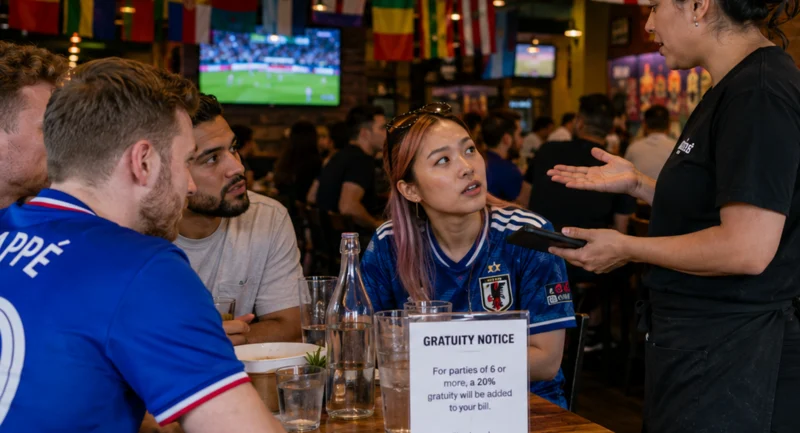
Restaurants across New Jersey, New York and Philadelphia are adjusting to an unexpected World Cup challenge as many international visitors, unfamiliar with American tipping customs, leave little or no gratuity for servers.
SECAUCUS, NJ – While restaurants anticipated a surge in customers during the FIFA World Cup, many owners say they’ve encountered an unforeseen cultural difference that is directly affecting employees’ paychecks.
Hospitality businesses in World Cup host regions—including areas serving fans traveling to MetLife Stadium—report that many international visitors come from countries where tipping is either optional, minimal, or already included in menu prices. As a result, some diners unknowingly leave little or no tip after their meals.
For servers whose earnings often depend heavily on gratuities, the misunderstanding has created an unexpected financial challenge during one of the busiest tourism events of the year.
Different customs lead to confusion
Unlike the United States, many countries throughout Europe, South America, and Asia either discourage tipping or incorporate service charges directly into restaurant prices.
Visitors accustomed to those systems often assume the final bill already includes compensation for waitstaff.
Restaurant owners say the issue generally is not one of unwillingness to tip but unfamiliarity with American dining customs.
Servers have found themselves spending additional time explaining how gratuities work in the United States while trying to avoid awkward interactions with guests from around the world.
Restaurants adding automatic gratuities
To protect employee earnings, some restaurants in World Cup host cities have begun automatically adding service charges to customer bills.
Teneshia Murray Butler, owner of the T’s Brunch Bar restaurant chain in Atlanta, increased her automatic gratuity from 18% to 20% specifically because of the World Cup.
Restaurant operators say the mandatory service charges help ensure employees receive consistent compensation regardless of where customers are visiting from.
Many businesses also include notices on menus or receipts explaining the policy to international guests.
Philadelphia restaurants take a different approach
Not every restaurant has chosen to implement automatic gratuities.
In Philadelphia, Mission Taqueria owner Daniel McLaughlin has said he decided against mandatory service charges despite the challenges.
McLaughlin has expressed concern that automatically adding gratuities could generate negative reactions from local customers who are accustomed to choosing their own tip amounts.
Instead, some restaurants continue relying on staff to explain American tipping expectations when necessary.
New Jersey businesses also seeing international crowds
Restaurants throughout North Jersey have experienced an influx of international soccer fans traveling to and from MetLife Stadium during World Cup matches.
The tournament has brought visitors from dozens of countries to hotels, restaurants, and entertainment districts across Bergen, Hudson, and Essex counties.
While some businesses have benefited from increased tourism, others say customer spending has been uneven. Earlier this week, several Meadowlands-area restaurant owners reported that road closures, traffic restrictions, and security measures around MetLife Stadium had actually reduced business on match days by discouraging local customers from visiting.
For those restaurants that are attracting international visitors, adapting to different dining customs has become another unexpected part of hosting one of the world’s largest sporting events.
Hospitality industry adapting
Restaurant industry representatives say educating visitors—not criticizing them—is the preferred solution.
Many owners note that the vast majority of international guests have been friendly, appreciative, and eager to learn about American customs once they are explained.
With additional World Cup matches and the tournament final still scheduled at MetLife Stadium, restaurants across the region are continuing to adjust operations to serve visitors from around the globe while protecting the income of hospitality workers.
Key Points
• Restaurants in New Jersey, New York, Philadelphia and other World Cup host cities say many international visitors are unfamiliar with American tipping customs.
• Some businesses have added automatic 20% gratuities to protect servers’ wages, while others continue relying on staff to explain local tipping practices.
• Restaurant owners say the issue reflects cultural differences rather than intentional refusal to tip, as many countries include service charges in menu prices or have little expectation of gratuities.
FIFA World Cup, MetLife Stadium, New Jersey restaurants, New York restaurants, Philadelphia restaurants, tipping culture, restaurant industry, hospitality workers, international tourism, World Cup economy