
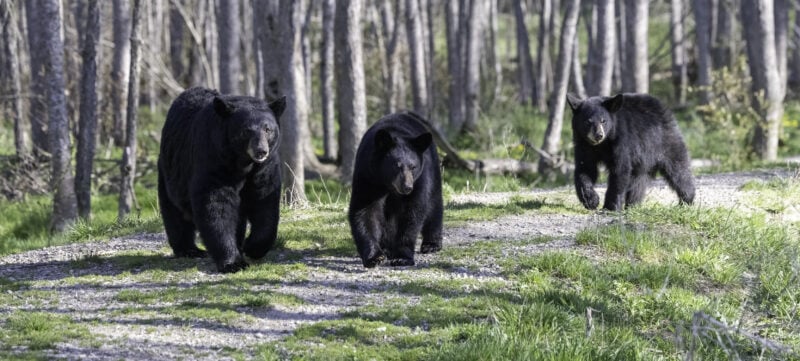
Wildlife officials say black bears are beginning to emerge from winter dens across New Jersey, and residents may start seeing them near homes and garbage cans as they search for food.
Trenton, NJ – Black bears across New Jersey are beginning to emerge from their winter dens as temperatures warm and food sources become available. Wildlife officials say March typically marks the start of increased bear activity throughout the state.
As bears wake from winter dormancy, they begin searching for food, which often brings them into neighborhoods where garbage, bird seed, and pet food are accessible.
Key Points
• Black bears in New Jersey typically become active again in March
• Most bear sightings occur between March and November
• Feeding black bears in New Jersey is illegal
Why bears appear in neighborhoods during spring

After months in winter dens, black bears emerge hungry and begin actively searching for food. Their powerful sense of smell can detect food from more than two miles away, often drawing them toward residential garbage cans and outdoor food sources.
Wildlife officials say the primary human-related food source for bears in New Jersey is unsecured garbage. Once bears learn to associate neighborhoods with food, they may repeatedly return to those areas.
Black bears are powerful animals capable of running up to 35 miles per hour. Adult male bears, known as boars, average about 400 pounds but can weigh more than 600 pounds, while females typically average around 175 pounds.
Where bears are most common in New Jersey
The largest concentrations of black bears live in the forested regions of northwestern New Jersey. Sussex, Warren, Passaic, and Morris counties provide ideal habitat with dense forests, wetlands, and natural food sources.
However, sightings are no longer limited to those areas. As the bear population grows, reports have been confirmed across much of the state, including suburban communities farther south and east.
Wildlife officials estimate more than 3,100 bears live in the region north of Interstate 78 and west of Interstate 287. Bears are highly adaptable and can live near human development if food sources are available.
Understanding bear behavior and the mating season
Black bears are generally solitary animals and tend to be most active during early morning and evening hours. They spend much of the spring and summer foraging for berries, insects, nuts, and other natural foods.
Mating season typically peaks in June and July, which is another time when bears may travel long distances and pass through residential neighborhoods. Cubs are born in winter dens in January and usually emerge with their mothers in April.
Despite their size, black bears usually avoid people and will often flee when encountered. Problems can occur when bears become accustomed to human food sources and lose their natural fear of people.
Wildlife officials remind residents that intentionally feeding black bears is illegal in New Jersey and can increase the risk of dangerous encounters. Securing garbage, removing bird feeders, and keeping outdoor food sources inaccessible are among the most effective ways to reduce bear activity near homes.