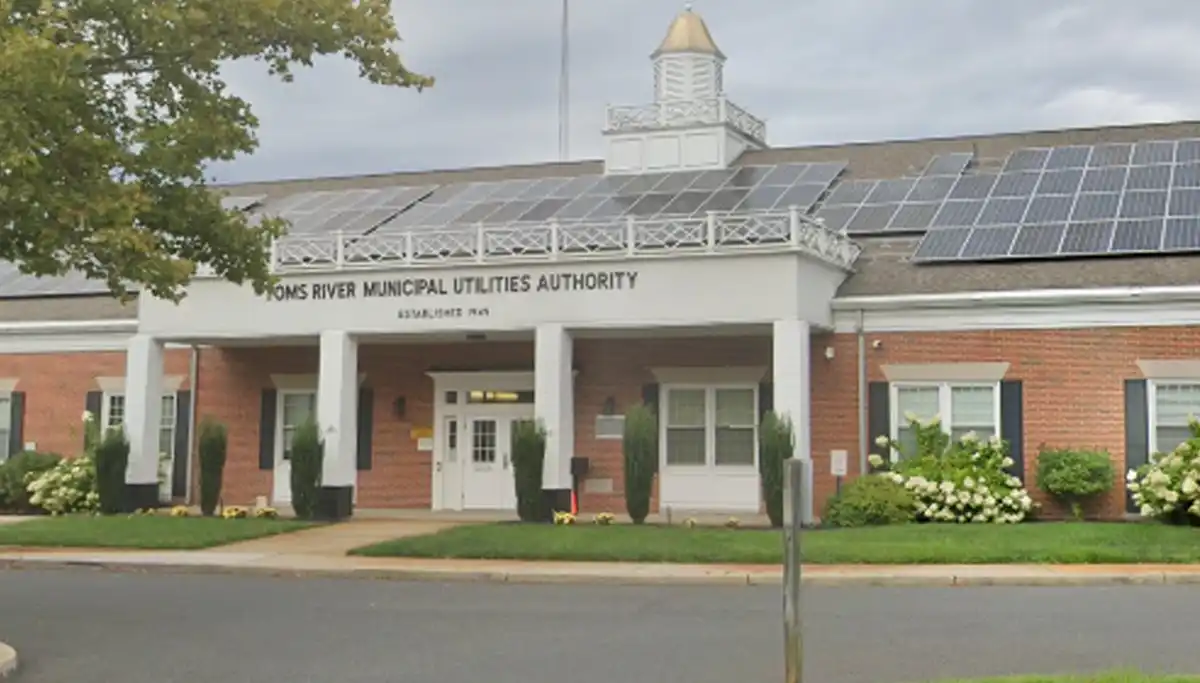
TOMS RIVER, N.J. – A long-running common sense battle over taxpayer-funded benefits for politically appointed, less-than-part-time members of the Toms River Municipal Utilities Authority now appears to be headed to court, where Mayor Daniel Rodrick is seeking to end what he says are illegal compensation packages for part-time and no-show commissioners.
Toms River Mayor Dan Rodrick said at a May 2026 meeting that he will seek a judge’s decision to end the longtime benefits program for those commissioners, citing a township ordinance which limits compensation to $2,000 per year per commissioner.
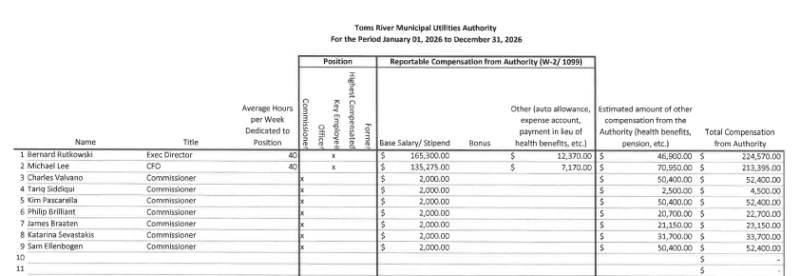
At the center of the dispute are health and pension benefits provided to several politically appointed commissioners who are paid a $2,000 annual stipend but receive benefit packages valued at up to $50,000 annually. According to the authority’s annual compensation disclosure, taxpayers are expected to spend roughly $250,000 this year on benefits and compensation for the board.
Two high-profile political officials are at the center of the controversy.

Free full-time medical benefits dwarf annual stipend
Under Toms River Township code governing statutory boards and commissions, MUA commissioners are limited to compensation of no more than $2,000 per year for their service. The commissioners are appointed to fixed terms and generally meet once each month.
Those meetings tend to last between 45 minutes to an hour or slightly over an hour.
Records filed by the authority show several commissioners receive health and pension benefits that significantly exceed their annual stipend. Two alternate commissioners, who serve only when regular members are absent, are also listed as receiving full benefit packages despite their limited role.
The disclosure indicates Commissioner Charles Valvano receives approximately $50,400 in benefits in addition to his $2,000 stipend, for total compensation of about $52,400.
Commissioner Phil Brilliant received total compensation of approximately $22,300, including more than $20,000 in benefits, according to the filing. Alternate Commissioner James Drakatos was reported to receive roughly $23,500, including more than $21,000 in benefits.
Brilliant, who has drawn the most criticism for his political involvement and business bankruptcy, was reappointed in 2026 by the anti-Rodrick council members. Brilliant, who rails against what he calls corruption in Toms River government, continues collecting free public benefits for working just one hour per month under the existing political patronage welfare system, according to the mayor.
According to the 2026 Toms River MUA budget, Ocean County Commissioner Sam Ellenbogen, head of the Toms River Jewish Community Council, who serves as one of those alternate commissioners, also receives $50,400 in health benefits. Ellenbogen was elected to county commissioner in 2025.
Alternates only serve in the absence of a regular commissioner.
Mayor alleges benefits violate township ordinance
Rodrick has twice sought to eliminate the benefit packages through legislative action, arguing they violate township ordinance because the statutory salary cap does not authorize additional taxpayer-funded compensation.
Last December, a proposal to dissolve the MUA failed after then-Councilman Justin Lamb cast the deciding vote against the measure.
More recently, Rodrick proposed legislation aimed at ending the benefits, but the measure failed to advance after opposition from Council members Clinton Bradley, David Ciccozi, Tom Nivison and Robert Bianchini.
The mayor said he will be moving to file a legal challenge in Ocean County Superior Court asking a judge to decipher the ordinance and determine whether the benefits are lawful under township code.
Among those named in the public dispute by the mayor is Commissioner Phil Brilliant, who previously led an unsuccessful effort to recall Rodrick as mayor. Brilliant has fought Rodrick since the mayor began discussions about ending the free benefits packages when he took office in 2024.
Brilliant has since filed lawsuits againt the township and the mayor, and led the failed recall effort since the mayor took office and announced he will continue to fight to end healthcare benefits for the MUA commissioners.
Rodrick has estimated that, when measured against the time commissioners spend attending monthly meetings, the compensation equates to over $4,000 per hour.
Why it matters
The impending legal challenge could determine whether the Toms River MUA may provide taxpayer-funded health and pension benefits to appointed board members whose salaries are otherwise capped by local ordinance. A ruling in the case may also affect how compensation is structured for similar appointed authorities throughout New Jersey.
The compensation figures cited in this article are drawn from the Toms River Municipal Utilities Authority’s annual financial disclosure for commissioner compensation. The legality of the benefits remains the subject of pending litigation, and no court has yet ruled on the mayor’s claims.
Update: 8/2/2026 – At the May 2026 council meeting, Mayor Rodrick had stated that he was immediately filing a lawsuit and a court challenge. As of July, the lawsuit has not yet been filed.
Phil Brilliant and the other commissioners are still taking public healthcare plans after attending just one meeting per month.