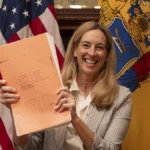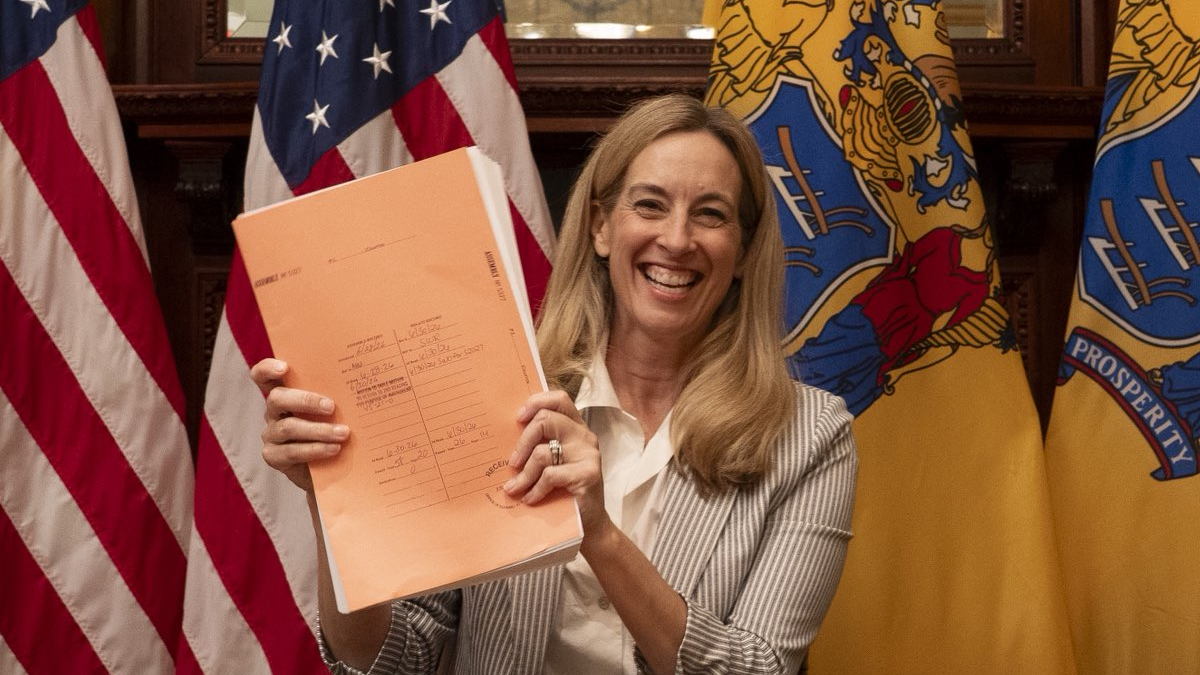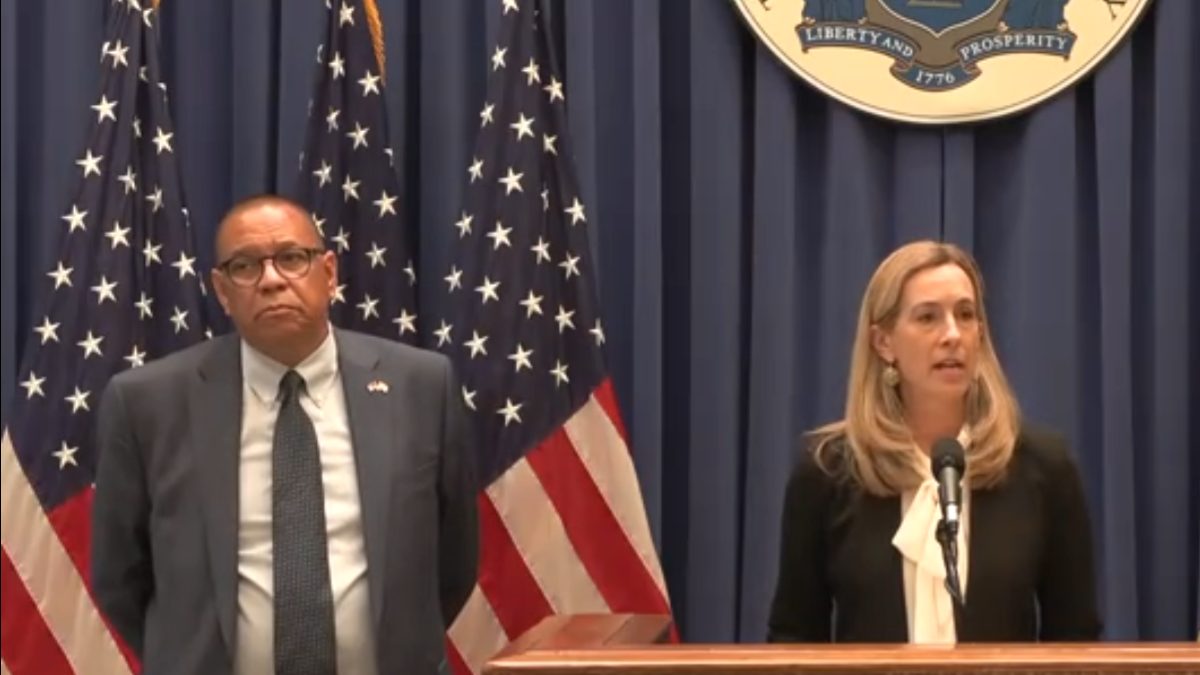
Trenton, NJ – A dispute between New Jersey Gov. Mikie Sherrill and the U.S. Department of Justice escalated Tuesday after a top federal official responded “Challenge accepted” to the governor’s refusal to provide personal information about thousands of New Jersey residents.
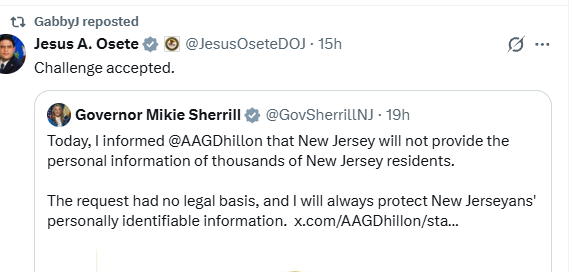
The exchange follows Sherrill’s announcement that New Jersey would not comply with a Justice Department request seeking information connected to voter registration records after the state disclosed a motor vehicle system error that improperly registered thousands of individuals between June 2023 and June 2024.
Governor cites federal and state privacy laws
In a July 28 letter to Assistant Attorney General Harmeet K. Dhillon, who leads the Justice Department’s Civil Rights Division, Sherrill said the federal request lacked legal authority and would violate privacy protections.
“With no legal basis, you requested that I provide extensive personal information about thousands of New Jersey residents,” Sherrill wrote.
The governor cited the federal Privacy Act and the Driver’s Privacy Protection Act, along with several New Jersey statutes, arguing those laws prohibit the disclosure of personally identifying information requested by the Justice Department.
Sherrill also said New Jersey election officials are working with county election offices to correct the voter registration errors caused by the New Jersey Motor Vehicle Commission system issue.
DOJ official responds on social media
After Sherrill publicly announced the state’s position, Jesus Osete, Principal Deputy Assistant Attorney General for Civil Rights, reposted the governor’s statement on social media with the brief response, “Challenge accepted.”
The Justice Department has not yet publicly elaborated on the statement or announced whether it intends to pursue legal action to obtain the requested records.
Sherrill’s letter references pending federal litigation, United States v. Caldwell, stating that New Jersey has already responded to filings in that case while reaffirming the state’s commitment to “free, fair, and secure” elections.
Background of the dispute
The disagreement stems from New Jersey’s recent disclosure that a system error at the Motor Vehicle Commission resulted in the improper voter registration of thousands of individuals through no fault of their own.
State officials have said they are working to identify and correct those records. The Justice Department subsequently requested information related to the affected registrations as part of its review.
It remains unclear whether the federal government will seek the information through court proceedings or whether the dispute will be resolved through ongoing litigation.
The dispute highlights a growing legal conflict between federal election oversight efforts and state privacy protections. At issue is whether the Justice Department has the legal authority to obtain personal information connected to New Jersey’s voter registration error and how federal privacy laws intersect with election administration responsibilities.