PRINCETON, N.J. — If you were a Virginia champagne socialist living in Montclair, New Jersey, and serving as governor, you would probably want to move out too.
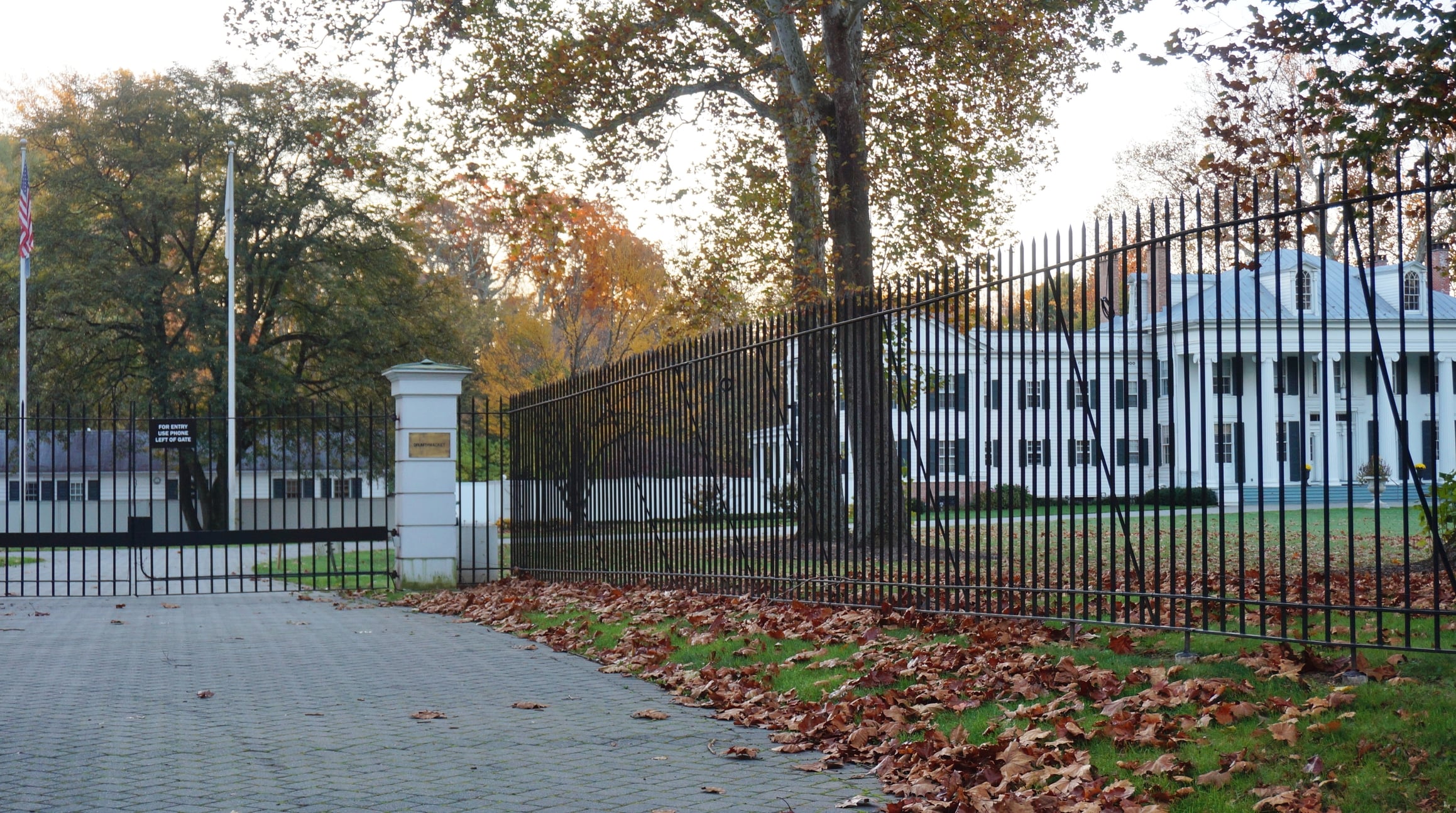
Gov. Mikie Sherrill has officially moved into Drumthwacket, becoming the first New Jersey governor in 22 years to make the Princeton estate her family’s full-time residence.
Sherrill and First Gentleman Jason Hedberg announced this week that they had completed the move, with the governor saying they were “thrilled to call it home” while noting the residence places her closer to the State House and Trenton.
While the move marks a modern milestone for New Jersey government, it also shines a spotlight on one of the state’s most historically significant—and complicated—homes.
Built in 1835, Drumthwacket was commissioned by Charles Smith Olden, a Princeton businessman who accumulated much of his wealth while working as a merchant in antebellum New Orleans, before the Civil War, in the height of slave labor in the Deep South, before returning to New Jersey. According to the official history published by Drumthwacket, Olden admired the Greek Revival homes on the slave plantations he encountered in Louisiana, and his Princeton mansion was designed to reflect that architectural style, which was heavily associated with Southern plantation estates.
The mansion’s official educational materials state that Olden’s design was inspired by “plantation architecture” he observed during his years in Louisiana.
Although the architecture carries clear Southern influences, historians have not established that Drumthwacket was itself a plantation, that enslaved labor built the mansion, or that Olden personally enslaved people. Those claims are not supported by available historical records, but there is no documentation to disprove those allegations either.
A governor’s mansion with Civil War roots
Olden would later become New Jersey’s governor in 1860 as the nation descended into civil war. New Jersey was not exactly a slave-friendly state under Olden’s reign.
His political record reflects the complicated position many Northern politicians occupied before and during the Civil War. Historical records indicate Olden opposed the expansion of slavery into new territories but supported enforcement of the Fugitive Slave Act, which required escaped enslaved people to be returned to their enslavers.
Olden also participated in the Washington Peace Conference of 1861, an unsuccessful attempt to avoid civil war through compromise with Southern states.
When President Abraham Lincoln issued the preliminary Emancipation Proclamation in 1862, Olden declined to join several Northern governors publicly endorsing the measure.
At the same time, Olden remained loyal to the Union and played a leading role in organizing New Jersey troops during the Civil War, making his legacy far more nuanced than either staunch abolitionists or Southern sympathizers of the era.
Today, that history remains embedded in the walls of Drumthwacket.
First full-time resident in more than two decades
Although Drumthwacket became New Jersey’s official governor’s residence in 1981, relatively few governors have actually lived there full time. Most recent governors had no reason to live there. They were successful and wealthy and had nice long-standing family homes they preferred to live in.
Sherrill, who has no real ties to New Jersey decided to make that move and buck the trend.
Gov. Jim Florio became the first governor to make Drumthwacket his permanent residence in 1990. Gov. Jim McGreevey moved into the mansion in 2002 and was the last governor to use it as his family’s primary home before leaving office in 2004.
Former Gov. Jon Corzine stayed there temporarily while recovering from injuries sustained in his 2007 automobile crash but otherwise maintained his private residence.
Former Govs. Chris Christie and Phil Murphy primarily used Drumthwacket for ceremonial events, meetings and official entertaining while continuing to live in their well-established family homes.
Sherrill therefore becomes the first governor in roughly 22 years to once again establish the mansion as the governor’s full-time residence.
For many New Jersey residents, Drumthwacket is simply the governor’s mansion. For historians, however, it represents a unique intersection of New Jersey politics, Civil War history and the state’s often-overlooked connections to the antebellum South.
- Gov. Mikie Sherrill has become the first New Jersey governor in 22 years to live at Drumthwacket full time.
- Drumthwacket was built in 1835 by future Gov. Charles Smith Olden.
- Official Drumthwacket history says Olden modeled the mansion after Greek Revival homes and plantation architecture he admired while living in New Orleans.
- There is no documented evidence that Drumthwacket was a plantation or was constructed using enslaved labor.
- Olden supported the Union during the Civil War but also supported enforcement of the Fugitive Slave Act and declined to endorse Lincoln’s preliminary Emancipation Proclamation.
FAQ
- Why is Sherrill’s move significant?
- She is the first New Jersey governor since Jim McGreevey to make Drumthwacket her full-time residence.
- Was Drumthwacket a plantation?
- No evidence has established that the property operated as a plantation.
- Was the mansion built by enslaved people?
- Available historical records do not establish that enslaved labor built Drumthwacket.
- Why is the mansion connected to plantation architecture?
- Official Drumthwacket history states Charles Smith Olden modeled the home after Greek Revival residences and plantation architecture he admired while living in antebellum New Orleans.
Sources: Drumthwacket, Drumthwacket History Timeline, Drumthwacket Educational Materials, New Jersey Militia Museum