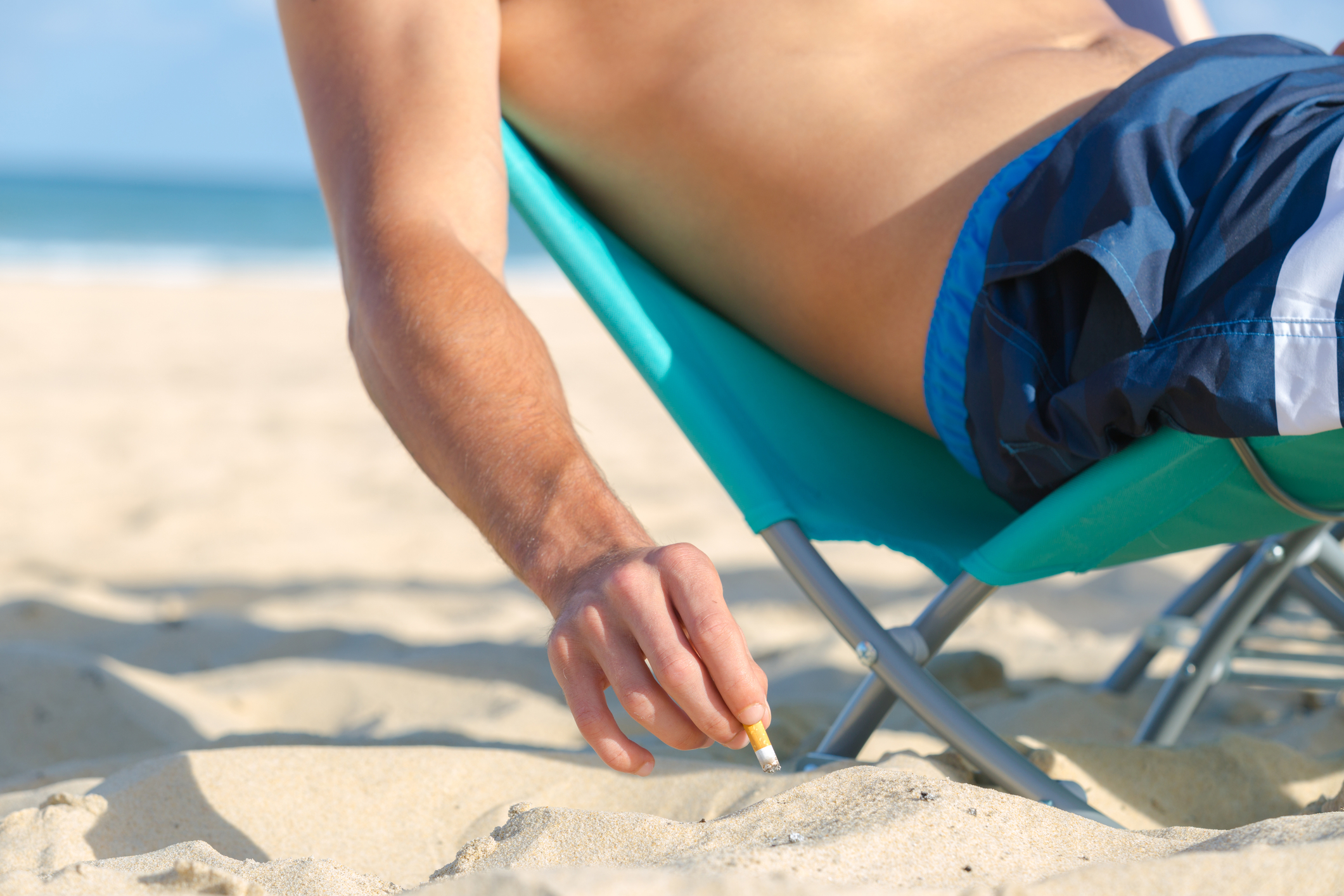
SEASIDE HEIGHTS, NJ – The days of building a sandcastle on New Jersey beaches and finding cigarette butts is over. At least it should be, but many vacationers are not familiar with a New Jersey law that prohibits smoking cigarettes on the beach.
New Jersey is renowned for its beautiful beaches, attracting visitors from near and far. To preserve the pristine nature of these coastal gems and promote public health, the state has implemented laws to prohibit smoking and the use of cannabis on its beaches. In this blog post, we will explore the reasons behind these regulations and the positive impact they have on beachgoers and the environment.
Smoking has long been recognized as a significant health hazard, not only for smokers but also for those exposed to secondhand smoke. To safeguard the well-being of beach visitors, the New Jersey legislature enacted the Smoke-Free Air Act in 2006, banning smoking on public beaches across the state. This law aims to protect individuals from the harmful effects of tobacco smoke and create a healthier environment for all.
That law was updated in 2018 by Governor Phil Murphy, which banned smoking on the beach completely and added stiff penalties.
The ban on smoking on New Jersey beaches serves several essential purposes. First and foremost, it reduces the risk of secondhand smoke inhalation, especially for families with young children who frequent these areas. Secondhand smoke contains numerous toxic chemicals that can cause respiratory problems, trigger allergies, and even increase the risk of cancer.
Additionally, the prohibition helps to prevent litter and maintain the cleanliness of our beaches. Cigarette butts, which take years to decompose, not only spoil the natural beauty of the shore but also pose a threat to marine life if they end up in the ocean. By eliminating smoking on beaches, we can reduce the amount of cigarette waste and preserve the integrity of our coastal ecosystems.
In addition to smoking, the use of cannabis is also prohibited on New Jersey beaches. Despite the legalization of recreational cannabis in the state, certain restrictions apply, including where it can be consumed. The prohibition on cannabis use on beaches aligns with the effort to promote responsible and safe cannabis consumption. It ensures that beachgoers can enjoy their time without the potential discomfort or inconvenience caused by cannabis smoke.
The ban on smoking and cannabis use on New Jersey beaches offers several key advantages. First, it creates a healthier and more enjoyable environment for all visitors, including families, children, and individuals with respiratory sensitivities. The clean air and absence of smoke enhance the overall beach experience.
The restriction contributes to the preservation of our beaches’ natural beauty. By reducing the amount of cigarette butts and cannabis-related waste, we can help maintain the cleanliness of our shores and protect the wildlife that depends on these fragile ecosystems.
The laws prohibiting smoking and cannabis use on New Jersey beaches are vital steps toward creating a healthier, cleaner, and more enjoyable environment for everyone. By safeguarding public health and preserving the beauty of our coastal areas, we can ensure that future generations will continue to enjoy the splendor of our beaches for years to come.
So, when you visit New Jersey’s breathtaking shores, remember to respect these regulations and help contribute to a positive beachgoing experience for all.
The fines for smoking on a New Jersey beach are as follows:
- First offense: $250
- Second offense: $500
- Subsequent offenses: $1,000 for each violation
These fines are intended to discourage smoking in prohibited areas and to ensure compliance with the smoking ban on New Jersey beaches.




The Best Pizza in Toms River According to the One Bite Pizza App
34-Year-Old Woman Fatally Shot In Southeast D.C.