
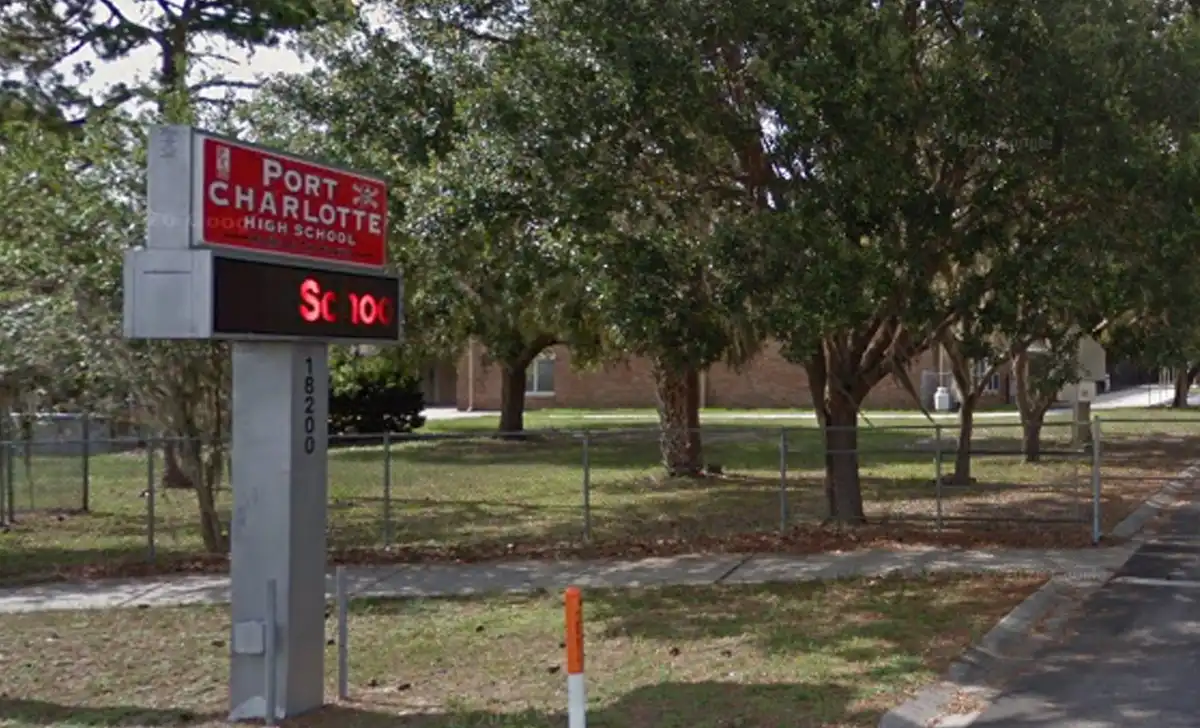
Charlotte County Sheriff Bill Prummell says false emergency calls have triggered repeated police responses, including incidents at Port Charlotte High School, and warns that some perpetrators are seeking online recognition for the disruption they cause.
PORT CHARLOTTE, FL — A series of false emergency reports targeting schools and other locations in southwest Florida has prompted Charlotte County Sheriff Bill Prummell to warn residents about a dangerous trend known as swatting, in which callers invent violent emergencies to provoke armed police responses.
The warning followed multiple lockdowns at Port Charlotte High School during the week of October 8, when authorities investigated threats that were determined to be swatting calls.
Prummell said his department has experienced numerous incidents and wants residents to understand why offenders make the calls and how public reactions can encourage additional hoaxes.
“We have been experiencing numerous Swatting calls recently and I wanted to take some time to explain the motives behind most calls received,” Prummell said in an October 8 statement published by the Charlotte County Sheriff’s Office.
False emergency calls designed to trigger armed police responses
Swatting occurs when someone deliberately reports a fabricated emergency at another person’s location, often claiming a shooting, hostage situation or other violent crime is underway.
The false reports can send armed officers racing to homes, schools or businesses where no actual emergency exists.
Prummell said the goal is often to harass, frighten or retaliate against a target.
Some offenders, however, are motivated by the attention they receive within online communities.
“The primary goal of offenders committing swatting calls is to cause severe disruption, harassment, or retaliation against a specific target,” the sheriff said.
The incidents can put unsuspecting residents and responding officers in dangerous situations while diverting emergency resources from legitimate calls.
Sheriff says online communities reward police responses
Prummell warned that swatting has become a form of competition within certain online gaming, hacking and social media communities.
According to the sheriff, some groups reward perpetrators with recognition based on the severity of the law enforcement response.
An ordinary patrol response may attract less attention than a large-scale operation involving SWAT officers, police dogs or evacuations.
The sheriff described an informal system in which offenders pursue status by generating increasingly disruptive responses.
Livestreams and recordings can also serve as evidence of an attack, allowing offenders to circulate footage within private online groups.
Prummell said some perpetrators seek titles, special privileges or recognition in online communities after successfully causing a police response.
The department did not identify a particular online group responsible for the recent Charlotte County incidents.
Port Charlotte High School targeted by false threats
The sheriff’s warning came after multiple false emergency reports prompted lockdowns at Port Charlotte High School.
The incidents disrupted school operations and required authorities to investigate reports of threats to public safety.
Prummell’s statement did not identify suspects, announce arrests or establish whether the recent incidents were connected.
The repeated threats illustrate the challenge for law enforcement agencies, which must treat potentially serious emergency reports as credible until officers can determine whether a genuine threat exists.
Sheriff urges public not to reward swatting suspects with attention
Rather than concentrating public attention on the people responsible, Prummell encouraged residents, news organizations and online communities to focus on the victims and consequences.
He advised people not to repeatedly publicize suspects’ online identities or circulate police response footage for entertainment.
The sheriff also encouraged residents to report suspicious online activity to the appropriate platforms and law enforcement agencies instead of amplifying posts claiming responsibility.
“A key way to reduce swatting is to remove the attention and recognition that offenders are seeking,” Prummell said.
His message also extended to schools and media organizations that may inadvertently increase an offender’s notoriety by circulating dramatic videos of emergency responses.
Sheriff’s office calls for accountability and public awareness
The department emphasized that swatting is criminal harassment, not a harmless prank.
False reports can place people in danger, create panic and interrupt emergency services.
Prummell said reducing the recognition offenders receive could help discourage future incidents, although the sheriff did not provide specific data measuring that approach.
“If attention is the reward, reducing attention can reduce the incentive,” he said.
“The focus should be on protecting victims, holding offenders accountable, and educating the public—not giving perpetrators the recognition they may be seeking.”
The Charlotte County Sheriff’s Office continues encouraging residents to report legitimate threats while warning against deliberate false emergency calls.