
A law dating back to 1949 keeps gasoline attendants at every New Jersey station, even after Oregon abandoned its statewide prohibition and lawmakers introduced new legislation allowing motorists to choose self-service.
NEW JERSEY — Drive into a gas station almost anywhere in America, and drivers get out, swipe their cards, and pump their own gasoline. Cross into New Jersey, and the rules change.
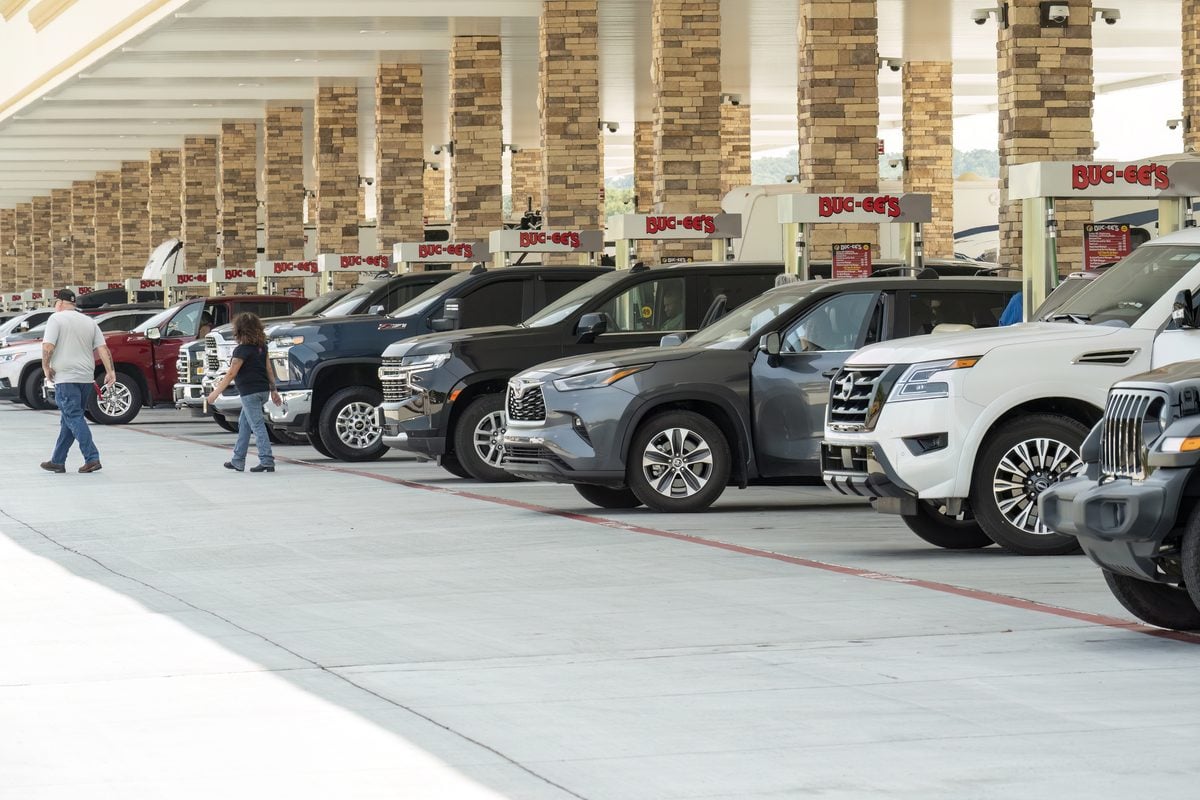
While many in New Jersey are fans of the I-95 pitstop chain Buc-ee’s, chances are that, because of New Jersey’s laws and political makeup, the chain will not be launching in the Garden State anytime soon.
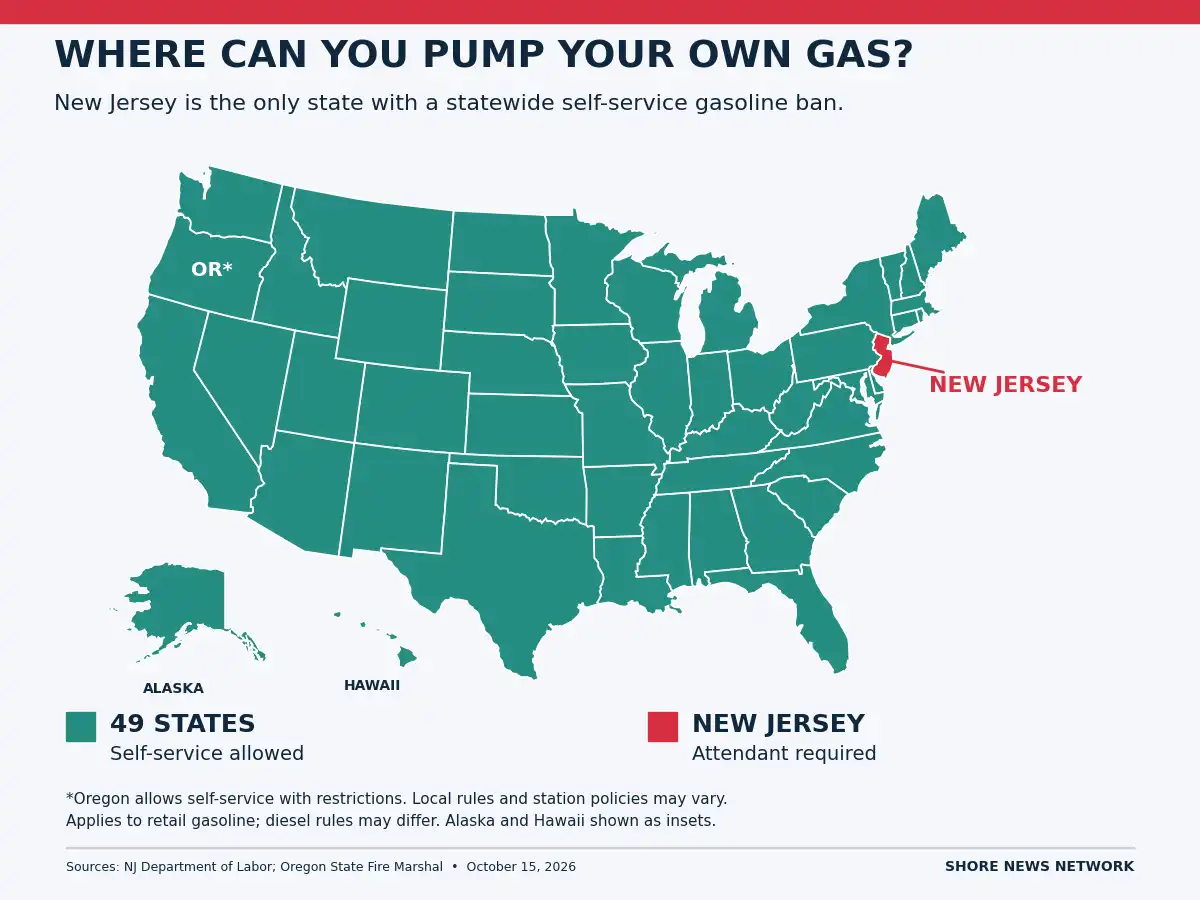
In the Garden State, customers must wait for an attendant to fill their tanks, making New Jersey the only state in the country that still prohibits motorists from pumping their own gasoline at retail stations.
The law dates back to 1949, when state lawmakers adopted a prohibition on self-service gasoline sales.
More than 75 years later, the restriction remains in place despite changes in technology, consumer habits and gasoline station operations nationwide.
But lawmakers are once again attempting to give New Jersey motorists a choice.
Why did New Jersey ban self-service gasoline?
New Jersey’s prohibition originated during an era when full-service gasoline stations were common throughout the country.
The 1949 legislation established restrictions on who could dispense gasoline, with safety concerns playing a central role in the law’s justification.
Patrick Murray, director of the Monmouth University Polling Institute, previously explained to Shore News Network that economic competition also influenced the legislation.
“There were forces involved who wanted to protect their interests in terms of the smaller gas owners against mega gas stations that were starting to be built at the time that would require self-service to be profitable,” Murray said.
The state’s current Retail Gasoline Dispensing Safety Act continues to emphasize fire prevention, proper handling of flammable liquids and consumer protection.
Under the law, gasoline station employees must receive training, follow established safety procedures and prevent customers from operating gasoline pumps.
Oregon changed its law, leaving New Jersey alone
For decades, New Jersey and Oregon were the only states prohibiting motorists from pumping their own gasoline.
That changed in August 2023 when Oregon enacted legislation allowing self-service fueling.
Oregon’s new rules permit motorists in 20 rural counties to pump their own gasoline at any station, while stations in the remaining 16 counties can offer self-service at up to half of their pumps.
Attended fueling remains available under the state’s requirements.
New Jersey never followed Oregon’s example, leaving motorists here subject to a restriction that no other state maintains statewide.
New legislation would finally let drivers pump their own gas
State Sen. Jon Bramnick has introduced Senate Bill S1047 during the 2026–2027 legislative session.
The measure would allow gasoline stations to offer self-service, full-service or a combination of both.
Stations with more than four dispensers would be required to offer attended fueling between 8 a.m. and 8 p.m. whenever they are open during those hours.
The legislation would also maintain safety standards and training requirements for gasoline station operations.
Supporters argue that allowing self-service could reduce waiting times, give drivers greater convenience and potentially lower operating costs.
Opponents of changing the longstanding system have raised concerns about attendant jobs, customer convenience and the availability of full-service fueling for older motorists and people with disabilities.
Would self-service gasoline actually be cheaper?
Whether allowing customers to pump their own gasoline would reduce prices remains an important question.
Self-service operations could reduce labor expenses for station owners, particularly during overnight hours.
However, lower operating costs do not necessarily guarantee lower retail prices. Gasoline prices also depend on wholesale fuel costs, competition, taxes and individual station pricing decisions.
New Jersey’s existing law explicitly states that lawmakers found no conclusive evidence that self-service gasoline provides sustained price reductions for consumers.
Whether that decades-old rationale still applies is part of the continuing debate.
Why has New Jersey refused to change?
The issue has repeatedly crossed party lines, with lawmakers from both parties showing reluctance to eliminate a service that many New Jersey drivers have used their entire lives.
Some motorists appreciate remaining inside their vehicles during winter storms, heavy rain and extreme summer heat.
Others argue that being required to wait for an attendant is inconvenient, particularly when stations are busy or short-staffed.
Previous efforts to change the law have failed to secure enough political support.
As of October 2026, S1047 remains proposed legislation, and New Jersey’s prohibition on self-service gasoline remains in effect.
For now, New Jersey drivers can travel across the country and pump their own gasoline almost anywhere else, but must hand the job over to an attendant when they return home.
And for that reason, Buc-ee’s will probably never come to New Jersey, as the cost of paying 45 attendants to pump gasoline is definitely not in their business plan.