
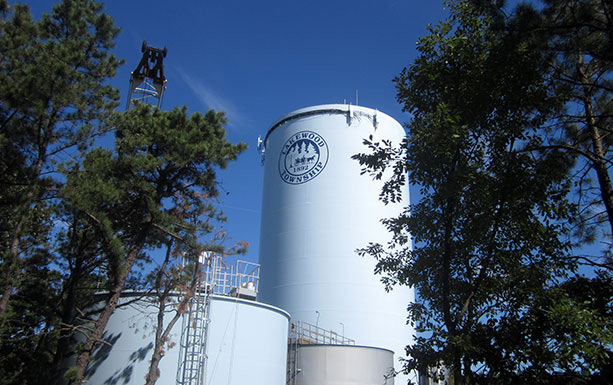
Lakewood MUA commissioners draw hefty pay and benefits despite part-time roles
LAKEWOOD, NJ – Commissioners at the Lakewood Municipal Utilities Authority (MUA) are receiving compensation and benefits packages that far exceed what’s typical for part-time board members who meet only once a month, according to figures from the agency’s newly adopted 2025 budget.
The report, filed with the New Jersey Department of Community Affairs and publicly available online, shows that the five-member board collectively earns tens of thousands of dollars annually in stipends, health benefits, and other compensation despite limited meeting schedules.
The investigation continues into MUA boards across the Jersey Shore, sparked by Toms River Mayor Dan Rodrick’s move to dissolve the Toms River MUA earlier this month. There, commissioners earn a salary, plus full medical benefits for working just a handfull of hours per year.
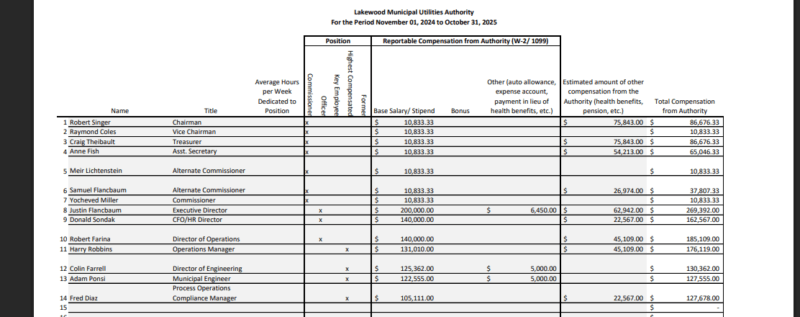
Chairman New Jersey State Senator Robert Singer and Vice Chairman and Lakewood Mayor Raymond Coles — both prominent local political figures — each receive a base stipend of $10,833, but Singer’s compensation reaches $86,976 once benefits and allowances are included.
Mayor Coles does not take benefits through the MUA.
Justin Flinchbaum, a commissioner on the Ocean County Election Board also receives medical benefits totalling $62,942.00 annually and a $200,000 salary. Flinchbaum is reportedly a close ally of convicted Ocean County GOP Chairman George Gilmore, who ironically also serves as Chairman of the Ocean County Election Board.
Treasurer Craig Theibault earns the same amount. Assistant Secretary Anne Fish receives $65,046 under the same structure.
High benefits, modest duties
The budget lists “estimated amount of other compensation from the authority” — including health benefits and pension costs — as the driving factor behind the six-figure totals. While the commissioners’ stipends remain modest, their full-time benefits packages account for the bulk of their pay.
Alternate commissioners Meir Lichtenstein, Samuel Flancbaum, and Yocheved Miller also receive payments and benefits, even though alternates typically attend only as needed.
The document shows MUA Executive Director Justin Flancbaum as the highest-paid official, collecting a salary of $200,000 plus $62,940 in benefits for a total of just over $200,000. CFO Donald Sandach follows with $185,567 in combined compensation.
Critics question oversight and fairness
Local taxpayers and transparency advocates have raised concerns over the spending, noting that MUA commissioners are appointed, not elected, and that their duties largely consist of attending monthly meetings and approving contracts, budgets, and water-sewer rates.
“This is an authority, not a full-time agency,” one resident said after reviewing the figures. “These kinds of benefits for part-time service are unheard for people who aren’t politically connected, even for full time benefits.”
The Lakewood MUA operates independently of the township government, managing water and sewer services for thousands of residents and businesses. Its annual budget exceeds $30 million, funded largely through customer rates rather than local property taxes.
Calls for reform likely to follow
The release of the budget has prompted calls for closer scrutiny of local authority compensation practices across New Jersey. State oversight officials have in the past urged utilities and housing boards to rein in benefit packages that mirror those of full-time employees.