
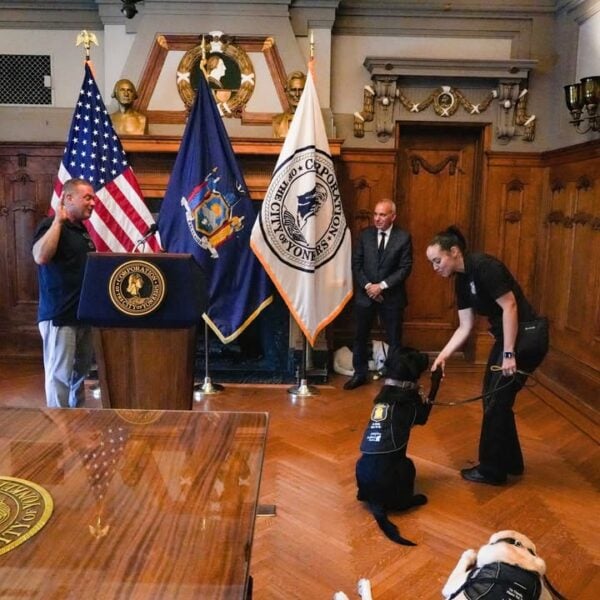
YONKERS, N.Y. – The Yonkers Police Department officially launched its new Facility Dog Program this week with the swearing-in of its first two Facility K9s, Nilsen and Gator, marking a new approach to supporting victims, strengthening community outreach, and promoting officer wellness.
Unlike traditional police K9s trained for patrol, narcotics detection, or explosives work, Facility Dogs are specially trained to provide comfort during traumatic events, assist victims and witnesses during interviews, support children affected by crime, and help officers and department personnel manage stress following critical incidents.
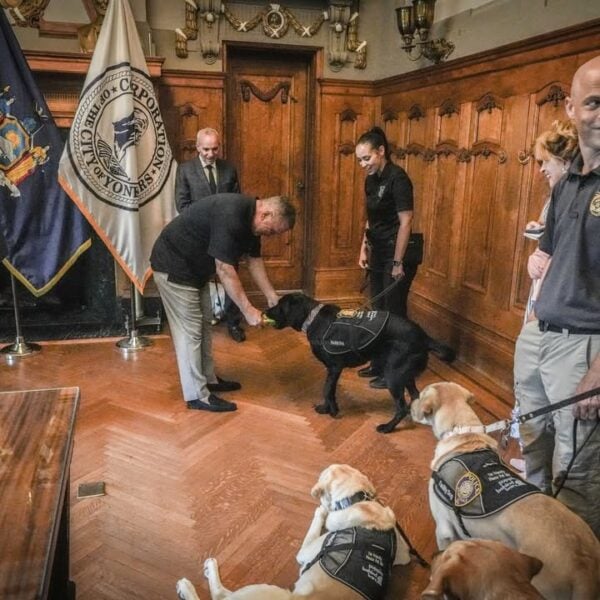
Nilsen will serve alongside Police Commissioner Christopher Sapienza, while Gator has been paired with Officer Genesis Vasquez of the department’s Domestic Violence Unit. Before beginning their duties, both handler teams completed a two-week certification program through Puppies Behind Bars.
Dogs trained through unique nonprofit partnership
The program was made possible through a partnership with Puppies Behind Bars, a nonprofit organization that breeds, raises, and trains service dogs through correctional facility programs across the country.
Nilsen and Gator were raised and trained at Green Haven Correctional Facility in Stormville, New York, where incarcerated participants spent more than a year helping prepare the dogs under the supervision of Puppies Behind Bars staff. The organization says the program not only produces highly trained service animals but also provides participants with vocational skills, responsibility, and opportunities to contribute to their communities.
Despite the significant cost of raising and training service dogs, Yonkers officials said both dogs were donated to the city at no cost through the generosity of Puppies Behind Bars and its supporters.
Leaders say dogs will strengthen community policing
Mayor Mike Spano said the new program reflects the city’s commitment to supporting residents during difficult moments.
“Public safety is about protecting people and supporting them through life’s toughest moments. It’s more than responding to emergencies; it’s about caring for people,” Spano said. “We’re proud to welcome Nilsen and Gator to the Yonkers Police Department. Thank you to Puppies Behind Bars for this incredible partnership and for reminding our community how important healing, comfort, and compassion are.”
Police Commissioner Christopher Sapienza said the dogs will become an important resource throughout the department.
“Facility Dogs represent another way we’re strengthening the way we serve our community,” Sapienza said. “Nilsen and Gator will provide comfort to victims, support officer wellness, and help build stronger connections with the people we serve. I’m grateful to Mayor Mike Spano and his administration for supporting this impactful program, and to Puppies Behind Bars for making it possible.”
Facility dogs becoming more common in policing
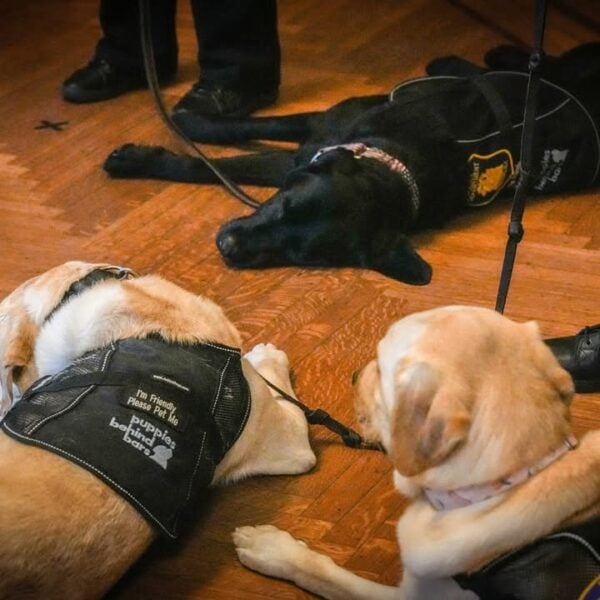
Law enforcement agencies across the country have increasingly incorporated Facility Dogs into victim services, school outreach, and crisis response programs. Their presence is intended to reduce anxiety during interviews, provide emotional support after traumatic incidents, and improve interactions between police officers and the communities they serve.
Yonkers officials noted the community recently witnessed the benefits of such programs when neighboring police agencies from Tuckahoe, Greenburgh, Scarsdale, and White Plains deployed their own Facility Dogs to assist following a tragic incident at a local school. The dogs provided comfort to students, faculty, first responders, and others affected by the event.
Officials said the experience reinforced the need for Yonkers to establish its own Facility Dog Program.
Why It Matters
Victims of crime, particularly children and survivors of domestic violence, often experience significant stress during investigations and interviews. Facility Dogs are increasingly used by law enforcement agencies to create a calmer environment that can help victims communicate more comfortably while also supporting officers responding to traumatic events.
The program also reflects a growing trend toward community-focused policing by expanding resources available beyond traditional law enforcement responsibilities.
Local Impact
Residents of Yonkers can expect to see Nilsen and Gator participating in schools, community events, victim assistance efforts, officer wellness initiatives, and responses to critical incidents. The program is intended to strengthen trust between the police department and the community while providing additional support during emergencies.
What Happens Next
Nilsen and Gator will immediately begin serving alongside their handlers in daily departmental operations. Their responsibilities will include assisting victims and witnesses, supporting investigations involving trauma, participating in community outreach events, visiting schools, and promoting officer wellness programs throughout the city.
Sources
- Yonkers Police Department
- Puppies Behind Bars
- Statements from Mayor Mike Spano
- Statements from Police Commissioner Christopher Sapienza
FAQ
- What are Facility Dogs?
Facility Dogs are specially trained service dogs that provide emotional support during investigations, interviews, crisis situations, and community events. - How are they different from police K9s?
Unlike patrol or detection dogs, Facility Dogs are not used for law enforcement operations such as tracking suspects or detecting narcotics. Their primary role is providing comfort and support. - Who are Yonkers’ first Facility Dogs?
Nilsen and Gator are the first Facility Dogs assigned to the Yonkers Police Department. - Who trained the dogs?
Puppies Behind Bars raised and trained the dogs through its correctional facility partnership at Green Haven Correctional Facility. - How were the dogs funded?
Yonkers officials said the dogs were provided to the city at no cost through Puppies Behind Bars and its supporters.
Key Points
- The Yonkers Police Department has sworn in its first two Facility Dogs, Nilsen and Gator.
- The dogs will support crime victims, children, officers, and community members during traumatic events and outreach programs.
- The new program was established through a partnership with Puppies Behind Bars, which donated the dogs to the city.