
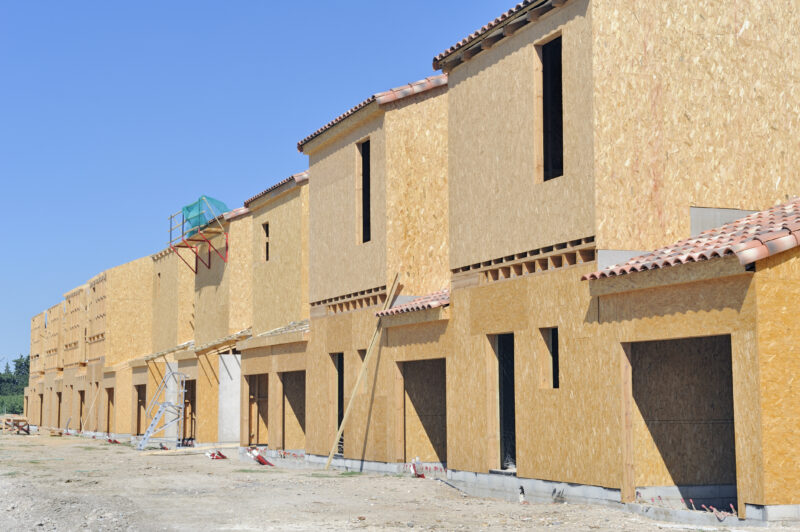
Jackson Township, New Jersey – A pair of high-profile development failures, combined with aggressive warehouse expansion and a sweeping new affordable housing plan, are pushing Jackson Township toward a tipping point that could redefine the community for decades.
Jackson Township officials—including the township council, planning board, and zoning authorities—are facing mounting scrutiny as residents watch two of the town’s most heavily promoted projects, Jackson Twenty-One and Adventure Crossing, fall far short of their original promises. What was pitched as balanced, destination-driven development has instead produced a landscape dominated by apartments, stalled entertainment concepts, and rapidly expanding logistics facilities.
The result is not just disappointment—it is a structural shift in how Jackson functions, with real consequences for traffic, infrastructure, environmental preservation, and quality of life.
Jackson Twenty-One: the original promise unravels
Jackson Twenty-One was supposed to be the crown jewel—a 900-acre, mixed-use “dream village” built around arts, culture, and community life. Developer Mitch Leigh envisioned theaters, restaurants, public greens, and a true downtown atmosphere anchored by nearly 3 million square feet of commercial space. Residential units were meant to come first, but only as a foundation for what would follow.
That sequence never materialized.
Instead, the township approved wave after wave of residential construction—apartments, townhomes, and affordable housing components—while the commercial core was repeatedly delayed, downsized, or effectively abandoned. కీల conditions tying housing growth to commercial delivery were waived or softened, removing the very safeguards that were meant to ensure balance.
What stands today is not a “dream village,” but a housing-heavy development with little of the cultural or economic infrastructure that justified it in the first place. No theaters. No performing arts center. No meaningful downtown. Just density.
Adventure Crossing: economic engine or unfinished gamble?
If Jackson Twenty-One represents a broken promise, Adventure Crossing represents an unfinished one.
Marketed as a regional destination near Six Flags Great Adventure, Adventure Crossing was supposed to bring a large-scale sports and entertainment complex to Jackson—complete with indoor facilities, restaurants, and family attractions. It was framed as an economic engine that would diversify the township’s tax base and create jobs.
Instead, the project has struggled under financial and legal pressure.
A key component—the sports dome—has faced foreclosure following a multimillion-dollar loan default, while additional parcels tied to the project have also entered foreclosure proceedings. At the same time, warehouses were approved early in the process, despite resident concerns about traffic and land use compatibility.
Now, the focus has shifted again—this time toward housing. Proposals for hundreds of residential units, including large-scale rental developments, have emerged as the project’s most viable path forward. Legal disputes between the developer and township over housing density caps continue into 2026.
The pattern is familiar: ambitious entertainment promises on the front end, with housing and warehouses filling the void when those promises stall.
—
Key Points
• Jackson Twenty-One and Adventure Crossing have both failed to deliver promised commercial and entertainment components
• Warehouse development is accelerating, bringing traffic and infrastructure strain
• A new affordable housing plan could trigger thousands of additional residential units
—
Warehouse growth becomes the default outcome
While major projects stall or shift, one type of development has moved forward with consistency: warehouses.
Jackson’s location near Interstate 195 has made it increasingly attractive for logistics and distribution centers. Industrial parks and large-scale warehouse facilities are now spreading across the township, reshaping both its economy and its physical landscape.
For local officials, warehouses offer ratables and quicker approvals. For residents, they bring a different reality—constant truck traffic, increased congestion on already burdened roads, and growing concerns about safety and noise.
This trend reflects a broader statewide and national pattern, where suburban and semi-rural communities are being transformed into logistics corridors. But in Jackson, it is happening alongside dense residential expansion, compounding the strain rather than balancing it.
The 2026 housing plan raises the stakes
Now, a new layer has been added: Jackson’s latest affordable housing obligations.
Under New Jersey’s fair-share requirements, the township has adopted a Housing Element and Fair Share Plan targeting roughly 1,000 new affordable housing units over the next decade. However, those units are only part of the equation. Because affordable housing is typically built within larger mixed-income developments, the real impact could be far greater.
Estimates suggest the plan could unlock between 8,000 and 9,000 additional market-rate units across multiple sites.
That level of growth would dramatically increase Jackson’s population, with some projections suggesting the township could approach 200,000 residents within a decade. Such an increase would place enormous pressure on schools, roadways, emergency services, water and sewer systems, and environmental resources—particularly in sensitive areas like the Pinelands.
State mandates require compliance, but they do not dictate how aggressively municipalities approve additional density beyond those requirements. That distinction is now at the center of the debate.
A pattern residents can no longer ignore
Taken together, these three forces—failed mixed-use execution, warehouse expansion, and aggressive housing growth—form a clear pattern.
Projects are approved with broad, appealing visions. Key commercial or recreational components are delayed or diminished. Residential units and warehouses move forward regardless. Infrastructure struggles to keep pace. And each new round of approvals builds on the last.
This is not simply about growth—it is about imbalance.
Jackson is not alone in facing these pressures, but the scale and speed of change in the township have made the consequences especially visible. What was once marketed as thoughtful, phased development has instead created a patchwork of high-density housing and industrial use, with limited cohesion or long-term planning discipline.
What happens next
Jackson Township officials now face a narrowing window to recalibrate.
Future approvals will determine whether the township continues on its current trajectory or begins to enforce the kind of balanced development originally promised. That includes revisiting conditions tied to mixed-use projects, aligning infrastructure investment with growth, and ensuring that commercial and community amenities are not treated as optional.
At the same time, ongoing litigation tied to Adventure Crossing, as well as reviews by agencies like the New Jersey Pinelands Commission, could shape how and where future development proceeds.
For residents, the stakes are no longer theoretical. The changes are visible—in traffic, in overcrowded systems, and in the physical transformation of the township itself.
Jackson’s future is still being written, but the direction is clear. The question now is whether local leadership will continue to react to development pressures—or finally assert control over them.