Jackson Township, NJ – A technical discussion about septic systems took center stage during a recent Jackson Township Planning Board meeting when longtime resident Raymond Tremer III urged board members to take a closer look at how advanced Pinelands wastewater systems are evaluated in land use applications, in particular to a project in Jackson where three private schools have been approved to be built.
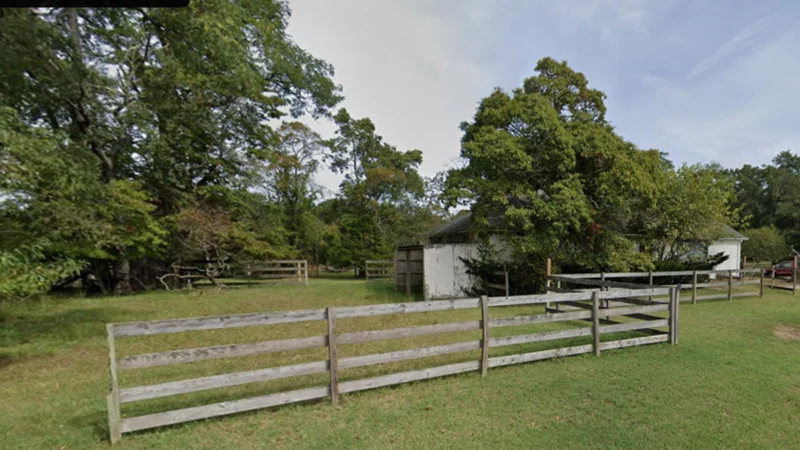
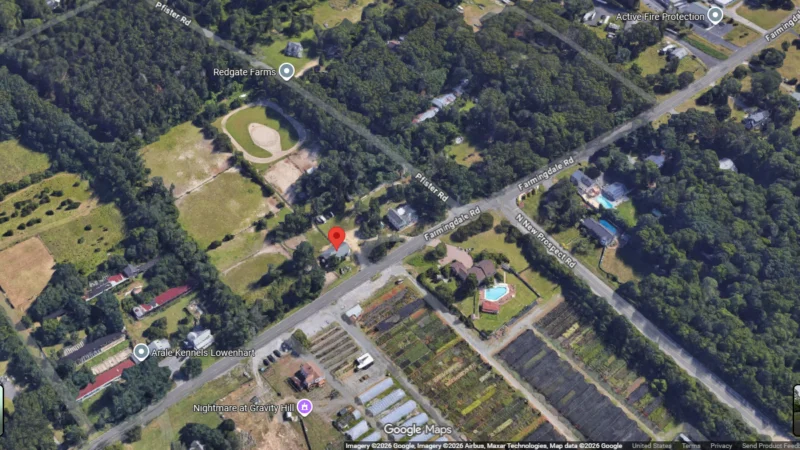
The property lies across the street from Cicconi Farms, on Farmingdale Road. That project also received a one-year extension to build. The owner, WB Ocean 26, is a New Jersey LLC based out of Brooklyn, New York.
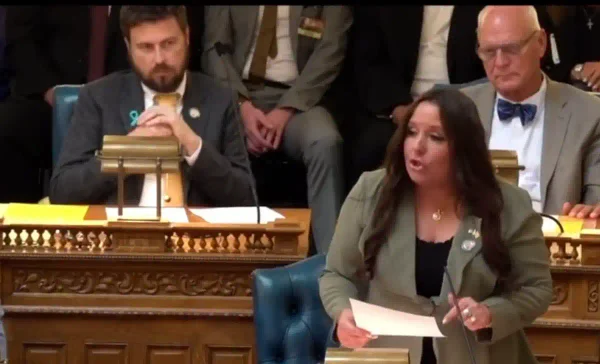
Tremer, who serves on the township’s Environmental Commission and is also a member of the Jackson Township Zoning Board, appeared before the Planning Board as a private citizen during public comment. Drawing on his experience installing septic systems, he said advanced treatment technology is often misunderstood by both applicants and the public.
Before beginning his remarks, Tremer thanked Council Liaison Kenneth Bressi for raising questions earlier in the meeting about septic systems used in the environmentally sensitive Pinelands region.
Cleaner wastewater does not mean less wastewater
Tremer explained that a conventional residential septic system consists of a tank where wastewater settles before flowing into a leach field.
“The normal house effluent goes into a tank,” Tremer said. “It just mixes up and goes into a field and spreads out.”
A Pinelands-approved advanced treatment system, he explained, adds another stage of treatment.
“It is basically a very small sewage treatment plant,” he said.
Wastewater moves through multiple treatment chambers before reaching the disposal field, breaking down more contaminants and producing cleaner discharge into the surrounding soil.
That cleaner discharge benefits groundwater quality, particularly within the Pinelands National Reserve, where environmental regulations require enhanced wastewater treatment for many developments.
However, Tremer stressed that the advanced treatment process does not reduce the amount of wastewater entering the system.
“There is a misconception that has been brought to the Boards many times that this creates less impact and we could do a lot more with less,” Tremer told the board.
“It is not true.”
Treatment quality and system capacity are different
Tremer said the distinction between treatment quality and hydraulic capacity is important when reviewing development applications.
“It still has the same amount of water going in it, the same amount of stuff,” he said.
“What it does is breaks down more of the effluent which gives a cleaner product going out into the same size field.”
Because the wastewater volume remains unchanged, he argued that advanced treatment systems should not automatically be viewed as capable of serving significantly larger facilities simply because they provide higher-quality treatment.
“So it does not change the demand,” Tremer said.
Practical experience shapes concerns
Tremer based his comments on years of field experience.
He told board members he has installed advanced Pinelands septic systems for approximately five years and has completed more than 250 installations.
“With over 250 systems under my belt, I will call myself a semi-professional,” he said.
While noting he was not appearing as an engineering expert, Tremer said his hands-on experience has led him to question wastewater calculations presented during some development applications.
School wastewater calculations questioned
As an example, Tremer compared the proposed septic system for the school project with standards commonly used for large homes.
“For a ten-bedroom house they demand a Pinelands system, a 2,000 gallon tank,” he said.
“How many people are in a ten-bedroom house? Fifteen maybe.”
He questioned how a similarly sized system could adequately serve a school with substantially higher daily occupancy.
“So, how could 150 children use the same system?”
Tremer said he believes planning boards should receive more detailed engineering support for septic capacity calculations before granting approvals.
“I have always said that we need better proof of calculation of these systems,” he said.
Debate centered on proposed subdivision
Tremer’s comments came during a hearing on an application seeking to modify an already-approved private school development by dividing it into three separate lots.
During deliberations, Board Attorney Doug Klee discussed procedural issues involving the proposal, including whether roadway realignment required by Ocean County could be handled separately from the requested subdivision.
Klee said that while certain roadway adjustments might be addressed through other processes, the subdivision itself would still require Planning Board approval.
Applicant attorney Donna Jennings said the applicant preferred to move forward with a vote on the application as submitted rather than remove the subdivision component.
Board Engineer Kenneth Bressi acknowledged that the proposed roadway improvements represented a positive aspect of the plan but expressed concern over creating three undersized lots without demonstrating a hardship.
Board members cite planning concerns
Several board members said their concerns extended beyond the septic system.
Vice Chair Joseph Sullivan said creating multiple school properties served exclusively by a local roadway would conflict with Jackson Township’s Master Plan.
“I do not like the idea of setting a precedence that schools can be allowed on local roadways exclusively,” Sullivan said.
Lisa DeMarzo questioned why the previously approved development needed to be divided into separate parcels.
“There is no question in my mind that by putting out three separate lots, the plan eventually will be to sell each one of those lots,” DeMarzo said.
She also expressed concern that future owners could seek approvals for entirely different uses on the undersized properties.
Colin Parkes said approving the proposal would be inconsistent with previous Planning Board decisions involving developments on local roads. He also cited concerns regarding the undersized lots and septic system.
Professionals discuss possible alternatives
Planning consultant Erie Peters told the board he did not have planning concerns regarding the property’s zoning, but discussion focused largely on the requested subdivision rather than the underlying use.
Board Attorney Doug Klee and board professional Robert Shea discussed possible procedural alternatives available to the applicant, including different methods of addressing the roadway improvements while complying with subdivision requirements.
Ultimately, the applicant chose to proceed with the application as filed.
Unanimous vote to deny
Following deliberations, Sullivan made a motion to deny the application, which was seconded by Bressi.
Chair Michele Campbell reminded members that a “yes” vote would constitute a denial and asked each voting member to explain how the application failed to satisfy the legal standards for approval.
Bressi cited the creation of undersized lots without hardship and the possibility of future changes in land use.
DeMarzo said the proposal’s detriments outweighed any benefits.
Shimshi Heller agreed with Bressi’s reasoning while noting he appreciated improvements made to the septic proposal.
Parkes cited concerns over local roadway access, undersized lots and the proposed septic system.
Patrick Rogers said placing two schools on a local street alone justified denial.
Tremer also voted to deny the application, citing both the local roadway and the undersized lots.
Campbell concluded by noting that the original school approval had undergone extensive review and she saw no reason to divide the project into separate parcels.
“I thought the original application was a very good application,” Campbell said. “I see no reason to have it divided up at this point.”
The Planning Board then voted unanimously to deny the subdivision application, leaving the previously approved school development unchanged.
Key Points
- Raymond Tremer III told the Planning Board that advanced Pinelands septic systems improve treatment quality but do not reduce wastewater demand.
- Tremer urged the board to require stronger engineering documentation supporting septic capacity calculations for large developments.
- The Planning Board unanimously denied the proposed school subdivision, citing undersized lots, local roadway access and consistency with the township’s Master Plan.