
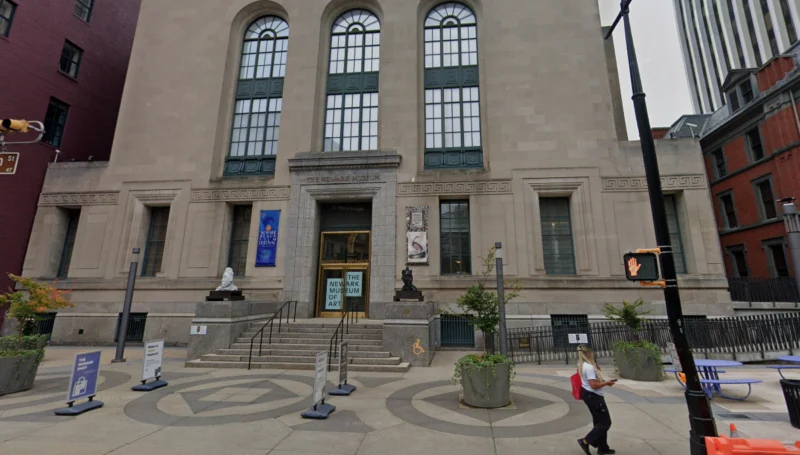
Newark, NJ — A former Newark Museum of Art employee alleging retaliation and workplace bias will have to pursue his federal lawsuit without court-appointed counsel after a judge denied his request for a free attorney, despite claims of financial hardship and a complex case.
U.S. Magistrate Judge André M. Espinosa ruled that Shawn Jones, who filed the lawsuit in October 2025, did not meet the threshold for appointment of pro bono counsel under federal law. The decision leaves Jones representing himself as he presses claims of discrimination, retaliation, and a hostile work environment against the museum and several individuals.
The ruling, issued in the U.S. District Court for the District of New Jersey, addresses only the request for legal representation and does not weigh in on the merits of Jones’ allegations.
Allegations stem from workplace complaints
Jones’ lawsuit centers on events that unfolded after he reported concerns about workplace conduct in late 2023.
According to the complaint, Jones alerted human resources in November 2023 that his supervisor was involved in an inappropriate relationship with an HR staff member—something he believed interfered with how complaints were handled.
He claims that after raising those concerns, his treatment at work changed sharply. The complaint describes a series of alleged retaliatory actions, including exclusion from meetings, reduced overtime opportunities, and being assigned duties outside his normal role.
—
Key Points
• Federal judge denies pro bono counsel request in Newark employment lawsuit
• Plaintiff alleges retaliation, gender bias, and hostile work environment
• Case will proceed with plaintiff representing himself
—
Disciplinary actions and termination
The situation escalated throughout 2024, according to court filings.
Jones alleges he received a disciplinary notice in July 2024 tied to how he wore his hat and what was interpreted as an insubordinate remark—claims he disputes. He further contends that although the discipline was later amended after a union grievance, his representatives failed to adequately advocate for him.
Additional tensions arose later that year involving a co-worker. Jones claims he reported that colleague’s sexual harassment concerns to HR, despite her reluctance to do so, which he says triggered further hostility toward him.
That conflict culminated in a complaint filed against Jones on December 18, 2024, followed by his suspension and termination nine days later, on December 27.
Claims of bias and unequal treatment
Jones argues his firing was not based on misconduct but instead driven by retaliation and gender discrimination.
He alleges the museum responded more seriously to complaints from female employees while ignoring his, suggesting unequal treatment based on gender. His lawsuit brings claims under federal and New Jersey law, including Title VII of the Civil Rights Act, the New Jersey Law Against Discrimination, and the Conscientious Employee Protection Act.
The complaint also includes common law claims such as defamation, negligence, and emotional distress.
Why the judge denied counsel
In seeking a court-appointed attorney, Jones cited financial hardship and said he had unsuccessfully contacted multiple lawyers and legal aid organizations.
But the court emphasized that civil litigants do not have a guaranteed right to free legal representation. Instead, judges may appoint counsel at their discretion under limited circumstances.
Judge Espinosa found that standard was not met in this case, determining that appointment of counsel was not warranted at this stage of the proceedings.
What happens next
The denial means Jones must continue litigating the case on his own unless he secures private representation.
The broader lawsuit—naming the Newark Museum of Art, his supervisor, co-workers, and union representatives—remains active in federal court. No findings have yet been made regarding the validity of his discrimination or retaliation claims.
The case will proceed through early litigation stages, with the court expected to address the sufficiency of the claims and potential motions from defendants in the coming months.
 North Jersey News
 New Jersey News
Thief slips into Newark car and swipes $200 plus three cellphones
Shore News Network Lottery Results
Burlington County ticket hits massive $576K Jersey Cash 5 jackpot
Shore News Network North Jersey News