
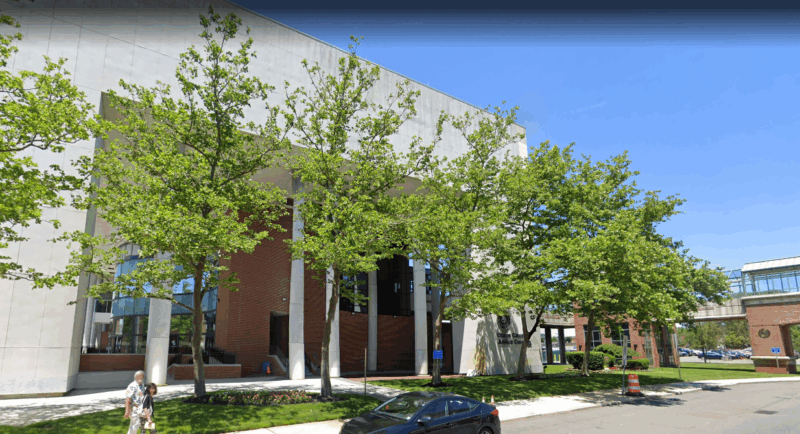
Trenton, NJ — A federal judge has dismissed a lawsuit accusing Ocean County prosecutors and a fellow business owner of weaponizing a criminal investigation to sabotage a competing construction company, ruling the claims do not meet the legal standard required to proceed. The decision ends the case against key defendants, including prosecutors and the county prosecutor’s office.
U.S. District Judge Georgette Castner granted a motion to dismiss the amended complaint filed by Scott Cowan and Jonathan Price, who alleged they were illegally targeted amid a business rivalry tied to post-Hurricane Sandy rebuilding contracts.
The ruling removes claims against multiple defendants, including Assistant Ocean County Prosecutor William Scharfenberg, Ocean County Prosecutors Joseph Coronato and Bradley Billhimer, a county detective, and the Ocean County Prosecutor’s Office.
Business rivalry at center of allegations
Cowan and Price own Price Home Group (PHG), a construction company that participated in New Jersey’s Reconstruction, Rehabilitation, Elevation, and Mitigation (RREM) program, which funded rebuilding efforts after Hurricane Sandy.
According to the lawsuit, PHG expanded rapidly after joining the program in 2013, competing with Beacon Homes, another contractor operating in Ocean County.
Beacon Homes was owned by Scharfenberg, who simultaneously served as an assistant prosecutor—an overlap the plaintiffs argued created a serious conflict of interest.
Claims alleged misuse of prosecutorial power
The plaintiffs claimed Scharfenberg used his position and access to government resources to harm their business, accusing him of operating Beacon Homes using prosecutor’s office staff and equipment.
They also alleged that other prosecutors knowingly allowed the conduct to continue and that a criminal investigation launched in 2015 stemmed from a private business dispute rather than legitimate law enforcement concerns.
At the center of that dispute was a disagreement between PHG and a homeowner over construction payments, which plaintiffs said escalated improperly into a criminal matter.
Key Points
• Federal judge dismissed lawsuit accusing prosecutors of targeting rival construction firm
• Case stemmed from competition tied to Hurricane Sandy rebuilding program
• Court ruled claims failed to meet legal standards required to proceed
Court rejects claims under federal civil rights law
The lawsuit included claims under 42 U.S.C. § 1983, a federal statute used to challenge alleged violations of constitutional rights by government officials, along with related state law claims.
Judge Castner ruled that the plaintiffs’ amended complaint did not sufficiently support those claims, granting the defendants’ motion to dismiss under Rule 12(b)(6), which applies when a complaint fails to state a valid legal claim.
The opinion notes that courts must accept factual allegations as true at this stage but are not required to accept legal conclusions presented as facts—a key distinction that often determines whether cases move forward.
Context: rebuilding program created high-stakes competition
The dispute unfolded against the backdrop of the RREM program, which distributed grants to homeowners rebuilding after Hurricane Sandy. Contractors approved for the program competed for a limited pool of projects, often creating intense local competition.
PHG initially operated in southern Ocean County before expanding into areas like Toms River and Seaside Heights, where it directly competed with Beacon Homes.
That expansion—and the overlap with Scharfenberg’s dual roles—formed the foundation of the plaintiffs’ allegations.
What happens next
The court’s decision dismisses the claims against the moving defendants, significantly narrowing or potentially ending the case at the district court level, depending on any remaining claims against other parties.
As of now, the ruling means the plaintiffs cannot proceed on the dismissed claims in their current form. Any further action would likely involve an appeal or an attempt to amend claims if permitted.
The case highlights the legal challenges of turning business disputes into federal civil rights claims, particularly when alleging misconduct by prosecutors.
The matter remains closed as to the dismissed defendants following the court’s ruling.