
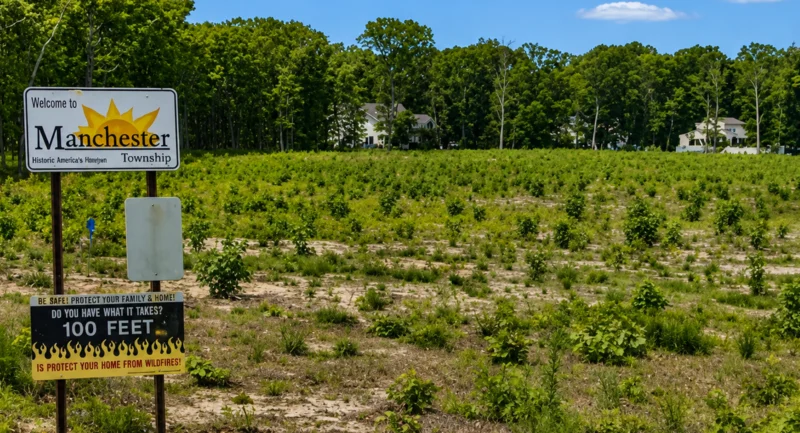
A Lakewood-based developer has filed suit against Manchester Township, alleging officials improperly changed zoning rules to block townhouse and garden apartment projects on a 25-acre Whiting property.
A developer is asking an Ocean County judge to overturn a recently adopted Manchester Township zoning ordinance that eliminated townhouse and garden apartment developments from most Pinelands-area zones, claiming the change violated state land-use laws and unfairly restricted housing opportunities.
The lawsuit was filed by Manashe Frankel and 451 Old Lacey Acquisition LLC, which owns approximately 25 acres in the township’s Whiting Town Highway Development (WTHD) Zone. According to the complaint, the property is surrounded by a mix of residential neighborhoods, commercial businesses, a shopping center, a pharmacy, medical offices, a Wawa convenience store, and age-restricted housing developments.
Dispute centers on sudden zoning reversal
The lawsuit claims Manchester Township adopted a Master Plan Reexamination Report in January that recommended continuing to allow townhouse and garden apartment developments in several Pinelands-area zones, including the WTHD Zone where the developer’s property is located.
The Township Council subsequently adopted Ordinance 26-11 in February, implementing those recommendations and preserving townhouse and garden apartment development opportunities in multiple zoning districts.
However, according to the complaint, township officials reversed course just one month later by introducing Ordinance 26-24. The new ordinance removed townhouse and garden apartment developments as permitted conditional uses from several Whiting-area zones and ultimately limited those housing types to only the PB-1 zone.
The lawsuit describes the move as a “complete about-face” from the recommendations contained in the township’s own planning documents.
Developer says housing options were eliminated
One of the key allegations in the lawsuit is that Ordinance 26-24 effectively removes residential development opportunities from the developer’s property despite surrounding residential uses.
The complaint notes that after adoption of the ordinance, the WTHD Zone still permits a wide variety of commercial and industrial uses, including manufacturing facilities, shopping centers, retail businesses, motor vehicle uses, educational facilities, health care services, and recreational uses. Townhouses and garden apartments, however, are no longer permitted there.
The plaintiffs argue the ordinance is inconsistent with Manchester Township’s Master Plan goals of encouraging residential growth and providing a variety of housing choices. They also contend the ordinance leaves townhouses and garden apartments permissible only in the PB-1 zone, which is a non-residential district.
Lawsuit alleges notice and procedural violations
In addition to challenging the substance of the zoning change, the lawsuit alleges residents and property owners were provided confusing and inconsistent public notices during the adoption process. Plaintiffs claim the ordinance changed substantially between its initial introduction and final adoption without restarting the public review process.
The complaint further alleges the Manchester Township Planning Board failed to properly document its review and findings regarding whether the ordinance was consistent with the township’s Master Plan.
The suit seeks to have Ordinance 26-24 declared invalid, set aside by the court, and deemed void from the outset. Plaintiffs are also seeking damages, attorney’s fees, and other relief.
The allegations contained in the lawsuit are claims made by the plaintiffs and have not been proven in court. Manchester Township and the other defendants had not yet filed responses to the complaint at the time of filing.
Key Points
• A developer is suing Manchester Township over a zoning ordinance that eliminated townhouses and garden apartments from most Pinelands-area zones.
• The lawsuit claims township officials reversed a housing policy adopted just weeks earlier and improperly changed zoning regulations.
• Plaintiffs allege the ordinance conflicts with the township’s Master Plan and unfairly restricts development of a 25-acre Whiting property.