
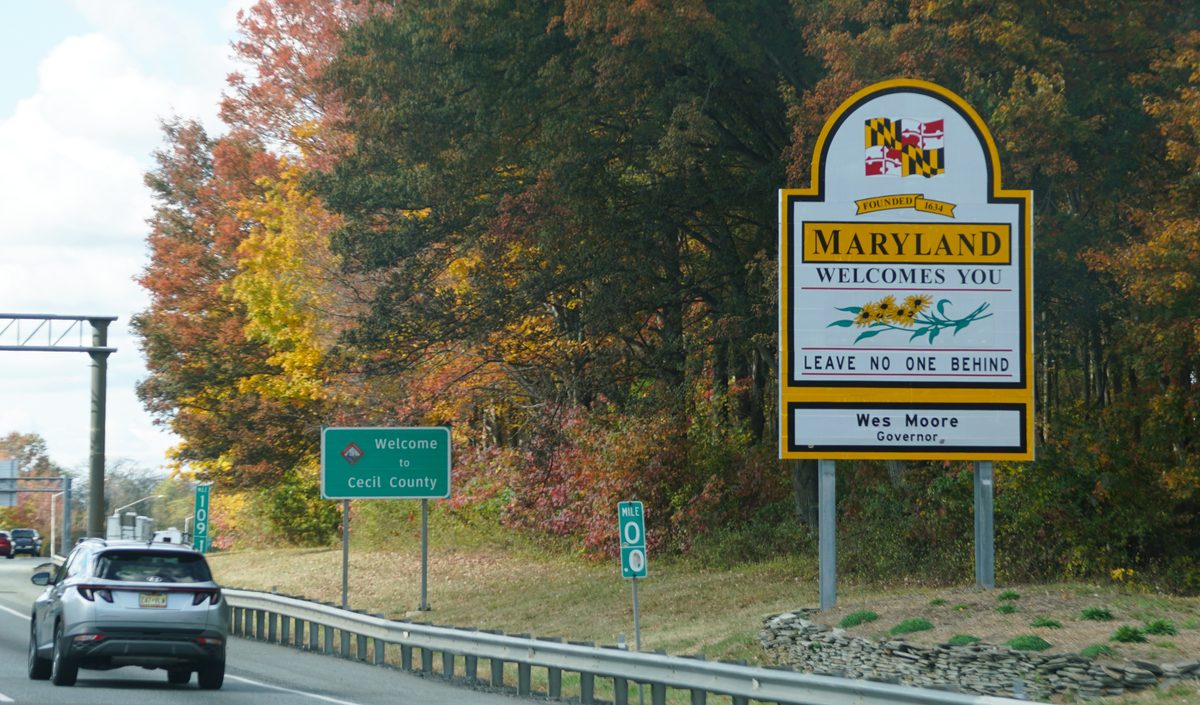
ANNAPOLIS, Md. – Maryland’s Community Trust Act has opened a major legal and political fight over immigration enforcement after becoming law without Gov. Wes Moore’s signature, restricting when local police and correctional facilities can assist federal immigration authorities.
The law, Senate Bill 791, generally prevents local authorities from continuing to hold a person for U.S. Immigration and Customs Enforcement based solely on an administrative immigration warrant, with exceptions involving certain offenders. The measure passed the House 92-37 and ultimately cleared the Senate 32-15 before becoming law May 31.
The fight has since moved from Annapolis to federal court. Sheriffs from 17 of Maryland’s 24 counties sued Moore, Attorney General Anthony Brown and the state, and the Trump administration later filed a separate federal challenge arguing Maryland is unlawfully interfering with federal immigration authority.
- The Community Trust Act restricts how Maryland police, sheriffs and correctional facilities can cooperate with ICE on civil immigration enforcement.
- Gov. Wes Moore allowed the legislation to become law without his signature, saying he supported its objective but saw “real implementation challenges.”
- Seventeen county sheriffs and the Trump administration have separately gone to federal court challenging the law.
Maryland Law Limits Local Cooperation With ICE
The Community Trust Act was sponsored by Democratic state Sen. Clarence Lam of Anne Arundel and Howard counties and was enacted as Chapter 872.
One of its central provisions limits the ability of state and local authorities to hold individuals based on administrative immigration warrants issued by federal immigration authorities rather than warrants signed by judges.
The legislation includes exceptions involving certain people convicted of crimes, including specified felony offenders and registered sex offenders.
Supporters contend immigration enforcement is fundamentally a federal responsibility and that local police should remain focused on criminal investigations and community policing rather than acting as an extension of ICE.
Opponents see the restrictions differently, arguing the law prevents local authorities from cooperating with federal officers even when someone wanted by ICE is already being held in a county jail.
Harford County Sheriff Jeffrey Gahler described the legislation in stark terms before it became law.
“This legislation is a direct assault on public safety,” Gahler said in comments reported by WTOP. He argued the measure restricted communication between local law enforcement and federal partners at the Department of Homeland Security.
Washington County Sheriff Brian Albert told WTOP the legislation created conflicting responsibilities for local law enforcement.
“We’re sworn to uphold the constitution of the United States and the state of Maryland,” Albert told the outlet. “The Community Trust Act puts us in a very tough predicament.”
Wes Moore Let Law Take Effect Without His Signature
Moore stopped short of vetoing the legislation, but he also declined to sign it.
The Democratic governor said Maryland should cooperate with federal authorities when doing so improves public safety while drawing a line between traditional policing and federal civil immigration enforcement.
“Maryland will always work with the federal government when that coordination makes our people safer,” Moore said in a statement published by CBS News Baltimore.
Moore said the Community Trust Act advances the goal of keeping local police focused on reducing crime while protecting constitutional rights, but acknowledged concerns about how the legislation was written.
“This bill presents real implementation challenges that must be addressed through executive action and in next year’s legislative session,” Moore said, according to CBS News Baltimore.
The governor specifically pointed to ambiguities involving joint investigations and said local authorities need sufficient flexibility to share appropriate information and protect communities.
“For those reasons, I will allow the Community Trust Act to become law without my signature,” Moore said.
The legislation subsequently became law May 31 under the Maryland Constitution.
Seventeen Maryland Sheriffs Sue to Block Community Trust Act
The dispute escalated when 17 county sheriffs filed a federal lawsuit challenging the law.
The plaintiffs include sheriffs representing counties across Maryland, including Harford, Frederick, Carroll, Garrett, Cecil, Worcester, Wicomico, Washington and other jurisdictions.
The federal case, Gahler v. Moore, was filed May 26 in U.S. District Court for the District of Maryland. The sheriffs contend the state restrictions conflict with federal law and violate the Constitution’s Supremacy Clause.
Gahler, the lead plaintiff, said at an Annapolis news conference that the legislation amounted to state interference with public safety.
“This legislation is not about trust, and it’s certainly not about supporting the law-abiding members of our community,” Gahler said, according to Maryland Matters. “It is an intentional state-mandated obstruction of public safety.”
The sheriff argued the restrictions could require jails to release people sought by federal immigration authorities rather than continue holding them for ICE on an administrative detainer.
Garrett County Sheriff Bryson Meyers similarly said the legislation placed sheriffs in what he called an “impossible position” by restricting cooperation that local agencies believe federal law permits.
Supporters reject the argument that limiting civil immigration cooperation makes communities less safe.
Democratic Del. Teresa Woorman told Maryland Matters that separating local policing from immigration enforcement helps establish trust with immigrant communities, making residents more willing to report crimes.
“Immigration is personal to me,” Woorman told the outlet. “I grew up in this country undocumented, so I know what it feels like to live with that uncertainty and fear.”
Trump Administration Takes Maryland to Federal Court
The legal stakes increased again in July when the Trump administration filed its own lawsuit against Maryland over the Community Trust Act.
The federal government argues Maryland cannot prevent state and local authorities from cooperating with federal immigration enforcement in ways authorized by federal law.
Maryland officials have taken the opposite position, arguing federal authorities are responsible for immigration enforcement and cannot compel state and local agencies to perform federal immigration functions.
Attorney General Anthony Brown’s office issued guidance stating that local authorities can still cooperate with federal agencies on criminal investigations, including joint task-force operations.
Immigrant-rights organization CASA, which supported the legislation, also defended the law after the Trump administration sued.
“The Community Trust Act is not an obstacle to public safety. It is one of the reasons Maryland is safer,” CASA Executive Director George Escobar said in a statement reported by Maryland Matters.
The competing lawsuits now put the central constitutional question before the federal courts: how far Maryland can go in restricting its own police, sheriffs and correctional institutions from participating in federal immigration enforcement.
Until those challenges are resolved, the Community Trust Act represents one of the clearest dividing lines in Maryland over the Trump administration’s immigration enforcement agenda and the authority of states to limit local participation in it.
What does Maryland’s Community Trust Act do?
The law restricts state and local law enforcement and correctional facilities from assisting with certain federal civil immigration enforcement activities and generally requires more than an ICE administrative warrant to continue holding someone, subject to specified exceptions.
Why are 17 Maryland sheriffs suing over the law?
The sheriffs argue the Community Trust Act interferes with cooperation with federal immigration authorities, creates public-safety concerns and conflicts with federal law. Maryland officials dispute those claims.
Did Gov. Wes Moore sign the Community Trust Act?
No. Moore allowed the legislation to become law without his signature. He said he supported its objectives but believed the measure presented implementation problems that required clarification.
Sources: Maryland General Assembly legislative records; Gov. Wes Moore statement as reported by CBS News Baltimore; Maryland Matters; WTOP; Garrett County Sheriff’s Office; federal court records.