NEPTUNE, N.J. – A group of Neptune Township residents is escalating its challenge to the local school district’s spending, arguing that taxpayers are being asked to shoulder rising costs while enrollment has declined and academic performance remains a concern.
The Neptune Alliance for Tax Reform has been pressing the Board of Education, township officials and state representatives for answers. Resident Paul Zapka has emerged as one of the most persistent voices, repeatedly raising the school budget at public meetings and asking state and local officials to scrutinize district finances.
- Neptune’s audited enrollment declined from 4,286 students in 2016 to 3,384 in 2025, while operating expenditures increased during the same period.
- Residents have formally asked state officials to examine the district’s spending and operational efficiency as school taxes put pressure on homeowners.
- The dispute has reached beyond the school board, with taxpayers taking their concerns to the Neptune Township Committee and state officials.
The concerns are particularly acute among residents of Ocean Grove and Shark River Hills, where homeowners say substantial property-tax increases are becoming increasingly difficult for seniors and families to absorb.
Enrollment Falls While District Spending Climbs
The numbers behind the dispute show why residents are asking questions.
Neptune Township School District’s 2025 audit reports enrollment of 3,384 students. In 2016, enrollment stood at 4,286.
That represents a decline of more than 900 students in less than a decade.
Over the same period, audited operating expenditures increased from approximately $86.3 million in 2016 to more than $109.3 million in 2025.
The district’s audited operating cost per pupil increased from $20,144 to $32,315 during that period.
Those figures differ from some numbers currently being circulated by residents, including a $36,188 per-pupil figure. Different state reports calculate per-pupil spending differently, so comparisons need to use the same accounting measure from year to year.
The district’s 2025-26 advertised budget, for example, calculated its “Total Budgetary Comparative Per Pupil Cost” at $26,375. That state-defined calculation excludes several categories of spending.
What is clear across the district’s own audited records is the broader trend: enrollment has fallen substantially while overall operating expenditures have risen.
That is the issue taxpayers want school officials to address.
Residents Question Whether Neptune Has Too Much School Capacity
One of the Neptune Alliance for Tax Reform’s biggest concerns is whether the district continues operating more building space than its current student population requires.
Residents contend the school system’s buildings were designed for approximately 6,500 students but are now serving roughly half that number.
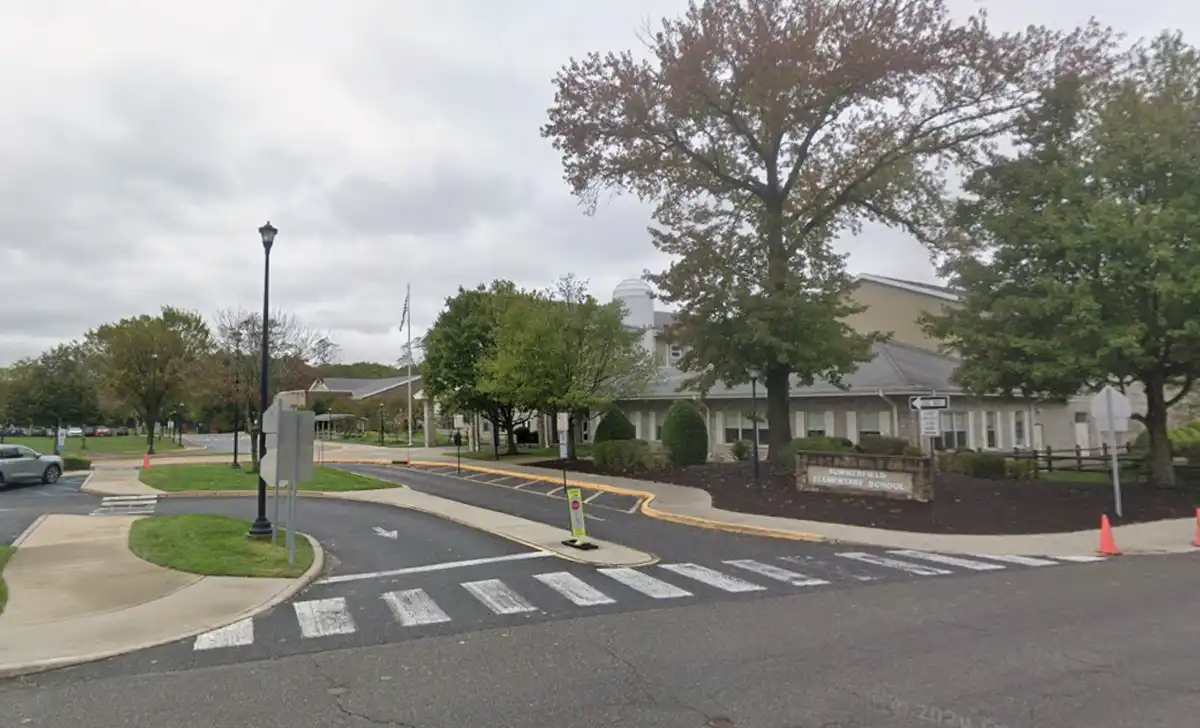
The district currently operates seven schools: Neptune High School, Neptune Middle School, Gables Elementary School, Green Grove Elementary School, Midtown Community Elementary School, Shark River Hills Elementary School and Summerfield Elementary School.
The district’s audited enrollment data confirm the substantial decline in students, but Shore News Network has not independently verified the taxpayers group’s 6,500-student building-capacity calculation.
That question deserves a straightforward answer because maintaining underused buildings can carry significant costs for utilities, maintenance, staffing, security and capital improvements.
Residents want an independent examination of whether Neptune’s current facilities match the size of its student population and whether consolidation or other changes could reduce expenses without harming education.
Taxpayers Have Taken Fight Beyond School Board
The frustration is no longer confined to Board of Education meetings.
Official Neptune Township Committee minutes show Zapka and other residents have repeatedly brought the issue directly to municipal officials.
At a March 9 Township Committee meeting, Zapka spoke about the Neptune Alliance for Tax Reform and the school budget. Another resident, Karen Mason, raised the same concerns.
Township officials acknowledged at that meeting that school spending had become a significant community issue.
The minutes show a school budget task force was scheduled to meet March 18 and note that “many residents spoke out against any additional tax increases” during a February Board of Education meeting.
The township also reported that the Neptune Alliance for Tax Reform had formally objected to the district’s Statement of Assurance concerning operational efficiencies and asked the state to conduct a rigorous review.
There is an important distinction for taxpayers: the Neptune Township Committee does not control the Board of Education budget.
School taxes may appear on the same property-tax bill as municipal and county taxes, but the school district is a separate government entity with its own elected board and budgeting process.
That separation has not stopped residents from asking township officials to use whatever influence they have to push for answers.
Residents Say Property Tax Increases Are Becoming Unsustainable
For homeowners, the dispute is less about government accounting terminology and more about the number printed on their tax bills.
Neptune resident Jane Wiatr told Shore News Network that her household’s property taxes increased by more than $4,000 in one year.
Wiatr said she and her husband now pay approximately $20,000 annually on an 1,800-square-foot home in Shark River Hills.
She says neighbors have reported similar increases, including homeowners with smaller properties.
Wiatr also described growing anxiety among older residents of Ocean Grove who live on fixed incomes.
“People are selling their homes in Shark River where I live because they can’t afford the taxes,” Wiatr told Shore News Network.
Individual tax increases can be affected by several factors beyond the school budget, including assessed property values, tax rates and changes in the distribution of the tax levy. A homeowner’s increase therefore cannot automatically be attributed entirely to additional school spending.
But residents argue the size of the school levy makes district spending impossible to ignore when discussing Neptune’s overall property-tax burden.
Academic Results Are Becoming Part of Spending Debate
The taxpayer group is also questioning what Neptune residents are receiving for the money being spent.
Residents contend proficiency in reading and mathematics remains below state averages and argue that academic outcomes should be examined alongside staffing, administrative expenses and per-pupil costs.
The district, meanwhile, says advancing academic achievement is one of its three major priorities for the new school year, along with strengthening family partnerships and supporting the physical and emotional well-being of students and staff.
District officials also point to educational opportunities beyond core classroom instruction, including electives, athletics, clubs, arts programs and after-school activities.
For taxpayers, however, the question is increasingly focused on whether the district’s financial structure is sustainable as enrollment changes.
They are asking whether enough money reaches core instruction, whether staffing reflects current student needs and whether Neptune can operate its buildings more efficiently.
Residents Want Independent Review and Public Answers
Zapka and other members of the tax reform group have sent their concerns to officials at the local, county and state levels.
Their effort is not limited to demanding a smaller budget. They are asking for an independent examination of district operations, enrollment, facilities, administration and educational outcomes.
That could put greater attention on Neptune’s annual audits and the district’s Statement of Assurance regarding operational efficiencies.
The school district already undergoes annual financial auditing, and its website publishes budget and audit documents. What residents are seeking is a broader independent examination of whether the district’s current structure represents the most efficient way to educate a shrinking student population.
The distinction matters. An annual financial audit examines financial reporting and compliance; it does not necessarily answer larger policy questions such as whether a district needs every building it currently operates or whether staffing and programs should be reorganized.
For residents watching their tax bills climb, those are precisely the questions they want answered.
And with taxpayers continuing to appear at public meetings, the pressure on the Neptune Township Board of Education is unlikely to disappear simply because a new school year has begun.
Neptune’s enrollment decline is documented in the district’s own audited financial records.
Enrollment fell from 4,286 students in 2016 to 3,384 in 2025, while audited operating expenditures increased from about $86.3 million to $109.3 million.
Residents want more than the district’s routine annual financial audit.
The Neptune Alliance for Tax Reform is seeking a broader examination of operational efficiency, facilities, staffing and spending as enrollment declines.
The Township Committee does not control the school district’s budget.
Neptune’s school district and municipal government are separate entities, although residents have been taking their concerns to both while also seeking state review.
Sources: Neptune Township School District budget and financial records; Neptune Township School District 2025 audited financial statements; Neptune Township Committee meeting records; correspondence from Neptune resident Jane Wiatr; statements and concerns provided by the Neptune Alliance for Tax Reform.