
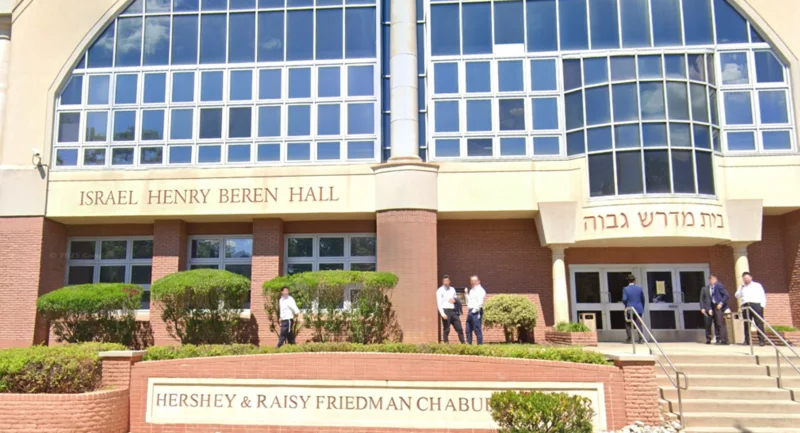
Legislation would expand the authority of Class Three special law enforcement officers, allowing them to provide armed security at churches, synagogues, mosques, temples, and other places of religious worship.
A New Jersey lawmaker has introduced legislation that would allow retired police officers serving as Class Three special law enforcement officers to provide security at houses of worship across the state.
The bill, sponsored by Sen. Joseph P. Cryan, would expand the duties of Class Three officers beyond their current role in public schools, nonpublic schools, and county colleges. If enacted, the officers could also provide security at churches, mosques, synagogues, temples, and other buildings used by congregations as places of religious worship.
Expanding security options for religious institutions
Under current law, Class Three special law enforcement officers are authorized to exercise powers similar to those of full-time police officers while providing security at schools and county colleges.
The proposed legislation would add houses of worship to the list of locations where these officers may serve. While performing those duties, the officers would have the same law enforcement authority currently granted under the Class Three designation.
The bill maintains existing firearm requirements for Class Three officers. Those officers are authorized to carry firearms only after meeting state training and qualification standards and would not be permitted to carry firearms off duty unless they satisfy the requirements applicable to retired law enforcement officers.
Retired officers fill Class Three roles
Class Three special law enforcement officers are retired law enforcement professionals appointed by local police departments. To qualify, an individual generally must be under age 65, have served as a fully trained full-time municipal, county, or State Police officer, and meet physical fitness and training requirements.
The officers may only be employed in a part-time capacity and cannot be used to replace full-time police officers.
According to the bill’s statement, the legislation is intended to expand where these trained retired officers can provide security while continuing to assist local law enforcement agencies.
Clarifies security services for nonpublic schools
The bill also includes provisions affecting school districts that utilize Class Three officers.
Under the proposal, any school district that hires Class Three officers to provide security in public schools would also be required to make those services available to nonpublic schools located within the district.
The legislation specifies that the school district, rather than the public or nonpublic school, would be responsible for compensating the municipality for the officers’ services.
The bill does not require school districts to hire Class Three officers. However, districts that choose to employ them in public schools would be required to provide equivalent access to nonpublic schools under the measure.
If approved by the Legislature and signed into law, the measure would take effect immediately.
Key Points
• A New Jersey bill would allow Class Three special law enforcement officers to provide security at churches, synagogues, mosques, temples, and other houses of worship.
• Class Three officers are retired police officers who currently provide security at schools and county colleges.
• School districts using Class Three officers in public schools would also be required to make those services available to nonpublic schools in the district.