
Assemblyman Paul Kanitra says undocumented immigration costs New Jersey billions and adds pressure to schools and housing, while Gov. Mikie Sherrill argues the state’s affordability crisis requires hundreds of thousands of additional homes.
TRENTON, N.J. — New Jersey has a housing affordability problem. The political fight is increasingly over what caused it.
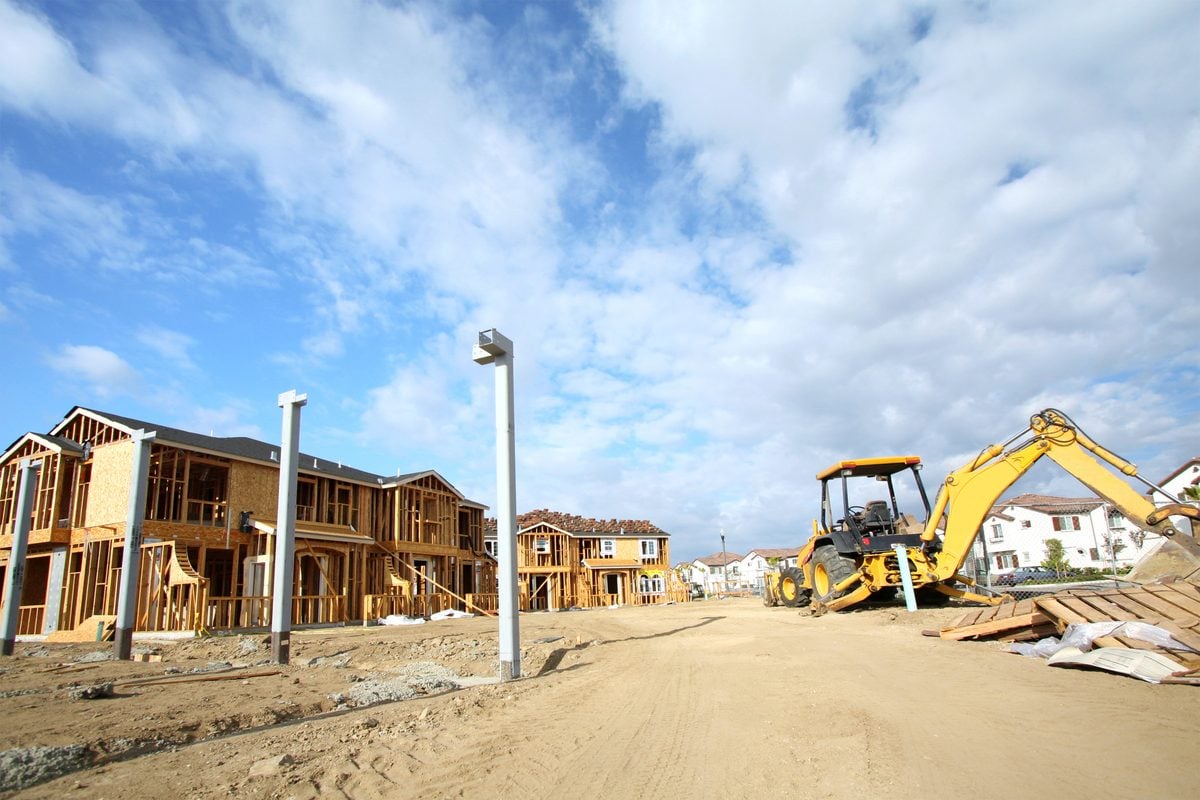
Gov. Mikie Sherrill’s answer is supply. Her new housing strategy says New Jersey needs roughly 350,000 additional homes and calls for faster permitting, transit-oriented development and doubling planned housing on state-owned land from 20,000 to 40,000 units, according to the Sherrill administration’s housing plan.
Republican Assemblyman Paul Kanitra argues policymakers are overlooking another source of demand: undocumented immigration.
His office’s 2026 report estimates about 737,000 undocumented immigrants live in New Jersey and calculates an annual state and local fiscal impact of about $8.2 billion, including $7.14 billion attributed to public education.
Those figures are Kanitra’s estimates, not official state totals. Other organizations produce materially lower population estimates. Pew Research Center estimated New Jersey had about 600,000 unauthorized immigrants in 2023, while the Migration Policy Institute estimates about 476,000 using a different methodology.
Either way, it’s more than 500,000 people in New Jersey who weren’t here 10 years ago and they have to go somewhere. Whether that somewhere is deportation back to their home nations or into massive new state funded housing projects under Mikie Sherrill’s plan is now a political subject matter that needs to be resolved soon.
More People Do Mean More Housing Demand
At its most basic level, Kanitra’s housing argument has an economic foundation.
Every additional household needs somewhere to live.
Rapid population growth — whether from international immigration, domestic migration or natural population growth — increases demand for apartments and houses unless housing construction keeps pace.
New Jersey’s estimated population reached about 9.55 million in 2025, according to the U.S. Census Bureau.
The state was already the most densely populated of the 50 states at the 2020 Census, with 1,263 residents per square mile.
New homes do not appear in isolation. They bring cars, schoolchildren, sewer demand, water use and additional traffic onto roads that residents in many communities already consider overloaded. They also bring social welfare, subsidies and in many cases, hire taxes for communities that are intakes for these new low-income residents.
Kanitra Says Taxpayers Are Absorbing Billions
Kanitra’s report argues the fiscal consequences extend well beyond housing.
His office estimates undocumented immigration costs New Jersey taxpayers about $8.2 billion annually, or roughly $2,300 per household.
Public education accounts for nearly 90% of his calculation.
That number includes not only undocumented children but also U.S.-born children living in households with undocumented parents. Those U.S.-born children are American citizens, an important distinction when evaluating the report’s headline number.
Kanitra has argued that New Jersey should collect more precise immigration-status data so taxpayers can independently evaluate those costs.
Schools Face Real Costs, but ESL Is Not the Same as Illegal Immigration
Growing enrollment of English learners can increase school expenses because districts must provide language instruction and federally required educational services.
The New Jersey Department of Education notes that federal Title III money can support some English-learner programs but cannot replace the core bilingual and ESL services districts are already legally required to provide. The state has frozen ESL funding since the Biden-era immigration surge, leaving districts with millions of dollars in unfunded state mandates to accommodate the growing ESL population.
What About Auto Insurance?
New Jersey drivers have unquestionably been hit with rising premiums.
But there is not strong evidence establishing undocumented immigration as a primary cause. It has been a talking point among many Republican leaders.
The New Jersey Department of Banking and Insurance has instead identified inflation, increasingly expensive vehicles and replacement parts, higher repair costs, theft, distracted driving, severe crashes, supply-chain problems and reinsurance costs as major factors pushing premiums higher.
That does not mean population growth has no effect on congestion or accident exposure. More vehicles on already crowded roads can create additional risk.
Sherrill’s Answer Is to Build
Sherrill sees inadequate supply as the central housing problem.
Her Housing Governing Council concluded that New Jersey needs another 350,000 homes to keep pace with demand and improve affordability.
The governor is pushing agencies to accelerate approvals, impose permitting deadlines and develop more state-owned land.
That raises a different concern for existing residents: how much more development can America’s most densely populated state absorb before the costs of congestion begin outweighing the housing benefits?
That debate is already playing out in towns fighting affordable-housing obligations and arguing that schools, roads, sewer systems and other infrastructure cannot endlessly absorb new development.
The real New Jersey policy question is therefore broader than whether the state should simply “build more.”
It is whether state leaders are adequately addressing both sides of the equation — how rapidly the population and number of households are growing, and how much additional development existing communities can realistically accommodate.
Sherrill’s plan concentrates heavily on increasing supply.
Kanitra and other Republicans are arguing that Trenton also needs to confront the demand created by immigration and the public costs associated with it.
That is likely to become one of the central affordability debates in New Jersey: whether the state can build its way out of high housing costs without simultaneously addressing the population pressures creating additional demand.
