
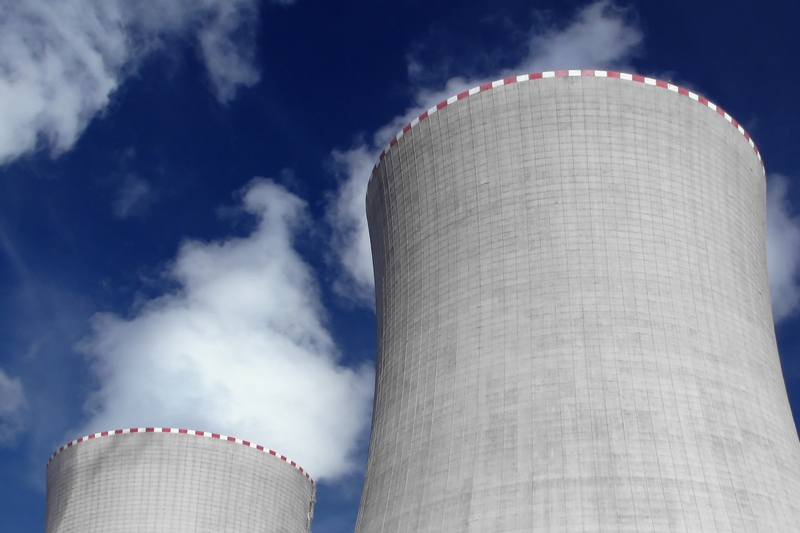
Governor Mikie Sherrill signs sweeping legislation ending a 40-year restriction on new nuclear development.
Trenton, New Jersey – Governor Mikie Sherrill signed legislation Wednesday lifting New Jersey’s decades-old moratorium on new nuclear power plants, marking a major shift in state energy policy aimed at stabilizing rising energy costs and expanding clean power capacity. The move formally ends a restriction in place since the 1970s and positions New Jersey to reenter nuclear development as part of its long-term energy strategy.
The legislation, S3870/A4528, removes a key provision of the Coastal Area Facility Review Act that had effectively blocked new nuclear plant permits for more than 40 years. The New Jersey Department of Environmental Protection had been prohibited from approving new facilities unless a permanent federal radioactive waste repository existed—a condition that has never been met. The repeal replaces that requirement with updated standards aligned with current federal nuclear waste storage regulations.
Decades-old restriction rooted in waste concerns
The original moratorium was enacted during a period of heightened national concern over nuclear safety and long-term radioactive waste disposal. Lawmakers at the time sought to prevent expansion of nuclear energy without a federally approved permanent storage solution, effectively halting new development in New Jersey despite the state’s existing nuclear infrastructure.
By eliminating that requirement, the new law allows state regulators to evaluate nuclear projects under modern safety and storage frameworks already used across the United States. Supporters argue the change reflects advancements in reactor technology and waste management practices that have evolved significantly since the 1970s.
Governor Sherrill, announcing the decision, emphasized the state’s readiness to expand nuclear capacity. “New Jersey is uniquely positioned to lead on nuclear power,” Sherrill said. “These new steps will help New Jersey secure a safer, cleaner, more affordable, and reliable energy future.”
Energy costs and grid reliability drive policy shift
The repeal comes as New Jersey faces mounting pressure over energy prices and grid reliability, particularly as demand increases and the state transitions away from fossil fuels. Nuclear power, which provides consistent, carbon-free electricity, is increasingly being reconsidered nationwide as part of broader clean energy strategies.
State officials and energy analysts have pointed to nuclear energy’s ability to provide baseload power—electricity that is available at all times—as a critical complement to intermittent renewable sources such as wind and solar. The policy shift signals a growing recognition that meeting climate goals while maintaining affordability may require a diversified energy mix.
—
Key Points
• Governor Mikie Sherrill signed legislation ending New Jersey’s 40-year nuclear power moratorium
• The law removes a requirement tied to a nonexistent federal waste repository and adopts modern standards
• Officials cite rising energy costs and grid reliability as key drivers behind the policy change
—
New nuclear task force to guide next steps
Alongside the legislation, Sherrill announced the creation of a state Nuclear Task Force to guide implementation and evaluate future opportunities. The task force is expected to include industry experts, regulators, and policymakers tasked with assessing potential projects, workforce readiness, and regulatory pathways.
New Jersey already operates nuclear facilities that supply a significant portion of the state’s electricity, giving it an established workforce and infrastructure base. Officials say that foundation could accelerate development compared to states starting from scratch.
The move aligns with a broader national trend of renewed interest in nuclear energy, including small modular reactors and next-generation designs that promise enhanced safety and efficiency. Several states have recently revisited or repealed similar restrictions as energy demand and climate targets reshape policy priorities.
The repeal does not immediately authorize construction of new plants but clears a major legal barrier that had prevented proposals from moving forward. Any future projects will still require extensive regulatory review, environmental assessments, and federal approvals.
State agencies and the newly formed task force are expected to begin evaluating potential pathways for nuclear expansion in the coming months, as New Jersey navigates the balance between affordability, reliability, and clean energy goals.