
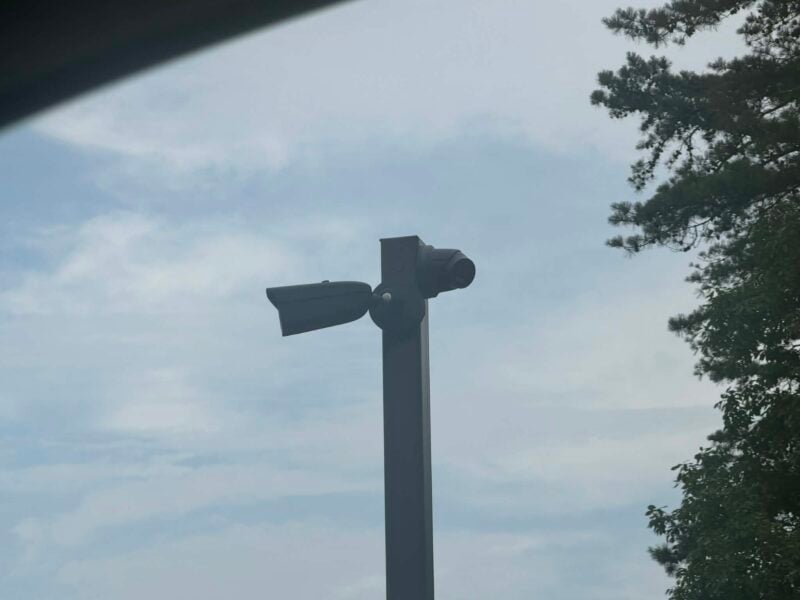
Washington Township in Gloucester County reportedly spent nearly $268,000 in opioid settlement funds on police vehicles and license plate readers while telling New Jersey officials that $170,446 went toward drug education programs.
WASHINGTON TOWNSHIP, NJ — A Gloucester County municipality is facing scrutiny after an investigation found that money intended to address the opioid epidemic was used to purchase police SUVs and surveillance cameras, even as the township reported spending the funds on drug education and prevention.
Washington Township spent $267,924.50 from its opioid settlement account on two Chevrolet Tahoe police vehicles, equipment installed in those vehicles and Flock automated license plate readers between November 2024 and April 2026, according to records examined in an investigation published Friday by NJ.com.
The most significant discrepancy involves $170,446.70 that the township reported to the state as spending on drug education programs during fiscal years 2024 and 2025.
Investigators found that the same amount had instead been spent on police vehicles and surveillance equipment.
The revelations have raised questions about how New Jersey municipalities are using billions of dollars in opioid settlement funds and whether state officials are adequately monitoring those expenditures.
Township reported school drug education spending that records don’t support
According to the Washington Township investigation published by Opioid Audit, the municipality reported spending $134,321.38 during fiscal year 2024 and another $36,125.32 during fiscal year 2025 on drug education.
The township described the spending as supporting a school-based drug education program intended to reach approximately 500 children.
However, the investigation found no corresponding payments to education providers.
Instead, township financial records showed expenditures of $117,946.70 for two 2024 Chevrolet Tahoe SUVs and $52,500 for 15 Flock license plate readers.
Those purchases totaled exactly $170,446.70 — the amount reported to state officials as drug education spending.
Additional expenditures for vehicle equipment, camera renewals and data services brought the reported total charged to opioid settlement funds to nearly $268,000.
Police chief defends cameras as tool against addiction-related crime
Washington Township Police Chief Patrick Gurcsik defended the department’s use of license plate readers during a September township council meeting.
Gurcsik said the department believed the cameras could help disrupt criminal activity associated with drug addiction.
According to reporting by NJ.com and The Philadelphia Inquirer, the chief argued that the technology could play a role in breaking the cycle of addiction-related crime.
He also pointed to existing police initiatives involving treatment referrals and naloxone.
The department’s position raises a central question about the restrictions governing opioid settlement funds: whether purchases primarily intended for general law enforcement qualify as opioid remediation.
The township has not established that the purchases were approved as permissible opioid remediation expenditures under the settlement agreements.
Washington Township had significant heroin treatment admissions
The controversy comes as state data indicate that Washington Township has experienced substantial demand for addiction treatment.
According to the reporting, the municipality had 95 heroin-related treatment admissions recorded in 2025, the highest total among Gloucester County municipalities.
During the peak of the opioid epidemic, Washington Township also ranked among the highest 30% of New Jersey municipalities for heroin treatment admissions per capita.
Those figures do not necessarily represent 95 individual township residents, but they illustrate the demand for treatment services associated with the community.
Addiction researcher Sandy Gibson criticized the apparent lack of state intervention.
“I can’t see how there’s been no response or action taken to address that,” Gibson told NJ.com.
“Inaction at the level of the state is permission.”
New Jersey’s opioid settlement oversight questioned
The state is expected to receive more than $1.1 billion through 2038 from settlements with pharmaceutical manufacturers, distributors and retailers involved in the opioid crisis.
Under the New Jersey Office of the State Comptroller’s guidance, settlement proceeds are primarily restricted to opioid remediation, including addiction treatment, prevention, recovery support and related programs.
The funds generally cannot be used simply to replace ordinary municipal spending.
Municipalities and counties submit annual reports to the New Jersey Department of Human Services describing how their allocations were spent.
However, local governments are not routinely required to submit invoices or receipts verifying each expenditure.
The state comptroller’s office and Attorney General’s Office declined to confirm whether Washington Township was under investigation, according to the published reporting.
State lawmaker seeks greater transparency
The controversy has prompted renewed calls for stronger oversight of municipal opioid settlement spending.
Assemblyman Cody Miller, a Democrat representing parts of Gloucester County, introduced legislation intended to improve transparency and educate local governments about allowable uses of settlement money.
Washington Township officials have also begun considering changes to how the municipality manages future allocations.
In September, the township council authorized advertising for proposals from consultants to assist with opioid settlement fund management.
Gurcsik said the township was developing a broader spending plan to identify community needs and establish priorities.
“Moving forward, we are developing a master plan that will identify the needs of our community and establish clear priorities for future use of these settlement funds,” the chief said.