
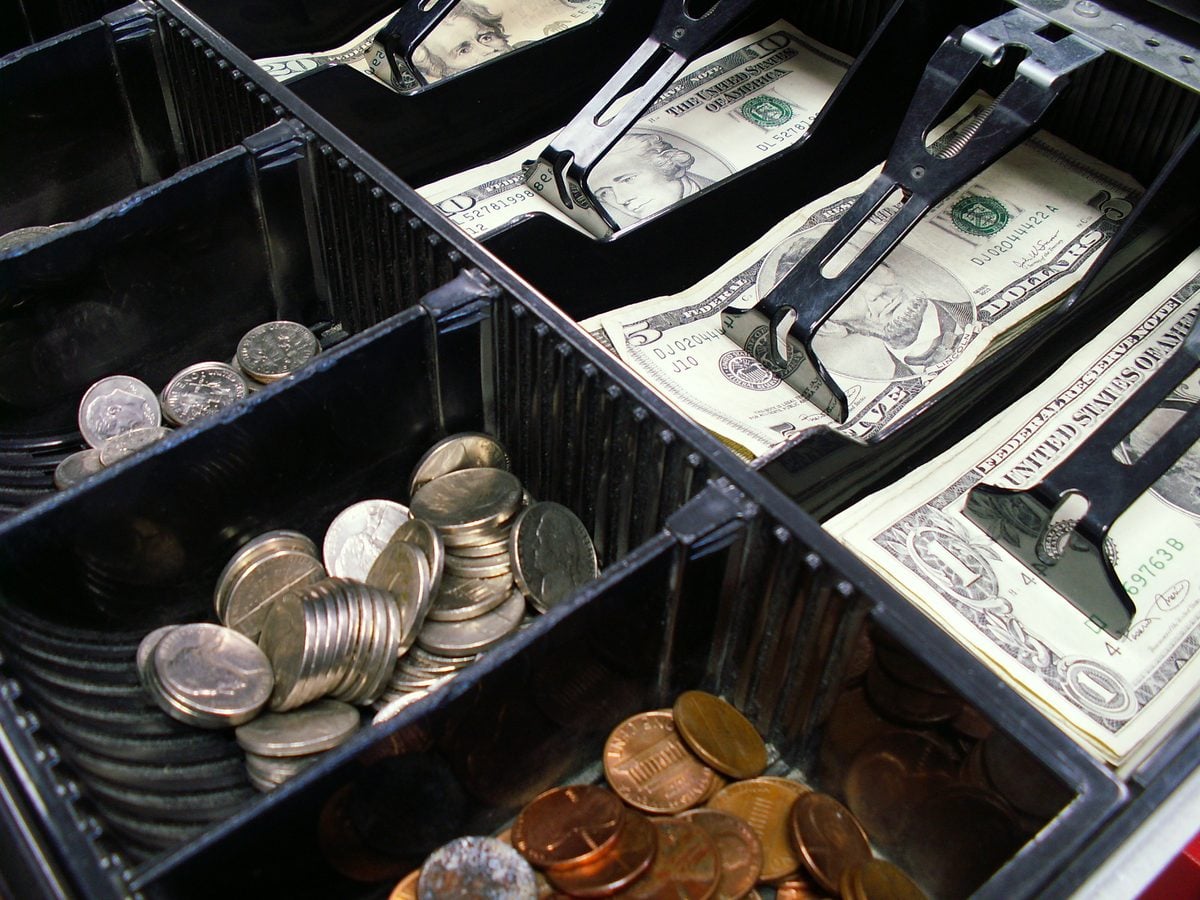
Assembly Bill A5233 would let New Jersey merchants round cash totals to the nearest nickel while imposing penalties of up to $5,000 for improperly rounding customers’ bills upward.
TRENTON, NJ — The penny is no longer being produced for everyday circulation, and New Jersey lawmakers are moving to establish rules for what happens at the cash register when stores no longer have enough one-cent coins to make exact change.
Assembly Bill A5233 would allow — but not require — merchants accepting cash to round the final amount owed to the nearest five cents under a uniform system. The Assembly Financial Institutions and Insurance Committee advanced the measure with amendments on Sept. 17.
“The bill intends to assist businesses in preparation for a phaseout in the use of the penny for cash transactions,” the committee said.
The legislation comes less than a year after the U.S. Mint struck the final penny intended for general circulation on Nov. 12, 2025, ending a 232-year production run. Pennies already in circulation remain legal tender and can still be spent.
Here’s How New Jersey’s Rounding System Would Work
The proposal establishes a symmetrical rounding system for merchants that choose to use it.
Under the bill, a final cash total ending in one or two cents would be rounded down. A total ending in three or four cents would be rounded up to the nearest five cents.
A total ending in six or seven cents would be rounded down, while totals ending in eight or nine cents would be rounded up to the nearest 10-cent increment.
That means a $10.01 or $10.02 cash purchase would become $10.00. A $10.03 or $10.04 purchase would become $10.05.
Similarly, $10.06 or $10.07 would become $10.05, while $10.08 or $10.09 would become $10.10.
The bill makes clear that the calculation would occur only after everything else on the receipt has been figured out.
“The rounding of any transaction under the bill will only be applied to the final transaction total after all taxes, fees, discounts, and any other adjustments have been accounted for,” the committee said.
Credit And Debit Card Purchases Would Not Change
The legislation applies only to cash.
Transactions paid by check, debit card, credit card, wire transfer or another non-cash method would continue to be charged to the exact cent.
That distinction means a customer whose purchase totals $18.99 could pay exactly $18.99 with a credit or debit card. A merchant participating in the rounding system could charge $19 in cash.
A purchase totaling $18.97, however, would fall to $18.95 when paid in cash.
The proposal puts New Jersey among a growing number of states addressing the practical consequences of the federal government’s decision to stop producing circulating pennies. The National Conference of State Legislatures said states have increasingly turned to symmetrical rounding — rounding some transactions up and others down — as a way to avoid systematically favoring either retailers or consumers.
Merchants Could Face $5,000 Penalties For Improperly Rounding Up
A5233 also contains an enforcement provision aimed specifically at merchants that improperly round a customer’s bill upward.
A merchant that rounds up a cash transaction when the bill requires the amount to be rounded down could face a civil penalty of $1,000 for a first offense, $2,500 for a second offense and $5,000 for a third or subsequent offense.
“Each day on which a violation occurs shall constitute a separate and distinct offense,” the bill states.
The penalties would be enforced through a civil proceeding in Superior Court.
The committee narrowed that provision when it amended the bill Sept. 17. Rather than broadly penalizing any violation of the legislation, the revised language applies the fines specifically when a merchant improperly rounds upward in situations where the law requires a reduction.
Checkout Donation Programs Would Still Be Allowed
The bill would not interfere with the increasingly common practice of asking customers to round their purchase up for charity.
“Nothing in this act shall be construed to prohibit a program that rounds a purchase or transaction up as a donation,” the legislation states, as long as participation is voluntary and consumers have the ability to opt in or out.
The distinction separates charitable checkout programs from the automatic rounding system governing cash change.
The measure is sponsored by Assemblyman Roy Freiman, a Democrat representing portions of Hunterdon, Mercer, Middlesex and Somerset counties.
A5233 was introduced June 8 and referred to the Assembly Financial Institutions and Insurance Committee. It was reported from committee with amendments Sept. 17.
The Penny Is Still Money — There Just Won’t Be New Ones For Circulation
Despite the end of circulating penny production, existing pennies have not suddenly become worthless.
The U.S. Mint says the penny remains legal tender and consumers can continue using the coins for purchases.
The Mint said escalating production costs helped drive the decision to end circulating production. It estimated that producing a single penny had climbed to 3.69 cents by the time production was suspended.
“While general production concludes today, the penny’s legacy lives on,” Acting Mint Director Kristie McNally said when the final circulating penny was struck in Philadelphia last November.
The Mint will continue making limited numbers of pennies for collector sets, but not for normal circulation.
For retailers, that creates a more immediate problem: exact cash change becomes increasingly difficult as the supply of available pennies declines.
The National Conference of State Legislatures has said state guidance can provide clarity for businesses and consumers as the country adjusts to commerce without newly minted pennies.
New Jersey Bill Would Take Effect 30 Days After Becoming Law
The legislation does not require merchants to begin rounding.
Instead, it establishes the rules a merchant would have to follow if the business chooses to round cash purchases.
That voluntary framework is a significant part of the proposal. A merchant with an adequate supply of pennies could continue making exact change, while another retailer could move to nickel-based rounding.
A5233 would take effect 30 days after enactment if it clears both houses of the New Jersey Legislature and is signed into law.
For New Jersey businesses, the change would represent one of the most visible consequences yet from the country’s transition away from the penny — a small difference at the bottom of a receipt that could eventually affect millions of everyday cash transactions across the state.