
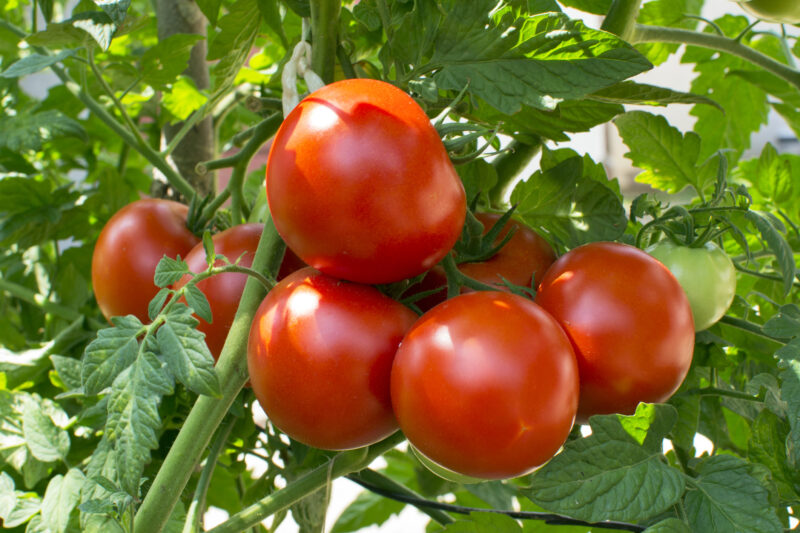
TRENTON, N.J. —New Jersey’s agricultural identity is so tightly tied to “Jersey Fresh” tomatoes and famously sweet blueberries that it’s easy to assume the state’s top crops would come straight from a summer farm stand—but they don’t. Hidden behind that expectation is a quieter reality: two of New Jersey’s most significant agricultural products are not only less celebrated, they’re often completely overlooked by the people who consume them every day. One grows in watery fields that flood each fall, the other thrives in rows that turn out a staple of countless restaurant menus, yet neither typically comes to mind when people picture farming in the nation’s most densely populated state.
That disconnect raises a deeper question about what New Jersey actually produces—and why its most important crops don’t match its public image. The answer reveals an agricultural system shaped less by tradition and more by geography, speed, and access to major cities. These crops move quickly, supply massive regional demand, and quietly outperform expectations, all while remaining largely absent from the “Garden State” narrative most people think they know.
New Jersey continues to supply millions of pounds of cranberries and a steady stream of fresh eggplant to East Coast markets, reinforcing its “Garden State” identity even as development pressures shrink available farmland.
The state remains one of the nation’s top cranberry producers—ranking third behind Wisconsin and Massachusetts—while also serving as a key regional hub for specialty crops that move quickly from farm to city.
Cranberries anchor South Jersey agriculture
Cranberry production remains one of New Jersey’s most visible agricultural strongholds, concentrated in the Pinelands of South Jersey where environmental conditions favor the crop.
Farmers in that region harvest tens of millions of pounds annually, using flooded bog techniques that allow ripe berries to float for collection. The method, widely associated with fall harvests, depends on the area’s naturally acidic, sandy soil and accessible water supply.
According to industry data and federal agricultural reporting, only two states consistently produce more cranberries than New Jersey, placing it firmly in the top tier nationwide.
That output supports a network of growers and processors, many of them multigenerational operations that continue to function despite rising land values and suburban expansion.
Key Points
• New Jersey ranks third nationally in cranberry production, with millions of pounds harvested annually
• Eggplant farming supplies major East Coast cities with fresh produce within 24 hours
• More than 700,000 acres of farmland remain despite pressure from development
Eggplant highlights fast-moving farm economy
While cranberries dominate headlines, eggplant represents a different but equally important part of New Jersey’s agricultural identity.
Grown primarily in central and southern parts of the state, eggplant benefits from fertile soil and proximity to dense urban markets, including New York City and Philadelphia.
That geographic advantage allows farmers to harvest and distribute crops rapidly—often within a single day—keeping produce fresh while reducing transportation costs.
The result is a steady supply chain feeding cities from Boston to Washington, D.C., even though New Jersey does not always appear at the top of national rankings for the crop.
Agriculture persists in a densely populated state
New Jersey remains the most densely populated state in the country, yet it still maintains more than 700,000 acres of farmland, according to U.S. Department of Agriculture and state-level data.
Beyond cranberries and eggplant, the state produces a wide range of crops, including blueberries—another nationally ranked product—along with tomatoes, peppers, and sweet corn.
This diversity reflects a shift away from large-scale commodity farming toward high-value, perishable goods that can be delivered quickly to nearby metropolitan areas.
A legacy shaped by location
The “Garden State” nickname dates back to the 19th century, when New Jersey farms supplied produce to neighboring cities.
That role continues today, though the economics have changed. Rather than competing with large agricultural states on volume, New Jersey farmers focus on speed, quality, and access to markets.
The state’s location—situated between two major metropolitan corridors—remains one of its strongest agricultural assets.
Development pressure vs. preservation
At the same time, farmland preservation remains a central issue.
Expanding housing developments and commercial growth continue to reshape parts of the state, particularly in areas once dominated by agriculture. Preservation programs and zoning policies have helped maintain key farming regions, but competition for land remains intense.
Cranberry bogs in protected Pinelands areas have been more insulated, while other crop sectors face greater uncertainty.
What comes next for NJ farming
Agricultural output in New Jersey is expected to remain stable in the near term, supported by strong regional demand and established distribution networks.
However, long-term sustainability will likely depend on land-use decisions, market conditions, and the ability of smaller farms to compete in a changing economy.
For now, the state’s continued production of crops like cranberries and eggplant underscores a simple reality: New Jersey’s agricultural roots remain active, even as its landscape evolves.