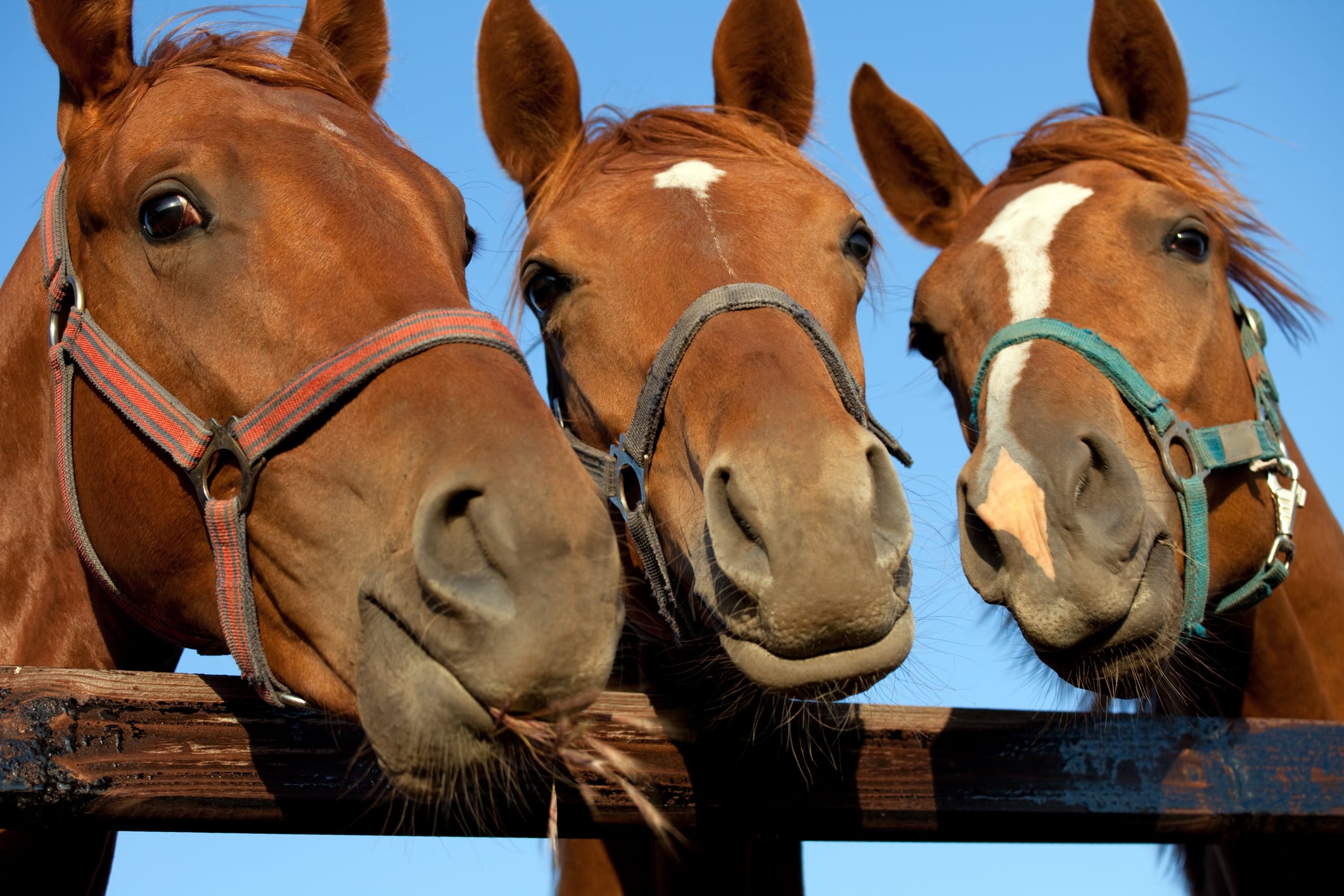
TRENTON, N.J. — New Jersey packs thousands of horses into a surprisingly small footprint, ranking among the most horse-dense states in the country and rivaling Kentucky on a per-square-mile basis, according to agricultural and industry data.
While Kentucky still dominates in total numbers, New Jersey’s combination of limited land and concentrated equestrian activity creates one of the highest horse densities nationwide—an often overlooked reality in the nation’s most densely populated state.
A surprising comparison driven by land, not totals
The contrast becomes clear in the numbers.
New Jersey has an estimated 40,000 to 45,000 horses spread across roughly 8,700 square miles, translating to about 4.9 horses per square mile.
Kentucky, widely known as the horse capital of the world, has more than 240,000 horses across 40,000 square miles, or roughly 5.9 horses per square mile.
That still places Kentucky ahead—but puts New Jersey in the same tier, a comparison that challenges long-held assumptions about where the country’s equine activity is concentrated.
Data from the New Jersey Department of Agriculture, Rutgers Equine Science Center, and the American Horse Council supports the state’s standing as a densely packed equestrian hub rather than a high-volume one.
Key Points
• New Jersey ranks among the most horse-dense states despite far fewer total horses than Kentucky
• Equine industry generates more than $1.1 billion annually and supports thousands of jobs
• Horse farms cluster in counties like Hunterdon, Monmouth, Somerset, and Morris
Where New Jersey’s horses are concentrated
The state’s equine activity is not evenly distributed.
Hunterdon County holds the largest share of horse farms, with expansive rural properties and a long-standing equestrian culture. Monmouth County serves as a major racing and training hub, anchored by Monmouth Park in Oceanport.
Somerset and Morris counties round out the core regions, blending preserved farmland with suburban equestrian communities and high-end boarding facilities.
Together, these areas form a network of nearly 8,000 equine facilities statewide, ranging from private stables to large training operations.
A billion-dollar industry hidden in plain sight
Beyond the numbers, New Jersey’s horse sector carries significant economic weight.
Industry estimates place its annual impact at more than $1.1 billion, supporting approximately 7,000 jobs and utilizing over 176,000 acres of land for equine-related purposes.
That includes racing, breeding, training, veterinary services, and equestrian events that draw participants and spectators from across the region.
Major venues like Monmouth Park and the Meadowlands Racetrack anchor the industry, hosting thoroughbred and harness racing that connect New Jersey to national circuits.
Why horses thrive in a densely populated state
Several factors explain how New Jersey maintains such a high concentration of horses despite intense development pressure.
Proximity to major metropolitan areas, including New York City and Philadelphia, creates strong demand for racing, recreation, and equestrian sports.
At the same time, aggressive farmland preservation efforts have protected large swaths of open space—more than 2 million acres statewide—ensuring land remains available for agricultural use.
Wealth in certain regions also supports private ownership, competitive riding, and specialized breeding operations, reinforcing the state’s equestrian infrastructure.
A different kind of “horse country”
Unlike sprawling ranches in western states or Kentucky’s vast breeding farms, New Jersey’s horse industry operates in tighter, more fragmented spaces.
Farms often sit minutes from highways or suburban developments, creating a unique overlap between rural tradition and modern density.
This structure favors high-value, specialized operations rather than large-scale production, aligning with broader trends in New Jersey agriculture.
What the data does—and doesn’t—show
Experts caution that density comparisons can be misleading without context.
Kentucky remains the clear national leader in total horses, breeding influence, and global reputation. New Jersey’s distinction lies in how much activity occurs within a smaller geographic area.
That nuance matters, particularly when interpreting rankings or economic impact.
What comes next
New Jersey’s equine industry remains stable, supported by preserved land, established facilities, and consistent regional demand.
Future growth will likely depend on continued land protection and the viability of racing and equestrian markets, both of which face economic and regulatory pressures.
For now, the state’s horse population—and the industry surrounding it—continues to operate largely out of public view, even as it rivals more traditional horse regions in concentration.