WINSLOW TOWNSHIP, N.J. — A secluded, deep-blue pool in the Pine Barrens continues to draw visitors each year despite safety warnings and long-running legends that describe it as “bottomless,” haunted, and dangerously unpredictable.
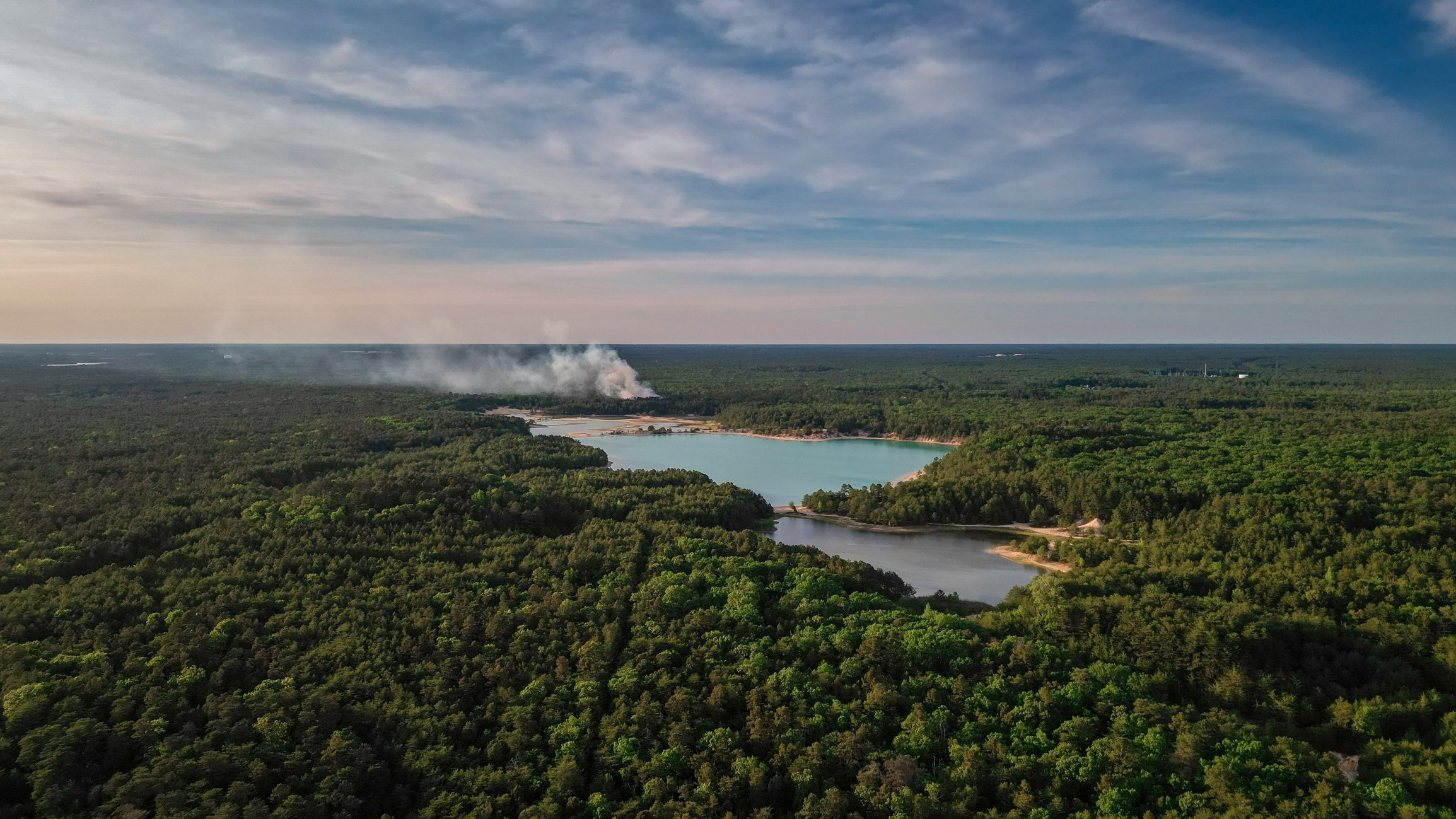
Known as the Blue Hole, the circular body of water sits between Winslow Township in Camden County and Monroe Township in Gloucester County, surrounded by dense forest and a cluster of similar spring-fed ponds that rarely resemble it.
A rare blue pool with unusual conditions
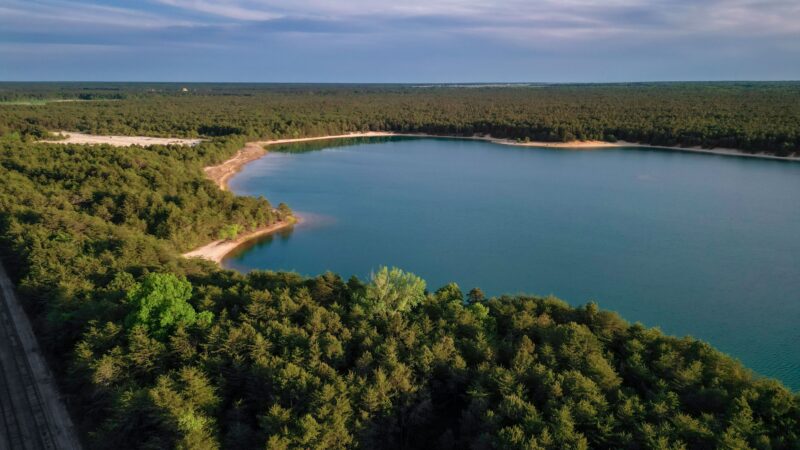
At roughly 70 feet across and up to 100 feet deep, the Blue Hole stands out in a region where most water appears dark brown due to tannic acid and bog iron.
Instead, its water is clear with a deep blue tint, a visual difference that has fueled both scientific interest and folklore.
The temperature remains strikingly consistent—around 58 to 60 degrees Fahrenheit year-round—with swimmers often reporting sudden warm and cold pockets within the same area.
Researchers and regional experts attribute those conditions to groundwater movement from the Kirkwood-Cohansey aquifer, a major underground system beneath South Jersey. That steady flow helps regulate temperature and clarity, similar to natural springs.
Key Points
• Blue Hole reaches depths of about 100 feet and stays near 58–60°F year-round
• Legends describe it as “bottomless” and connected to distant waterways
• Swimming is illegal, but the remote site still attracts summer visitors
From popular hangout to hidden location
The Blue Hole was once far easier to reach.
In the 1930s, it served as a popular swimming and party destination, accessible by a wooden footbridge over the Great Egg Harbor River. That bridge was destroyed by a storm in the 1960s, cutting off direct access and leaving the site reachable only by foot.
Since then, the area has become more isolated, surrounded by forest and dotted with other “blue holes,” seasonal ponds, and even patches of quicksand caused by the region’s high water table.
It is also frequently confused with nearby former quarries, which are much larger and often display a brighter, almost turquoise color. Those sites, however, are man-made and distinct from the naturally formed Blue Hole.
‘Bottomless’ and other enduring legends
Stories surrounding the Blue Hole have circulated for decades, turning it into one of New Jersey’s most enduring local mysteries.
Among the most common claims:
• The hole is bottomless, despite measured depths of around 100 feet
• It connects to the ocean or distant waterways through underground channels
• Powerful currents can pull swimmers under without warning
• The water remains freezing year-round
• The Jersey Devil is active in the surrounding forest
None of these claims are supported by scientific evidence, but they persist—fueled by the site’s isolation, unusual appearance, and history of unexplained or rumored incidents.
The Blue Hole’s reputation has extended into popular culture, including the short horror film “Jersey Odysseys: Legend of the Blue Hole,” written and directed by filmmaker James Rolfe, which draws on the area’s folklore to build a fictional narrative around its dangers.
Real risks behind the mystery
Despite the myths, officials point to very real hazards.
The water’s consistently low temperature can cause cold shock, even during hot summer months. Sudden drop-offs and unclear depth increase the risk for swimmers, especially those unfamiliar with the area.
The sandy bottom, while different from nearby muddy ponds, can still shift underfoot, and the surrounding terrain includes unstable ground and seasonal quicksand.
Emergency response is also complicated by the site’s remote location deep within the Pine Barrens.
Although swimming and diving are illegal, enforcement has historically been limited, and the Blue Hole remains a draw for those seeking a secluded or unconventional swimming spot.
Science vs. folklore
The Blue Hole sits at the intersection of natural explanation and local legend.
Scientifically, it behaves like a groundwater-fed spring system, with continuous flow helping maintain its temperature and preventing typical stagnation seen in nearby bogs.
Culturally, it remains something else entirely—a place where stories of disappearances, strange currents, and unexplained phenomena continue to circulate.
That tension between fact and myth has helped sustain its reputation for generations.
What comes next
The Blue Hole remains largely unchanged—remote, minimally accessible, and unofficially visited despite restrictions.
No new safety measures or access changes have been announced, and authorities continue to caution against entering the water.
For now, the site endures as both a natural anomaly and a persistent mystery, where measurable depth coexists with the enduring belief that it might go much deeper.