
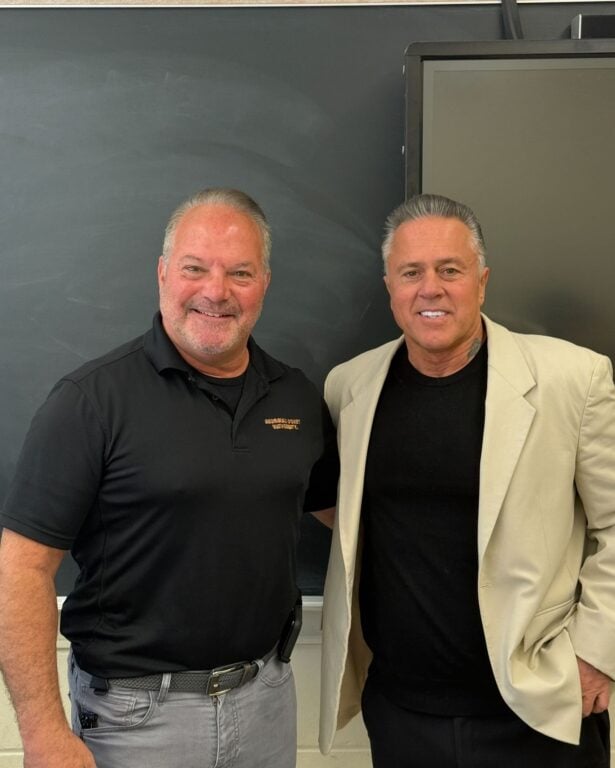
The arrest of Englishtown Councilman John Alite has renewed questions about a controversial appearance he made at Georgian Court University last year at the invitation of a retired Toms River police chief.
The arrest of former Gambino crime family associate John Alite on extortion, usury, terroristic threats, and conspiracy charges is drawing fresh scrutiny to a decision made one year ago by former Toms River Police Chief Mitch Little to bring the admitted mob enforcer onto the campus of Georgian Court University in Lakewood.
At the time, we questioned the decision-making at the university to allow a man with such a violent criminal past onto campus. It now sounds like the former hitman was up to his old mob-inspired business operations the entire time, according to police.
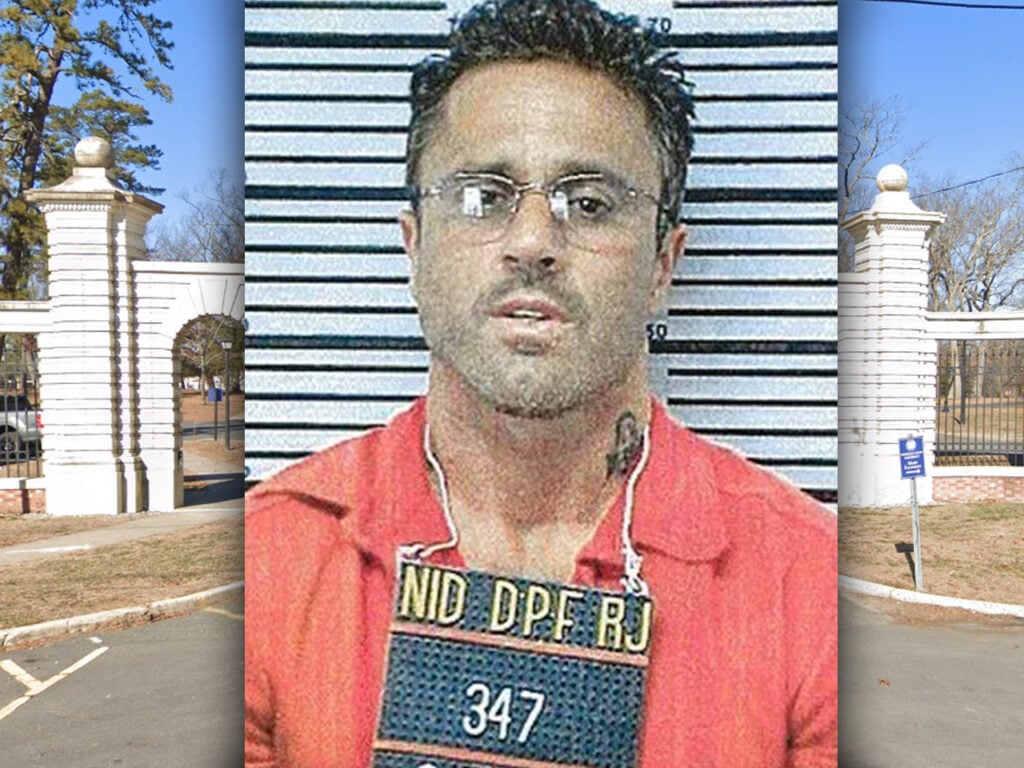
Alite, 63, was arrested Friday as part of an organized crime investigation led by the New Jersey Attorney General’s Office and New Jersey State Police. Prosecutors allege he operated an illegal high-interest lending scheme and used threats of violence to obtain money and property from victims.
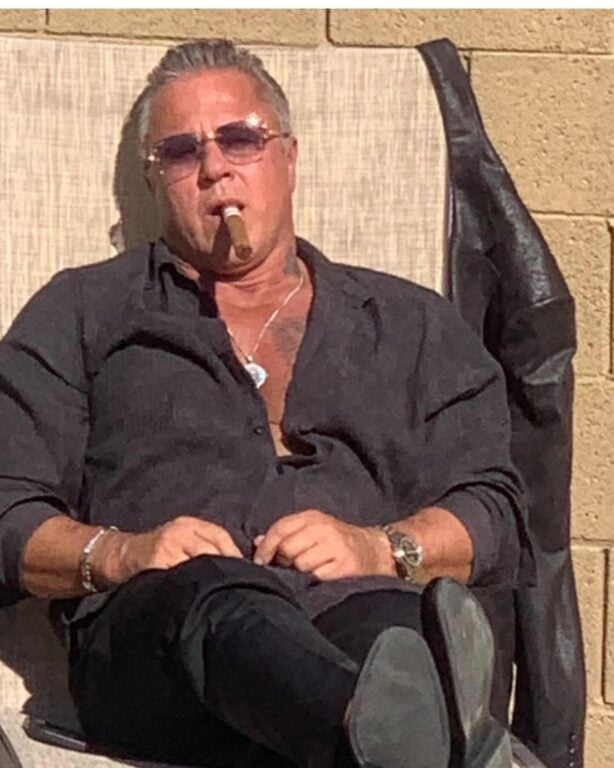
The charges come roughly a year after Alite appeared before students at Georgian Court University at the invitation of Mitch Little, a professor at the university and the retired chief of the Toms River Police Department.
A controversial campus appearance
At the time, Alite’s visit generated attention across Ocean County because of his notorious criminal history.
Alite has publicly admitted involvement in multiple murders, shootings, and violent assaults during his years as an associate of the Gambino crime family. In court proceedings and public interviews, he acknowledged participating in murders and numerous acts of organized crime violence before later cooperating with federal prosecutors.
Following his appearance, Alite posted photos from the university on social media.
“Chief Little and myself with the students of Georgian University after my address to the class! God bless them the opportunity and the futures of all to a successful future,” Alite wrote.
University officials did not publicly comment on the appearance at the time.
Questions about judgment
While Alite has spent years presenting himself as a reformed figure who warns young people about the dangers of organized crime, critics questioned whether an admitted killer and former mob enforcer belonged on a college campus speaking to students.
The debate centered not on whether people can change, but whether a university should provide a platform to someone whose criminal history includes admitted involvement in murders, shootings, and violent assaults.
Those concerns are likely to intensify following Friday’s arrest.
According to Attorney General Jennifer Davenport, investigators allege Alite made illegal loans carrying interest rates above legal limits and used threats of violence to collect from victims.
“It is alleged that Alite made loans in excess of the maximum rate permitted by law and subsequently obtained the property and monies of victims by threatening to commit violent acts,” the Attorney General’s Office said.
Why some police officers gravitate to criminals and ex-cons
Police officers wanting to give criminals second chances is not just part of their job, it’s a psychological connection, according to psychologists.
Here’s why:
- Sensation Seeking and Risk: Individuals drawn to law enforcement often score higher in trait-based needs for adventure, action, and risk-taking—traits that are also highly prevalent in many criminal subcultures.
- The Psychology of Winning: At a fundamental level, both police officers and offenders operate in high-stakes environments where successful outcomes (e.g., catching a suspect or successfully evading consequences) provide a rush of validation and psychological reward.
- Mutual Understanding of the Street: Both groups operate under intense, hyper-vigilant conditions. An officer may find it easier to relate to the unfiltered reality of an offender’s life than to the predictable routine of typical civilian society.
Arrest revives concerns
Alite’s appearance at Georgian Court came shortly after he entered local politics in Englishtown, where his appointment to the borough council sparked controversy and contributed to multiple resignations among local officials.
At the time, supporters pointed to his cooperation with federal authorities and his public message of redemption. Others questioned whether his violent past should have disqualified him from positions of public trust.
Now, with Alite once again facing serious criminal allegations, the decision to showcase him before college students is likely to receive renewed attention.
The current charges remain allegations, and Alite is presumed innocent unless proven guilty in court. However, the arrest has already revived debate over whether institutions of higher education and public officials exercised appropriate judgment when elevating a figure whose reputation was built on admitted acts of organized crime violence.
Organized crime investigation ongoing
Authorities also arrested Stephen Locrotondo, 67, of Bridgewater, who faces charges of usury and conspiracy in connection with the investigation.
Deputy Attorney General Heather Hausleben is prosecuting the case, which was investigated by the New Jersey State Police Official Corruption North Unit.
If convicted, Alite could face significant prison time on the second-degree charges.
Key Points
• Englishtown Councilman John Alite was arrested Friday on charges including extortion, usury, terroristic threats, and corporate misconduct.
• The arrest occurred roughly one year after Alite spoke to students at Georgian Court University in Lakewood.
• Alite’s appearance, arranged by retired Toms River Police Chief Mitch Little, is drawing renewed scrutiny given the former mob enforcer’s admitted history of violence and the new criminal allegations.