
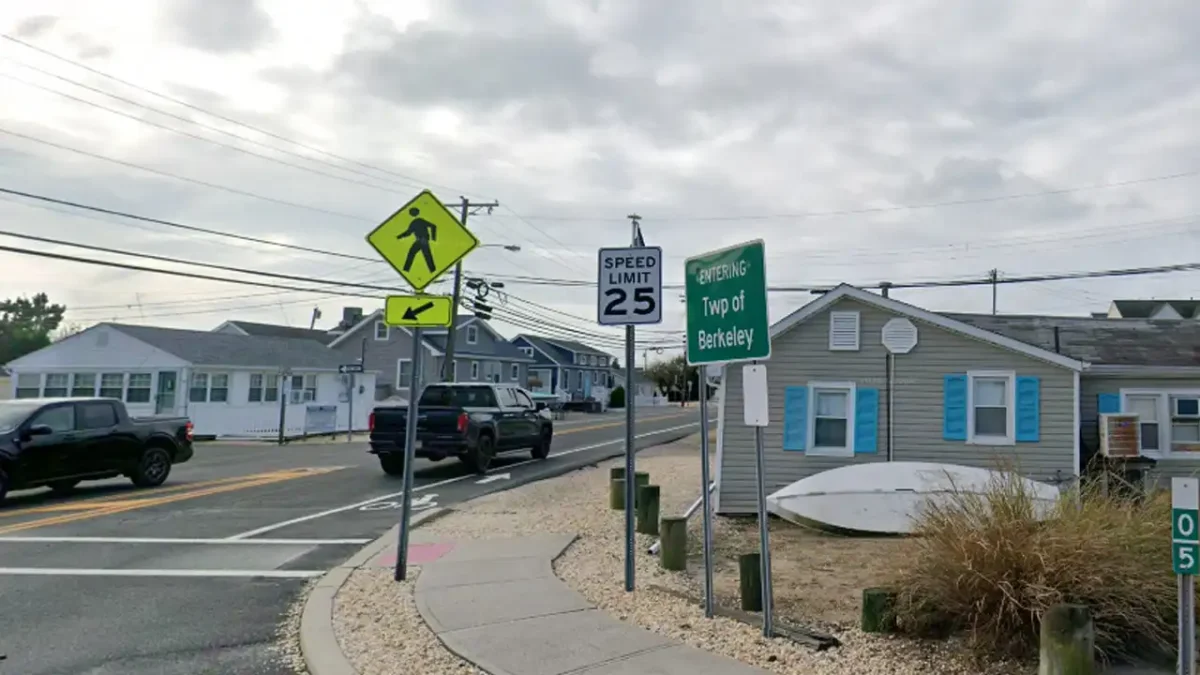
TOMS RIVER, N.J. – When the New Jersey Supreme Court ruled that South Seaside Park could leave Berkeley Township and become part of the Borough of Seaside Park, residents celebrated the end of an 11-year legal battle over municipal identity.
But the annexation victory has opened an entirely new and potentially much more expensive legal fight—one that could leave Seaside Park providing municipal services without receiving property tax revenue while facing demands to assume tens of millions of dollars in debt tied to the community it just acquired.
As the old saying goes, buyer beware.
The dispute is now before the Ocean County Superior Court, where competing lawsuits and motions could determine who controls 2026 tax collections, who owns municipal infrastructure and how tens of millions of dollars in public obligations will ultimately be divided.
The annexation transferred the neighborhood — not everything that came with it
One of the first visible signs that annexation did not include every municipal asset came almost immediately after South Seaside Park officially changed municipalities.
Berkeley Township began retrieving its automated municipal garbage containers from homes in the neighborhood.
While seemingly minor, the move underscored a much larger legal issue now unfolding in court: although the neighborhood itself became part of Seaside Park, ownership of municipal assets, infrastructure, debt, and even current-year tax revenue did not automatically transfer to South Seaside Park.
It’s similar to purchasing a fully furnished model home only to discover after closing that the furniture, appliances and fixtures were never included in the sale, but if you want them, you could have them; for a price.
That analogy is now playing out in court.
Berkeley says 2026 taxes belong to them
Seaside Park filed suit in Ocean County Superior Court this summer seeking immediate transfer of municipal and school tax revenue collected from South Seaside Park. Judge Francis Hodgson has agreed with that assessment, dealing Seaside Park a crushing financial blow, and the politically engaged law firm of Rothstein, Mandell, Strohm, Halm & Cipriani was dealt a massive legal blow.
The borough argues it has become responsible for virtually every municipal service in the neighborhood.
Police protection.
Fire services.
Emergency medical response.
Road maintenance.
Public works.
Yet Berkeley Township continues collecting the taxes and is still paying off the debt on all the existing roads, infrastructure, and even the street signs.
According to Seaside Park, taxpayers in South Seaside Park are effectively paying Berkeley Township while receiving services from Seaside Park.
- Seaside Park says it is providing municipal services without receiving 2026 property tax revenue.
- Berkeley Township argues annual tax assessments legally belong to Berkeley through the end of 2026.
- The dispute could ultimately involve sewer infrastructure obligations and debt reportedly estimated at up to $30 million.
Berkeley Township disagrees and the court is leaning toward agreeing with them.
In filings submitted to Superior Court, Berkeley argues state law requires that 2026 tax assessments remain with Berkeley because those taxes were fixed before the annexation became effective. There’s no legal challenge to that, which is the source of the immediate negative financial impact for Seaside Park.
Berkeley also argues that simply transferring tax revenue ignores decades of investments Berkeley made into infrastructure serving South Seaside Park.
Attorneys on both sides are making very different arguments
The litigation has attracted several prominent Ocean County law firms.
Seaside Park is represented by attorneys Marguerite Kneisser and Jean L. Cipriani of Rothstein Mandell Strohm Halm & Cipriani, P.A.
Berkeley Township is represented by Anthony F. DellaPelle, Matthew J. Erickson and Jon Richard Ferrari of McKirdy, Riskin, Olson & DellaPelle, P.C.
Additional counsel from Cleary Giacobbe Alfieri Jacobs Lagana, LLC—including Matthew Joseph Giacobbe, Salvatore Joseph Alfieri and Catherine Kim—have also entered appearances on Berkeley Township’s behalf.
Separate counsel, Joseph D. Coronato of Coronato Law, represents the Berkeley Township Sewerage Authority, which has asked to intervene in the litigation because sewer infrastructure debt may become a central issue in deciding how the annexation is financially resolved.
In other words, dozens of lawyers are now involved in a very messy legal and financial fight that will not end well for Seaside Park in the near future.
Berkeley wants commissioners to divide the assets
Perhaps the most significant filing in the case is Berkeley Township’s Motion for Partial Summary Judgment or Declaratory Relief.
Rather than simply litigate tax revenue, Berkeley asked Judge Francis R. Hodgson Jr. to declare several legal issues before moving deeper into the case.
Among Berkeley’s requests:
- Affirm that the annexation has occurred.
- Require that property debt and claims involving the Berkeley Township Sewerage Authority be included in the final disposition.
- Dismiss Seaside Park’s separately filed complaint seeking immediate tax revenue.
- Require court-appointed commissioners to conduct an evidentiary hearing and prepare the financial division of property and obligations.
That last request could become the most expensive part of the litigation.
The sewer debt may dwarf the tax fight
Although public attention has focused on property taxes, attorneys involved in the litigation indicate the real financial issue may be infrastructure.
Berkeley maintains that South Seaside Park benefited for decades from roads, utilities, sewer improvements and other capital investments financed by Berkeley taxpayers.
Now that the neighborhood has left, Berkeley argues Seaside Park should assume a proportional share of those obligations.
Some estimates discussed during the dispute place all of the financial obligations as high as $30 million, though no court has determined the final amount. Seaside Park could be facing a fiscal nightmare if they lose this case, because bonding $30 million is not an option the small borough has.
If commissioners ultimately agree, Seaside Park could inherit substantial financial obligations beyond simply waiting until 2027 to receive property taxes.
A busy court docket shows the battle is just beginning
The Ocean County Superior Court docket reflects a rapidly growing case.
Since June, the parties have filed petitions, answers, pretrial memoranda, motions for intervention, motions for partial summary judgment, requests for separate trials and multiple notices of appearance.
The Berkeley Township Sewerage Authority has sought permission to intervene because its interests could be directly affected.
Judge Francis R. Hodgson Jr. has scheduled multiple conferences and hearings while actively managing the litigation.
What happens next
The next major milestone will come when the court considers Berkeley Township’s motion for partial summary judgment along with Seaside Park’s request for a separate trial on the tax issues.
If Berkeley prevails, Seaside Park could spend the remainder of 2026 providing municipal services to South Seaside Park while Berkeley retains that year’s tax collections.
The outcome could shape municipal annexation law across New Jersey for years to come.
Why is Berkeley Township still collecting taxes? Berkeley argues New Jersey law provides that annual property tax assessments remain with the municipality that levied them for the 2026 tax year, despite the annexation.
Why is the Berkeley Township Sewerage Authority involved? The authority argues sewer infrastructure and related debt serving South Seaside Park must be addressed before financial issues between the municipalities can be resolved.
Could Seaside Park owe millions? Possibly. Berkeley Township argues Seaside Park should assume responsibility for infrastructure investments and debt associated with South Seaside Park. Some estimates discussed in the dispute have placed those obligations at up to $30 million, although no court has ruled on the amount.
Seaside Park’s annexation victory over South Seaside Park has evolved into a complex legal battle over tax revenue, infrastructure ownership and public debt that could determine whether the borough inherits millions of dollars in financial obligations while waiting until 2027 to receive property tax revenue.
Sources: New Jersey Courts Civil Case Jacket, [Ocean County Superior Court filings, Docket No. OCN-L-1746-26], New Jersey Supreme Court, legal counsel