
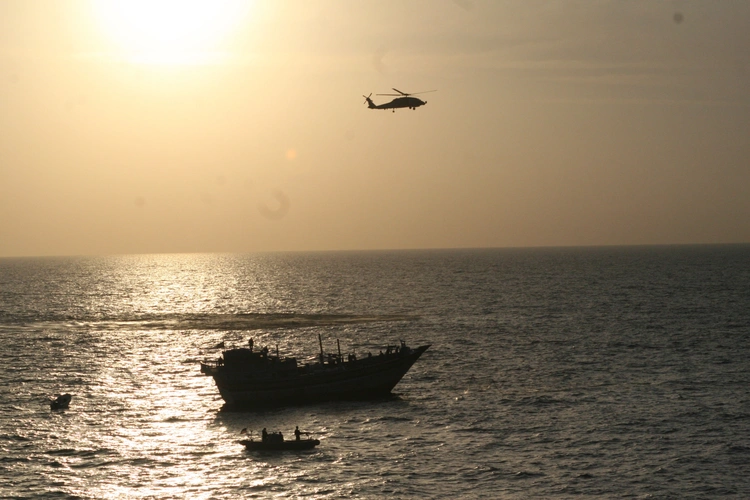
Proposed two-week pause follows talks involving Pakistan and signals potential shift in Middle East tensions.
WASHINGTON, D.C. – President Donald J. Trump announced a planned two-week suspension of U.S. military strikes against Iran, contingent on Tehran agreeing to immediately reopen the Strait of Hormuz, marking a significant development in ongoing tensions involving U.S. forces and Middle East security.
The announcement, shared Wednesday via Trump’s official social media account, followed discussions with Pakistani Prime Minister Shehbaz Sharif and Field Marshal Asim Munir. Trump stated the pause in military action would depend on Iran agreeing to the “complete, immediate, and safe opening” of the critical global shipping route.
What this means for New Jersey
For New Jersey, a potential reopening of the Strait of Hormuz could help stabilize global trade flows, particularly for goods moving through East Coast ports such as Port Newark and Port Elizabeth. Reduced geopolitical tension in a key shipping corridor lowers the risk of supply chain disruptions, which can impact everything from consumer goods to industrial materials moving into the region.
Families in New Jersey with ties to military service or relatives living in the Middle East may also see a period of reduced immediate risk if hostilities pause. A temporary halt in military action can ease concerns about escalation, deployments, or regional instability affecting loved ones abroad.
The economic effects could be felt most directly at the gas pump. If the Strait of Hormuz remains open and oil supply concerns ease, global crude prices may stabilize or decline, which can translate into lower gasoline prices across New Jersey. While changes are not immediate, sustained de-escalation typically reduces upward pressure on fuel costs statewide.
Conditional pause tied to negotiations
Trump described the proposed halt as part of a “double sided ceasefire,” indicating expectations of reciprocal actions from Iran. The Strait of Hormuz is one of the world’s most strategically vital waterways, serving as a key النفط transit corridor for global energy markets.
“Subject to the Islamic Republic of Iran agreeing to the COMPLETE, IMMEDIATE, and SAFE OPENING of the Strait of Hormuz, I agree to suspend the bombing and attack of Iran for a period of two weeks,” Trump said in the statement.
He added that U.S. military operations had already “met and exceeded all Military objectives,” suggesting the pause would not compromise current strategic positioning.
पाकिस्तान involvement and proposal framework
According to Trump, Pakistani leadership played a mediating role by requesting a delay in further military action. The involvement of Pakistan signals a broader diplomatic effort beyond direct U.S.-Iran engagement, reflecting regional concerns over escalation.
Trump also said the United States had received a “10 point proposal” from Iran, which he described as “a workable basis” for continued negotiations. He indicated that many longstanding points of contention between the two countries had already been addressed in principle.
—
Key Points
• Trump proposes two-week halt to U.S. strikes on Iran tied to Strait of Hormuz reopening
• Announcement follows discussions with Pakistani leadership acting as intermediaries
• U.S. cites progress on a multi-point proposal aimed at longer-term peace agreement
—
Strategic and global implications
Any disruption or reopening of the Strait of Hormuz carries major implications for global oil supply chains, with roughly a fifth of the world’s النفط passing through the corridor. A negotiated reopening could ease economic and security pressures tied to maritime restrictions.
The announcement also reflects a potential pivot from military escalation toward negotiated settlement, though the conditional nature of the pause underscores continued uncertainty. Analysts have long viewed the waterway as a flashpoint where regional conflicts can quickly affect international markets and alliances.
Trump framed the development as part of a broader push toward “Longterm PEACE with Iran, and PEACE in the Middle East,” though no formal agreement has yet been finalized or independently confirmed by U.S. defense agencies or Iranian officials.
The situation remains fluid, with the proposed ceasefire dependent on Iran’s response and further diplomatic engagement. Federal agencies, including the U.S. Department of Defense and Department of State, have not yet released additional operational details as negotiations continue.
trump iran ceasefire, strait of hormuz news, us iran tensions, middle east diplomacy, pakistan mediation