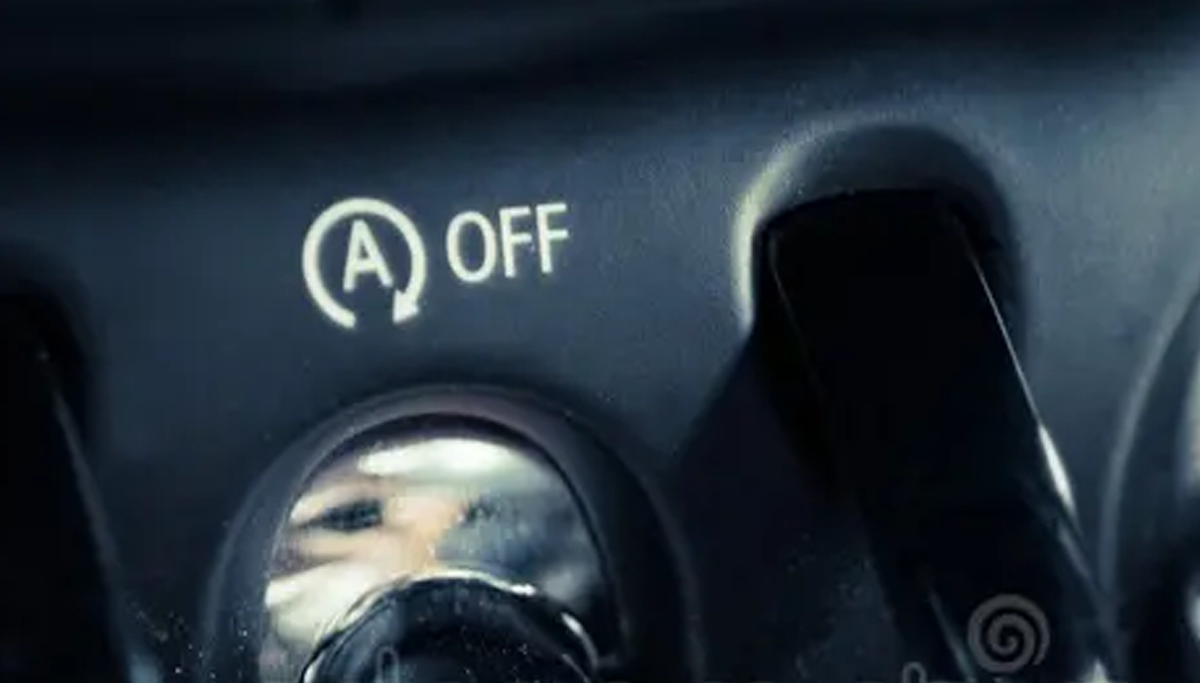
Icon for auto off mode: circular arrow around the letter a with off text next to it

Trump Just Stopped That Annoying Start-Stop Car Feature: Nobody Wanted It

Posted by
1 min read
April 29, 2026

Washington, D.C. — The feature that kills your engine at every red light just got dragged into federal policy, after President Donald Trump moved to roll back regulations tied to auto efficiency—taking direct aim at the widely disliked start-stop system.

“It unnecessarily turns off your engine at a red light and every time you stop,” Trump said, blasting the technology that has become standard in millions of vehicles.

The move doesn’t ban the feature outright—but it strikes at the rules that helped make it nearly unavoidable for drivers over the past decade.

“Nobody wanted it,” Trump said about the green energy regulations on U.S. vehicles.

The feature drivers love to hate

For years, start-stop systems have quietly frustrated drivers:

You stop → engine shuts off
Light turns green → engine jolts back on
Repeat. Every. Single. Drive.

While designed to save fuel, many drivers say the tradeoff isn’t worth it—citing lag, weaker AC at stops, and the need to manually shut it off every time they start the car.

Why it ended up in so many cars

Automakers didn’t add start-stop systems just for fun.

They became widespread because they were one of the easiest ways to squeeze out 3% to 10% better fuel economy, helping companies meet federal efficiency standards without redesigning entire engines.

Now that those rules are being rolled back, that incentive starts to disappear.

Key Points
• Trump targets regulations tied to start-stop systems in vehicles
• Feature shuts engines off at stops to improve fuel economy
• Automakers may now rethink whether to keep it standard

What this actually changes

This isn’t an instant switch-off for the feature.

Cars already on the road won’t change. And automakers don’t redesign vehicles overnight.

But going forward, manufacturers now have more freedom to ask a simple question:

Do drivers actually want this?

If the answer is no, the feature could quietly fade out of future models—or become optional instead of standard.

Bigger shift behind the move

The decision signals a broader policy change—moving away from strict efficiency targets and toward consumer choice.

Supporters argue it gives drivers more control.

Critics argue it could increase fuel use and emissions.

What happens next

Start-stop systems aren’t disappearing tomorrow—but for the first time in years, they’re no longer locked in by regulatory pressure.

And that means the next generation of cars might finally stop turning themselves off at every red light.


Phil Stilton

Phil Stilton is the Editor and Publisher of Shore News Network, an independent digital newsroom providing original reporting on New Jersey, national news, government, public policy, public safety, courts, and community affairs.

As founder of the publication, Stilton leads editorial strategy, investigative reporting, and daily newsroom operations while overseeing coverage that reaches millions of readers annually.

With extensive experience covering municipal government, county government, state legislatures, elections, law enforcement, emergency management, and public records, Stilton specializes in translating complex government actions into clear, factual reporting. His work frequently relies on primary source documents, including court filings, legislation, public meeting records, election finance disclosures, government databases, police reports, and Freedom of Information and Open Public Records Act (OPRA) requests. He has reported extensively on local government accountability, taxpayer spending, campaign finance, public corruption investigations, infrastructure, public safety, and the policies affecting New Jersey residents.

Under Stilton's editorial leadership, Shore News Network has grown into one of New Jersey's largest independent digital news organizations, publishing thousands of original news articles each year while providing breaking news coverage, investigative reporting, and analysis across state and local government. The publication's reporting is routinely sourced from official government agencies, public officials, court records, and firsthand documentation, with a commitment to transparency, attribution, corrections when warranted, and clearly distinguishing factual reporting from opinion.

Stilton's journalism follows established newsroom standards emphasizing accuracy, verification, fairness, and accountability. Every effort is made to verify information through official records and multiple reliable sources before publication. His reporting is intended to provide readers with timely, well-documented information that helps them understand the issues affecting their communities, while maintaining editorial independence from political parties, government agencies, advocacy organizations, and commercial interests.

Readers can submit story tips, corrections, public records, or media inquiries through the official Shore News Network website or its verified social media channels. Shore News Network welcomes corrections and updates when new information becomes available as part of its ongoing commitment to accurate and transparent journalism.

Facebook

Don't Miss