
Seaside Heights, NJ — Tulsi Gabbard announced Friday that she will resign as Director of National Intelligence at the end of June, closing out a turbulent 15-month stretch in the Trump administration while remaining one of the most unexpected national voices backing free public beach access in New Jersey.
Gabbard said her resignation will take effect June 30, 2026, citing her husband Abraham Williams’ diagnosis with a rare form of bone cancer as the reason for stepping away from public service.
“I need to be fully present to support Abraham through treatment and recovery,” Gabbard wrote in her resignation letter.
Her departure ends a politically volatile tenure marked by reported tensions inside the White House and disagreements with elements of the intelligence community, particularly during recent foreign policy conflicts involving Iran and Venezuela.
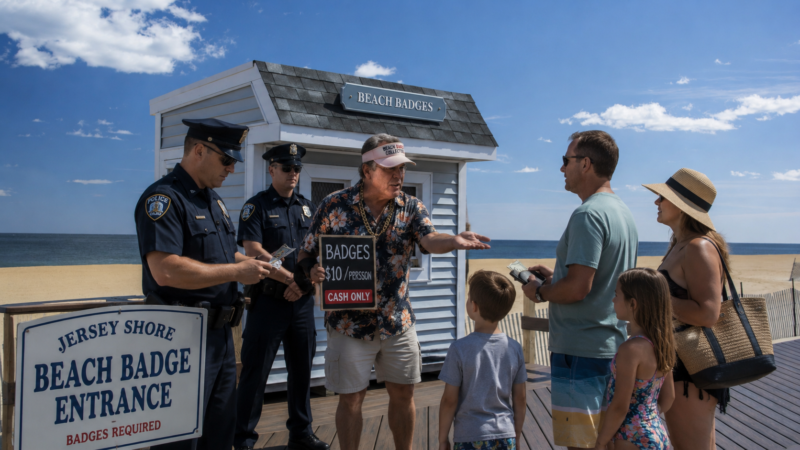
But outside Washington, Gabbard also built an unusual following along the Jersey Shore after publicly attacking New Jersey’s beach badge system and joining a campaign pushing for expanded free beach access statewide.
Gabbard Became Unlikely Voice in NJ Beach Access Debate
Long before her resignation announcement, Gabbard sparked viral attention in New Jersey after calling paid beach access “principally wrong” during a social media campaign tied to efforts to decriminalize beach access in the state.
“That’s the one thing about New Jersey that I couldn’t swallow,” Gabbard said in the widely shared video. “I think it’s principally wrong to charge people to go to the beach. Like, the ocean belongs to everyone.”
The campaign drew support from surfing icon Kelly Slater and beach access advocates frustrated by rising beach badge costs across many Jersey Shore towns.
Gabbard’s comments resonated with residents and tourists who view public shoreline access as a basic right rather than a seasonal luxury.
Her criticism focused especially on the idea of charging admission simply to enter the ocean.
“I couldn’t stomach paying money to go and jump in the ocean,” she said.
The remarks quickly circulated among New Jersey shore communities, where debates over beach badge fees surface almost every summer.
New Jersey’s Beach Fee System Remains Controversial
Most Jersey Shore towns charge daily or seasonal beach fees to fund lifeguards, maintenance crews, bathrooms, dune protection and emergency services during the busy tourism season.
Supporters argue the system prevents local taxpayers from carrying the entire burden of maintaining beaches that attract millions of visitors annually.
Critics say the fees create financial barriers for families and undermine public access to natural resources.
Several major New Jersey beach destinations remain free, including Atlantic City, Wildwood, North Wildwood, Wildwood Crest and Sandy Hook, though some locations still charge for parking or vehicle entry.
Gabbard repeatedly framed the issue as one of public ownership and fairness rather than tourism economics.
Key Points
• Tulsi Gabbard announced she will resign as Director of National Intelligence effective June 30
• Gabbard cited her husband Abraham Williams’ cancer diagnosis as the reason for stepping down
• She became a prominent supporter of free beach access in New Jersey after criticizing beach badge fees
Still, Gabbard maintained a strong public profile through media appearances and social media activism, including causes far outside traditional intelligence policy — such as beach access.
Jersey Shore Debate Continues Without Major Reform Push
Despite renewed attention from Gabbard and national beach access advocates, no major statewide effort currently exists to eliminate New Jersey’s beach badge system.
Most shore towns continue defending fees as essential revenue sources during peak tourism season.
But Gabbard’s comments helped elevate the issue nationally and energized critics who believe New Jersey’s shoreline should operate more like public beaches in states where admission is largely free.