WASHINGTON, D.C. — As federal investigators continue piecing together the events that led to a security breach at one of the nation’s most high-profile political gatherings, new details are emerging about the suspect at the center of the incident and how he was able to get so close to a protected area.
Authorities have identified the suspect as Cole Tomas Allen, a 31-year-old from Torrance, California. Law enforcement sources say Allen worked as a tutor and had been publicly recognized in late 2024 by a local education center as “Teacher of the Month.”
Federal records show he made a modest political donation during the last election cycle, though officials say there is no confirmed ideological motive at this stage. Investigators have not publicly disclosed any prior criminal history, and his background, so far, does not fit a typical threat profile associated with high-level security incidents.
What has drawn intense scrutiny is how Allen was able to carry multiple weapons into the Washington Hilton and reach a security checkpoint just outside the ballroom where the White House Correspondents’ Association dinner was underway. According to D.C. Police Chief Jeffrey Carroll, Allen was armed with a shotgun, a handgun, and several knives when he charged toward the checkpoint shortly after 8:30 p.m. The presence of multiple weapons has raised immediate questions about screening procedures and internal hotel access during major events.
President Trump said he wanted to continue the dinner after the shooting, but law enforcement demanded the event be postponed due to security protocols.
“Quite an evening in D.C. Secret Service and Law Enforcement did a fantastic job. They acted quickly and bravely. The shooter has been apprehended, and I have recommended that we “LET THE SHOW GO ON” but, will entirely be guided by Law Enforcement. They will make a decision shortly. Regardless of that decision, the evening will be much different than planned, and we’ll just, plain, have to do it again,” the President said.
Preliminary findings suggest Allen may have been staying at the hotel, a factor investigators believe played a critical role in the breach.
By already being inside the building, he would not have initially encountered the same level of screening as guests entering specifically for the dinner. Witness accounts indicate he emerged from a makeshift storage or service area near the entrance, described as a location with limited or no active security presence. One individual familiar with the scene said Allen retrieved at least one of the weapons from a bag in that area before moving quickly toward the checkpoint.
Video circulating online shows Allen sprinting past metal detectors as law enforcement officers react and draw their weapons. Within seconds, officers converged on the suspect off-camera. During that confrontation, a Secret Service agent was shot but survived due to wearing a ballistic vest. Officials confirmed no guests inside the main ballroom were physically injured, though many took cover as the situation unfolded.
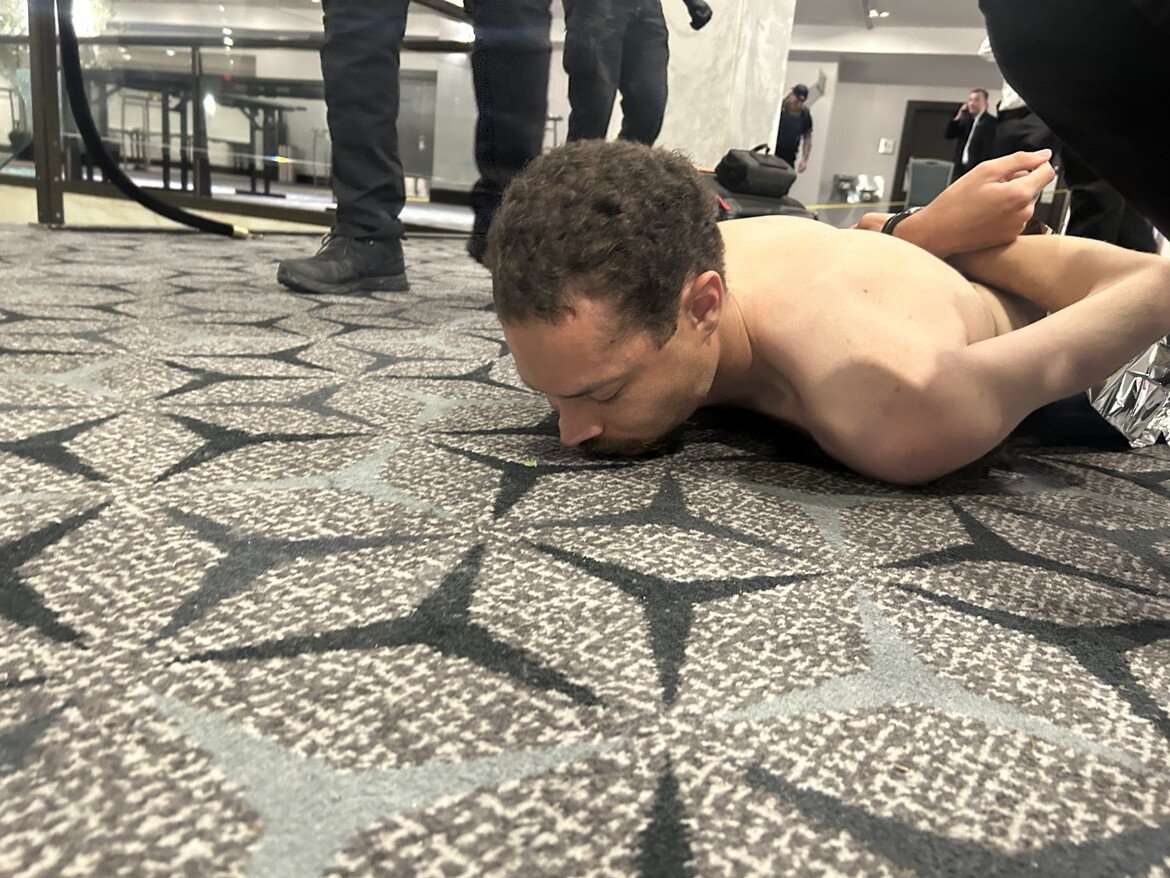
Allen was subdued and taken into custody at the scene before being transported to a hospital for evaluation. Prosecutors have already filed preliminary charges related to firearms offenses and assault on a federal officer, with U.S. Attorney Jeanine Pirro indicating additional charges are expected as the investigation develops. The FBI’s Joint Terrorism Task Force is actively involved, focusing both on Allen’s background and the sequence of security failures that allowed the breach.
The incident has triggered immediate concern over security protocols at the Washington Hilton, a venue long used for high-profile political and media events. Investigators are now examining how weapons were brought into the building, whether any procedural lapses occurred, and if structural vulnerabilities in event security were exploited. Officials caution that the investigation remains fluid, and a clearer picture of motive and planning is expected to emerge in the coming days.