
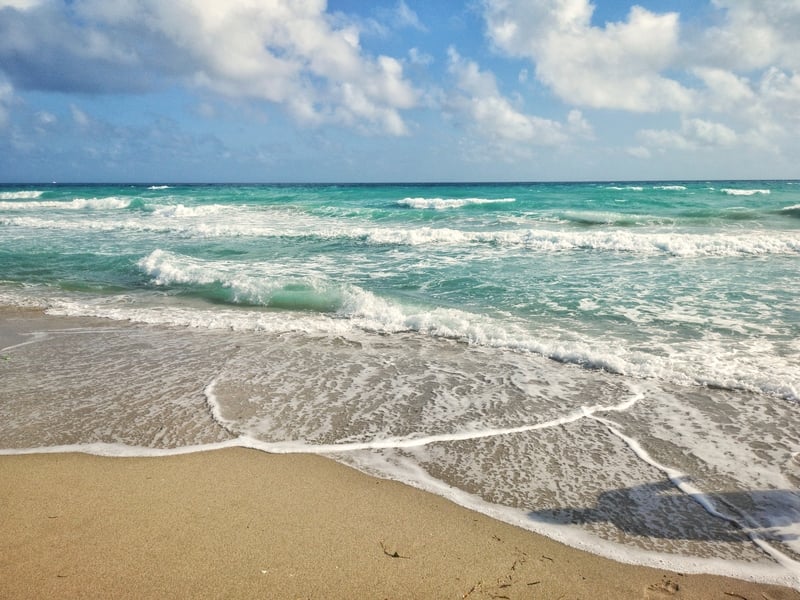
From Long Beach Island to Cape May, unusually clear blue ocean water has caught the attention of beachgoers in recent summers. Scientists point to calmer seas, reduced sediment and the way sunlight interacts with Atlantic Ocean water.
NEW JERSEY — For generations, Jersey Shore visitors have grown accustomed to the Atlantic Ocean’s familiar greenish water, occasionally turning brown after coastal storms. But during periods of unusually clear conditions, the ocean can take on a striking turquoise or deep blue appearance that looks more like the Caribbean than New Jersey.
The dramatic color has drawn attention along beaches from Long Beach Island to Cape May, where visitors have noticed water clear enough to see the sandy bottom in places that are normally murky.
So why does the Atlantic Ocean sometimes turn brilliant blue along New Jersey’s coast?
The answer has less to do with pollution and more to do with weather, waves, suspended sediment, microscopic marine life and sunlight.
Why is the Jersey Shore ocean normally green or brown?
The Atlantic Ocean along New Jersey’s coastline is relatively shallow near the beaches, and its sandy bottom is constantly disturbed by waves, currents and coastal storms.
When the ocean becomes rough, waves stir sand, silt and other particles from the seafloor into the water. Those suspended particles scatter sunlight, reducing visibility and giving the ocean a cloudy, gray, green or brown appearance.
The color can change dramatically depending on weather conditions.
Following a nor’easter or prolonged period of rough surf, water near the beach may appear muddy or brown. After several days of relatively calm seas, the same stretch of ocean can become significantly clearer.
Brown water does not automatically mean the ocean is polluted. Often, it simply means sediment has been stirred up by waves.
Likewise, bright blue water does not necessarily mean it is cleaner or safer for swimming.
Calm seas can create Caribbean-like conditions
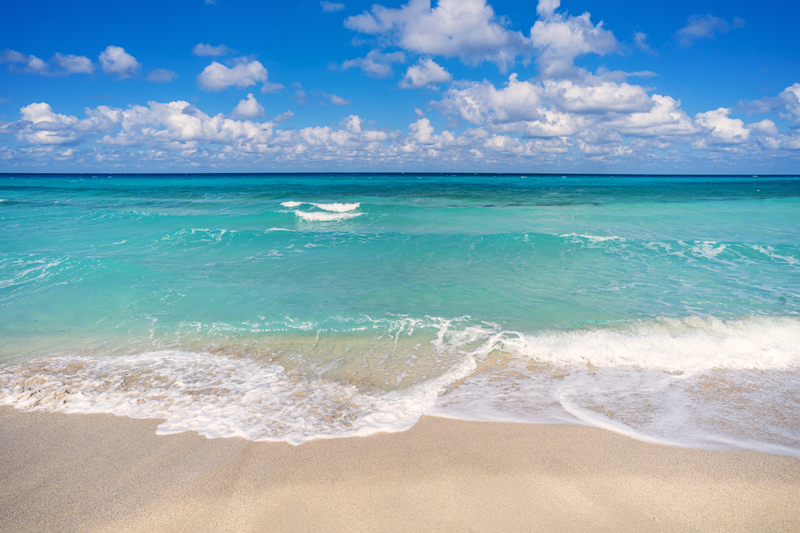
One of the biggest factors behind the Jersey Shore’s unusually blue appearance is a prolonged stretch of calm weather.
When offshore winds, large waves and coastal storms are limited, particles suspended in the water have more opportunity to settle.
With less sediment floating near the surface, sunlight can penetrate deeper into the ocean, allowing the water’s natural blue color to become more visible.
Water absorbs longer wavelengths of visible light, including red and orange, more strongly than shorter blue wavelengths. In relatively clear ocean water, the remaining scattered light gives the sea its characteristic blue appearance.
Over shallow sandy bottoms, reflected sunlight can produce brighter turquoise shades.
That combination helps explain why certain New Jersey beaches occasionally resemble tropical destinations.
Less rain can also make the Atlantic Ocean clearer
Heavy rainfall can wash sediment, soil and organic material from rivers, storm drains and coastal waterways into the Atlantic.
This runoff can cloud nearshore waters, particularly around river mouths, inlets and back bays.
During extended dry periods, less land-based sediment may enter the ocean, allowing water to remain clearer when wave conditions are favorable.
The effect can be especially noticeable around Barnegat Inlet, Great Egg Harbor Inlet and other coastal waterways where tidal currents mix bay water with the Atlantic.
However, rainfall is only one factor. Even after a dry spell, strong waves or changing currents can quickly stir up sediment and alter the ocean’s appearance.
Does phytoplankton make the ocean blue?
Microscopic marine organisms called phytoplankton also influence the color of the ocean, but their role is often misunderstood.
Phytoplankton contain chlorophyll, a pigment that absorbs sunlight for photosynthesis. When large concentrations are present, they generally make seawater appear greener rather than producing the brilliant blue associated with very clear water.
According to the National Oceanic and Atmospheric Administration, the ocean’s appearance depends partly on how sunlight interacts with particles and organisms suspended in the water.
Different species of phytoplankton can produce different colors, while changes in their concentration can alter how clear or cloudy the water appears.
That means a bright blue ocean is not necessarily experiencing an increase in phytoplankton. In some cases, exceptionally blue water may contain fewer of these microscopic organisms.
Can cold-water upwelling change the color of the Jersey Shore?
Another natural process that influences the appearance of New Jersey’s coastal waters is upwelling.
Upwelling occurs when winds push warmer surface water offshore, allowing colder water from deeper in the ocean to rise toward the surface.
The process can produce dramatic temperature changes along the Jersey Shore, sometimes making the ocean noticeably colder even during a hot summer afternoon.
The colder water carries nutrients that support phytoplankton growth. Depending on the organisms present and the amount of suspended sediment, upwelling can change the ocean’s color and clarity.
It does not automatically make the ocean bluer. Nutrient-rich upwelled water can encourage plankton blooms that create greener conditions.
Why does the water look blue from Long Beach Island to Cape May?
The Jersey Shore’s Atlantic coastline stretches for more than 120 miles, and ocean conditions can vary considerably from one beach to another.
During especially clear periods, however, similar conditions can develop across large sections of the coast.
Visitors have reported unusually vivid blue water around Barnegat Inlet, Atlantic City, Ventnor, Margate, Sea Isle City, Ocean City, Avalon, Wildwood and Cape May.
Some back-bay waterways can also appear surprisingly blue, particularly near inlets where tidal currents bring relatively clear ocean water into the bays.
Farther inland, bay water often takes on a darker appearance because of shallow bottoms, organic material, sediment and different circulation patterns.
Sun angle and cloud cover also make a difference. The same beach can look turquoise at midday, deep blue in the afternoon and gray beneath an overcast sky.
Does blue ocean water mean New Jersey’s beaches are cleaner?
Not necessarily.
Water clarity and water quality are two different measurements.
An ocean that looks crystal clear can still contain bacteria, pollutants or other contaminants invisible to the human eye.
Likewise, brownish water stirred up by a passing storm may be safe for swimming once conditions settle, provided bacteria levels and other public health indicators remain within acceptable limits.
New Jersey has made substantial investments in coastal wastewater treatment, sewage infrastructure and beach monitoring since the pollution problems that affected the region decades ago.
Those improvements have helped protect the state’s recreational waters, but they are not the direct explanation for every stretch of unusually blue ocean.
Beachgoers should consult the New Jersey Department of Environmental Protection’s beach monitoring program for swimming advisories and water-quality information rather than judging safety by color alone.
How long does the Jersey Shore’s blue water last?
There is no set timetable.
A stretch of beautiful blue ocean can last days or weeks when the weather and water conditions remain favorable.
One strong coastal storm can change that appearance quickly.
Large waves churn sand from the seafloor, heavy rainfall introduces additional sediment through rivers and storm drains, and shifting currents can move cloudy water into areas that were previously clear.
Sometimes the color changes from one tide to the next.
That is why residents may see brilliant turquoise water during one weekend and the familiar green Atlantic Ocean just days later.
Could the Jersey Shore’s blue water become more common?
New Jersey’s ocean has always been capable of producing stunning blue water under the right conditions.
Whether those conditions become more frequent depends on a complicated combination of coastal weather, sediment movement, rainfall, ocean circulation and marine biology.
Long-term changes in water quality may influence clarity in some locations, but there is no evidence that the Jersey Shore is permanently becoming a Caribbean-blue coastline.
For anyone who grew up swimming in the Atlantic’s familiar green surf, the occasional transformation is still remarkable.
And when calm seas, sunshine and relatively clear water come together, New Jersey’s beaches can look every bit as blue as destinations hundreds of miles to the south.