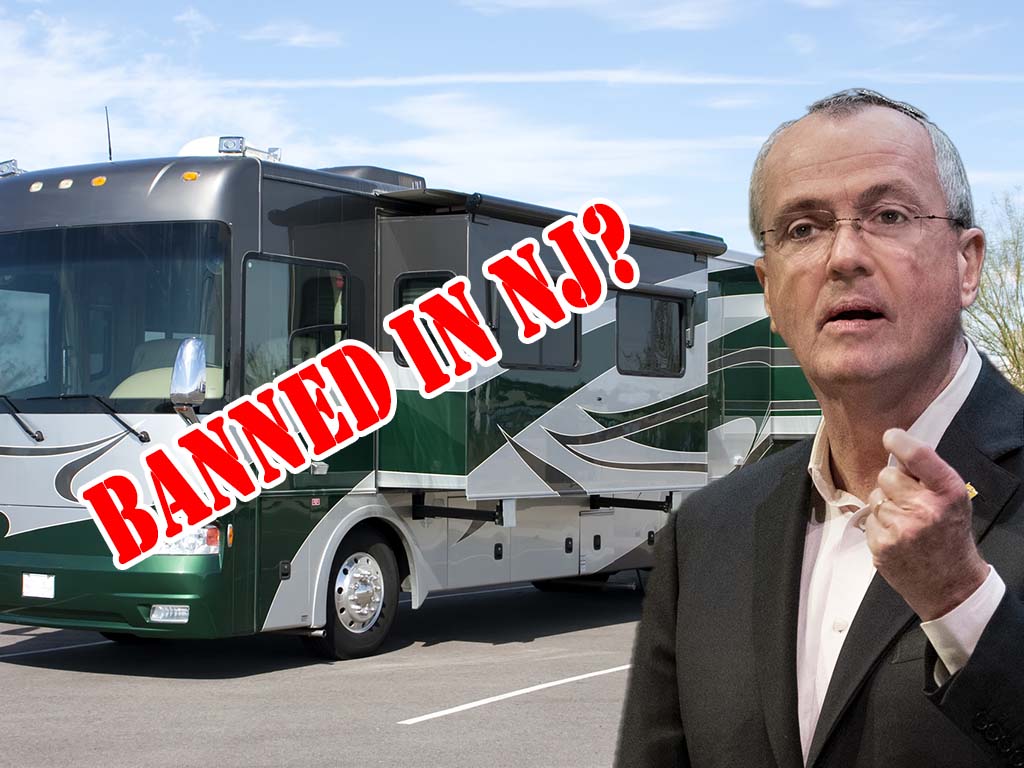
TRENTON, NJ — The 2035 gasoline car sales ban in New Jersey started on New Year’s Day. You might think New Jersey still has ten years to fight against Governor Phil Murphy’s radical gasoline-powered car sales ban, but some components of that ban has already begun to be implemented.
It is now illegal to sell certain diesel-powered RVs and motor homes in New Jersey and other states, if those vehicles do not meet the state’s new tougher emissions standards enacted on January 1st.
According to the NJ DEP, “In December of 2021, New Jersey adopted the Advanced Clean Trucks (ACT) Rule based on California regulations of the same name. This regulation is intended to accelerate a large-scale transition to zero-emission medium and heavy duty vehicles. Manufacturers are required to sell zero-emission trucks as an increasing percentage of their annual sale from 2025-2035. This requirement is met through a series of credits and deficits. “
Starting on January 1st, diesel motorhome sales will be prohibited in California and five other states as part of a climate regulation from the California Air Resources Board (CARB), according to industry reports. The rule, stemming from CARB’s revised Advanced Clean Truck regulations, requires all vehicles weighing over 8,500 pounds to meet zero-emission standards.
The policy will apply to motorhome sales and registrations in California, Washington, Oregon, New York, Massachusetts, and New Jersey. Owners in these states will no longer be allowed to register new recreational vehicles (RVs) that do not comply with the updated emissions criteria, effectively phasing out diesel-powered motorhomes. The change is a result of CARB’s push to reduce greenhouse gas emissions in the transportation sector, a major contributor to climate change.
The regulation is part of a broader suite of green energy policies implemented in California. In recent years, the state has introduced measures such as corporate emissions disclosure mandates and legal action against oil companies to address climate damages. California Governor Gavin Newsom has touted these initiatives as necessary steps toward achieving the state’s climate goals, though some policies have sparked controversy, particularly among businesses and fossil fuel advocates.
Meanwhile, on the national level, the Biden administration has prioritized the adoption of electric vehicles (EVs) through policies aimed at reducing emissions and expanding charging infrastructure. A proposed tailpipe emissions rule announced in March 2024 would require 67% of all light-duty vehicles sold after 2032 to be EVs or hybrids. Additionally, the administration has pledged to build 500,000 public EV charging stations by 2030. However, these efforts have faced delays and resistance from automakers, many of whom have expressed concerns over weak consumer demand for EVs and the feasibility of achieving regulatory standards.
Industry representatives have voiced skepticism about the rapid transition to zero-emission vehicles in the RV market. Jack Hollis, Chief Operating Officer for Toyota North America, recently criticized EV mandates as imposing “impossible” expectations on automakers and consumers alike. Similarly, some manufacturers have scaled back EV-related investments in response to what they describe as insufficient market demand and high production costs.
CARB’s new rule, finalized in October 2024, comes amid increasing pressure on states to adopt stricter environmental policies. The six states affected by the regulation have previously aligned with California’s emissions standards under Section 177 of the Clean Air Act, which allows them to set vehicle rules that exceed federal requirements. The RV industry, which heavily relies on diesel-powered motorhomes, is expected to face significant disruption as manufacturers adjust to the new standards.
CARB officials have not yet provided further comment on the rule’s implications, while industry experts predict that the regulation could prompt a shift toward electric and alternative-fuel RVs in the affected states.
The ban on diesel motorhomes marks a significant step in California’s ongoing effort to reduce vehicle emissions and transition to cleaner energy solutions.