TRENTON, NJ — In May 2020, at the height of the COVID-19 pandemic, New Jersey officials launched a sweeping campaign to enforce Governor Phil Murphy’s executive orders under a declared public health emergency.
Five years later, critics say those actions represent one of the clearest examples of unchecked government power under the guise of crisis management in the history of the United States.
Key Points
- In May 2020, NJ officials prosecuted hundreds for minor infractions of COVID-19 orders, including mask violations and on-site alcohol consumption.
- The Attorney General’s office pursued second-degree felony charges for individuals who allegedly coughed or spat near law enforcement.
- Businesses faced thousands in fines for price hikes and refunds during economic turmoil, prompting concerns over fairness and due process.
A heavy-handed crackdown
Then-Attorney General Gurbir S. Grewal and State Police Superintendent Colonel Patrick J. Callahan spearheaded enforcement actions in response to Governor Murphy’s executive orders.
These included charging individuals with terroristic threats—a second-degree crime punishable by up to 10 years in prison—for allegedly coughing or spitting near officers, often with no proof of actual infection or intent to harm.
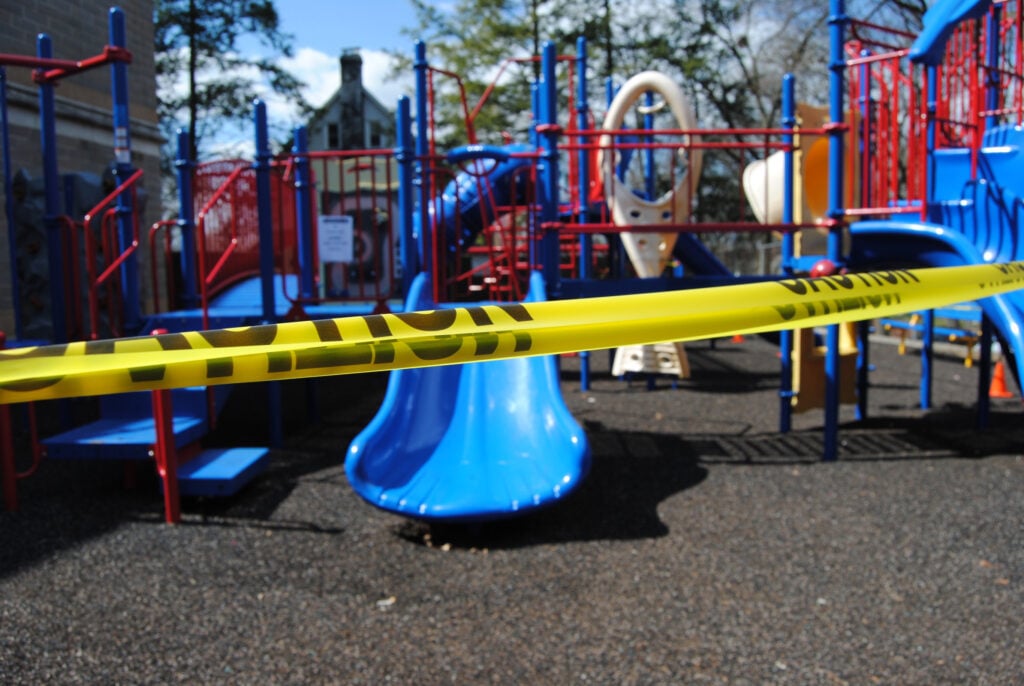
For some reason, New Jerseyans thought this was a good idea to protest the lockdown, which shut down their businesses, locked them inside their homes, and shut down their schools and churches.
Though described as a public safety measure, critics argue the policy blurred the line between public health enforcement and criminal prosecution.
“We have zero patience,” Grewal said at the time, a statement many now view as emblematic of the state’s intolerance for dissent or even minor noncompliance during the emergency.
Businesses punished amid economic collapse
In addition to individual prosecutions, the state took aim at struggling businesses.
The Division of Alcoholic Beverage Control issued suspensions and fines for establishments allowing masked patrons to consume alcohol on-site—despite lacking clear legislative backing for such regulations beyond the Governor’s orders. One Atlantic County bar was targeted for allowing patrons to drink outdoors on the premises.
Elsewhere, businesses were cited and fined for not enforcing mask mandates—rules that shifted frequently and often left local owners guessing at compliance requirements. Penalties reached thousands of dollars in some cases.
Price gouging or survival?
The Division of Consumer Affairs received nearly 5,000 complaints regarding price increases on items like bottled water, masks, and disinfectants.
Yet, with global supply chain disruptions and soaring wholesale costs, many retailers say the state failed to account for the realities of doing business during a crisis.
Under New Jersey’s price-gouging statute, any increase of more than 10 percent was deemed “excessive,” even if costs to the seller had risen. Each sale counted as a separate violation, multiplying potential fines. Critics contend the law was enforced without considering economic pressures or the impossibility of sourcing products at pre-pandemic prices.
Long-term consequences
Beyond fines and criminal charges, perhaps the most enduring consequence was the message sent by state officials: in times of emergency, civil liberties and economic freedoms could be sidelined. Enforcement of executive orders—some passed without legislative oversight—led to jail threats over gatherings, citations for outdoor service, and criminal records for alleged threats that never materialized into harm.
Though many cases were ultimately dismissed or reduced, the aggressive stance taken by state leaders remains a point of contention in the debate over emergency powers.
“Those who choose to ignore the law… will face swift law enforcement action,” Colonel Callahan said then—a sentiment that, in hindsight, has sparked increasing scrutiny.
What began as a public health response evolved into a far-reaching assertion of state control, leaving a legacy that still shapes how New Jerseyans view authority, liberty, and the limits of power in a democracy.