Boaters and beachgoers along the New Jersey coast are watching the Atlantic Ocean turn an unexpected shade of tropical blue as a massive phytoplankton bloom spreads across the Mid-Atlantic, creating swirling turquoise waters visible from space.
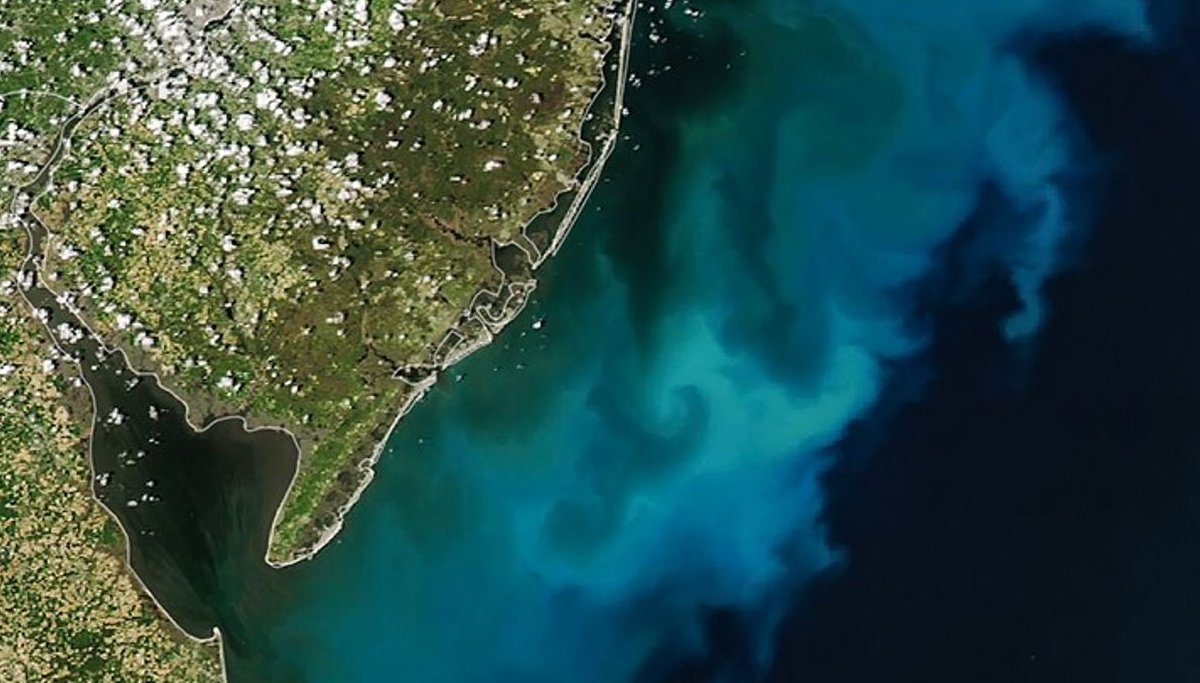
The enormous bloom, stretching from Virginia through New Jersey since mid-April, has transformed parts of the coastline into scenes more commonly associated with the Caribbean than the Northeast. NASA satellites tracking the event captured giant ribbons of milky-blue water offshore, while local fishermen and charter captains have reported unusually vibrant ocean colors in recent weeks.
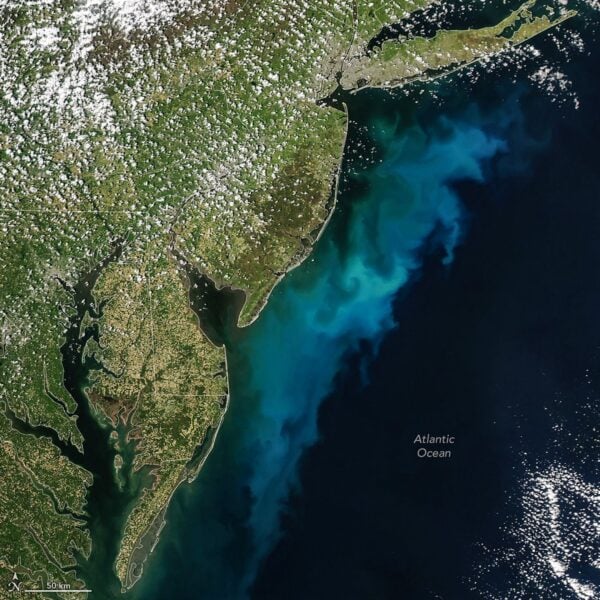
Scientists say the striking display comes from phytoplankton — microscopic plant-like organisms that float near the ocean’s surface. When sunlight hits chlorophyll inside dense concentrations of the organisms, the water reflects bright blue and turquoise tones visible both from aircraft and orbiting satellites.
NASA Monitoring Bloom From Space
NASA’s Earth Observatory and Goddard Space Flight Center have been closely tracking the bloom as it expanded across the Mid-Atlantic coastline.
Satellite imagery shows enormous swirling patches offshore, fueled by a combination of spring sunlight, nutrient-rich waters, and seasonal ocean upwelling — a process that brings colder, nutrient-dense water from deeper layers to the surface.
Researchers say spring blooms are a natural annual event, but the scale and vivid coloring of this year’s bloom have drawn unusual public attention. Last year’s bloom turned water in Atlantic and Cape May Counties a bright blue for several weeks before disappearing.
“The colors are caused by light interacting with high concentrations of phytoplankton near the surface,” scientists explained in NASA observations of the event.
Why the Water Looks Tropical
The ocean off New Jersey normally appears darker green or gray because of sediment, algae, and changing light conditions.
This bloom changes that appearance dramatically.
As phytoplankton multiply rapidly in nutrient-rich water, chlorophyll absorbs portions of sunlight while reflecting blue-green wavelengths, producing the glowing turquoise effect now visible offshore.
The result has led many locals to compare the coastline to tropical destinations.
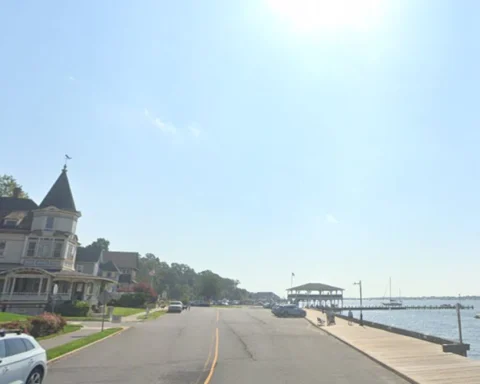
Photos shared online by boat captains and residents show unusually bright blue water extending for miles along sections of the Jersey Shore.
—
Key Points
• Massive phytoplankton bloom turned waters off New Jersey bright blue and turquoise
• NASA satellites tracked the bloom stretching from Virginia through the Mid-Atlantic
• Scientists say the natural spring event should fade within several weeks
—
Scientists Say Bloom Is Mostly Harmless
Oceanographers say the bloom poses little danger to swimmers, surfers, or beachgoers.
Phytoplankton form the foundation of the marine food chain and are essential to ocean ecosystems. Similar blooms occur every spring as temperatures rise and sunlight increases.
However, scientists note that extremely large blooms can occasionally create temporary ecological stress if massive amounts of phytoplankton die off at once.
As the organisms decompose, they can reduce dissolved oxygen levels in the water for short periods, potentially affecting marine life in localized areas.
Researchers say those impacts are typically limited and short-lived.
Rutgers Researchers Expect Colors to Fade
According to Rutgers University oceanographers, the bloom will likely begin fading once available nutrients in the surface waters are depleted.
Unless storms, river runoff, or additional upwelling replenish those nutrients, the tropical appearance is expected to disappear within weeks as ocean conditions return to normal.
Scientists say blooms of this type often peak during spring before gradually dissipating into the darker green Atlantic waters more common along the New Jersey coast.
For now, though, the phenomenon continues drawing attention from residents, photographers, and tourists eager to catch a glimpse of the unusually vivid Atlantic.
A Rare View Along the Jersey Shore
The event highlights how dynamic ocean ecosystems can create dramatic visual changes along the coastline with little warning.
While phytoplankton blooms happen every year, the combination of weather, nutrient levels, and ocean currents this spring produced one of the region’s most visually striking displays in recent memory.
NASA satellite imagery continues monitoring the bloom’s movement and intensity as scientists watch how long the tropical-colored waters remain visible off the Mid-Atlantic coast.