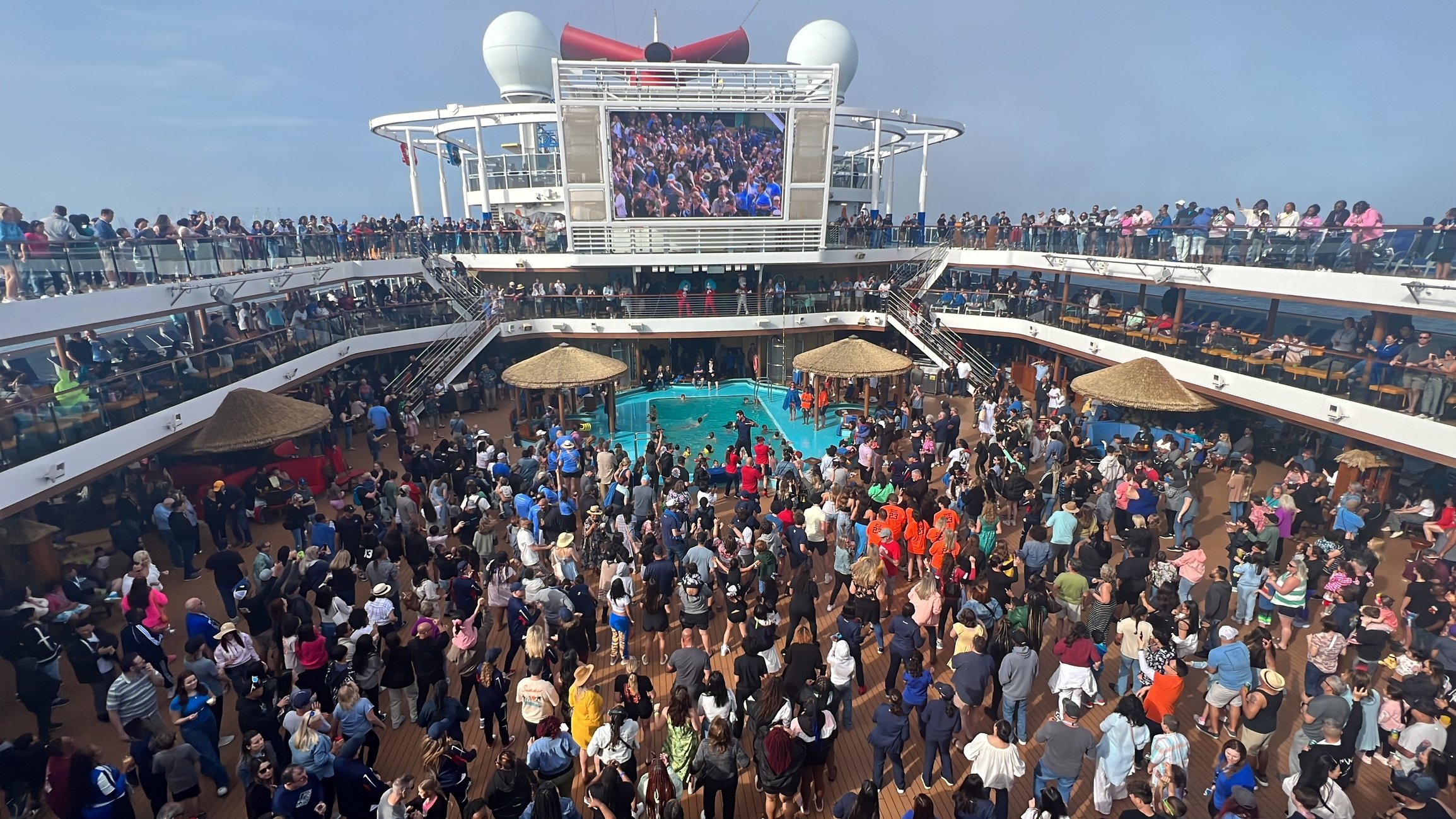
New York, NY — Carnival Cruise Line has rolled out stricter fleetwide rules for 2025–2026, including banning Bluetooth speakers and enforcing teen curfews, as the company intensifies efforts to reduce disruptive behavior and protect its onboard experience, according to updated guest policies.
Carnival confirmed multiple changes targeting noise, safety, and crowd control, with new enforcement measures that include confiscating prohibited items, removing unattended belongings, and increasing penalties for violations.
Crackdown focuses on noise, late-night activity and group disruptions
Among the most visible changes is a ship-wide ban on personal Bluetooth speakers and radios, requiring guests to use headphones in public spaces. The cruise line has also tightened limits on loud music in cabins and shared areas, a move aimed at frequent complaints about noise bleeding between rooms and decks.
Late-night activity is another focus. Carnival now enforces a 1:00 a.m. curfew for guests under 18, requiring minors to remain in their staterooms or be accompanied by an adult aged 21 or older. The policy formalizes stricter supervision expectations that the company says are tied to safety concerns and prior incidents involving unsupervised teens.
Dance floors and nightlife spaces are also affected. Carnival has banned handheld “clack” fans and restricted beverages on indoor dance floors, citing safety risks and disruptions in crowded venues.
Additional rules target physical behavior across the ship. Guests are now prohibited from throwing any objects overboard, with violations carrying significant penalties, and hanging clothes or towels on balcony railings, a longstanding safety concern that is now being more aggressively enforced.
Key Points
• Carnival bans Bluetooth speakers and enforces headphone-only audio in public areas
• Guests under 18 must follow a 1:00 a.m. curfew or stay with an adult onboard
• Pool chair “saving” limits and stricter penalties target disruptive group behavior
Shared spaces and guest conduct under tighter enforcement
Carnival is also addressing conflicts in high-demand areas like pool decks. Under updated policy, items left unattended on lounge chairs for more than 40 minutes may be removed by crew, ending the common practice of reserving chairs for hours without use.
Cabin corridors and doors are seeing new restrictions as well. Decorations are still allowed, but items deemed inappropriate, explicit, or obstructive can be removed, including symbols that violate company guidelines.
The cruise line has paired behavioral rules with enforcement tools. Policies now include increased monitoring of large groups, with warnings that disruptive passengers can be removed at the next port and potentially banned from future sailings.
Carnival has also expanded drug-sniffing dog screenings at embarkation and reinforced fines for violations such as smoking in non-designated areas, which can carry penalties of up to $500 and additional consequences.
A Carnival spokesperson said the changes are designed to “maintain a safe, respectful, and enjoyable environment for all guests,” emphasizing that the majority of passengers already follow the rules.
Pricing changes accompany stricter onboard policies
Alongside behavioral updates, Carnival has introduced higher daily gratuity charges per guest and increased pricing for drink packages and soda plans, reflecting broader cost adjustments across the cruise industry.
The company has also clarified age requirements for solo travelers, requiring guests under 21 to travel with a chaperone aged 25 or older, tightening access for younger independent passengers.
While these pricing changes are not directly tied to behavior, they arrive alongside a broader push to reshape the onboard atmosphere and reduce friction among guests.
Brand shift targets long-standing “party cruise” perception
Carnival has long marketed itself as a fun-first cruise line, but the latest rules suggest a deliberate shift toward greater control over onboard conduct, particularly on shorter sailings known for high-energy crowds.
Industry observers note that many of the newly enforced rules—such as speaker bans, curfews, and group monitoring—align with recurring passenger complaints about noise, overcrowding, and disruptive late-night behavior.
The updates also reflect wider trends across the cruise sector, where operators are balancing affordability with efforts to maintain a consistent guest experience as demand rebounds.
Carnival’s policy changes do not eliminate its entertainment-focused identity but signal a move to set clearer boundaries around how that experience unfolds.
What passengers can expect next
Travelers booking Carnival cruises in 2026 should expect more visible enforcement of existing rules, quicker intervention from crew in disputes, and less tolerance for behavior that affects other guests.
Passengers who violate policies risk confiscation of items, fines, removal from the ship at the next port, and potential bans from future cruises.
Carnival has not indicated that additional restrictions are imminent, but the company continues to monitor guest behavior and adjust policies as needed.
The current rules are already in effect across much of the fleet, with full enforcement expected to continue through 2026.
 Lottery Results
Top-prize lottery tickets sold in Queens and Suffolk County
Shore News Network Lottery Results
Queens deli sells top-prize lottery ticket
Shore News Network Breaking
 Cape May County News