Fiscally Irresponsible Brick Township Candidate’s Multiple Bankruptcies, Foreclosure, 77 Credit Cards Under Fire

BRICK TOWNSHIP, NJ – Opponents today are criticizing a Brick

BRICK TOWNSHIP, NJ – Opponents today are criticizing a Brick

SHIPPENSBURG, PA – A late-morning crash sent one driver to

CUMBERLAND, MD – A Saturday night pursuit through Allegany County

Man sentenced for threats against Trump and his family
Grand Rapids, MI A 35-year-old man has been sentenced to 18 months in a federal correctional facility for making threats to kill President Donald Trump and assault his family members. U.S. District Judge Jane M. Beckering issued the sentence on Monday.
Richard James Spring pleaded guilty to one count of making threats against the President of the United States. In exchange for his plea, prosecutors dropped additional charges related to threatening Trump.
As part of his plea agreement, Spring will undergo mental health, anger management, and substance abuse counseling. The threats began with a TikTok post on January 22.
Court documents revealed grotesque details of the threats, including a message stating that he would “make sure he is assassinated before his first year.” Following threats directed at Trump’s family were also documented.
On January 26, Secret Service agents questioned Spring about the threats he made on social media. He claimed they were not meant to be taken seriously, stating he was a Democrat who disagreed with Trump’s policies.
Spring has no access to weapons and lacks formal military or police training, according to court filings. A search of his phone showed that his previous Twitter account had been suspended for similar threats.
Following his release, Spring will serve two years on supervised release.

New York, NY – A swift, coordinated response by the

Newark, NJ – Democratic New Jersey gubernatorial candidate Mikie Sherrill

Washington, DC – A night of celebration at Howard University

Lincoln University, PA – A night meant for celebration at

Mother charged after allegedly attempting to drown her three children in pond
Liberty, TX
Jessica Quintana has been arrested after allegedly trying to drown her three children in a pond near their home. The 39-year-old mother faces two counts of injury to a child and one count of aggravated assault causing bodily injury.
Quintana was charged following her release from the hospital on Friday. The incident in question occurred on Sept. 29, where her three children, aged 6, 11, and 15, survived and are now in the custody of child protective services.
Domingo Quintana, the children’s father, alerted emergency services, claiming that his wife poisoned their children with NyQuil and attempted to drown them. Domingo managed to rescue their 11-year-old daughter, who was transported to the hospital in critical condition.
Law enforcement has not verified the presence of NyQuil in the children’s system but confirmed that there was no alcohol involved. Law enforcement officials indicated it was believed Quintana intended for her children not to survive.
Reports state that Quintana underwent a mental health evaluation during her hospital stay, although the results are not publicly available. Following the incident, Domingo Quintana faced animal cruelty charges due to the condition of a cat found in the home.
He posted a $5,000 bond and was released. During a recent custody hearing, the children reportedly showed adverse reactions to the idea of staying with their father. His visitation rights remain revoked as the investigation continues.
Quintana is currently being held at the Liberty County Jail without bond.
Texas man sentenced to life for neighbor’s murder after shooting 32 times
Forney, TX A man has been sentenced to life in prison for the murder of his neighbor, marking a significant conclusion to a violent case. Trevor Rhea McEuen, 33, was found guilty of capital murder on Thursday by a Kaufman County jury.
Judge Shelton Gibbs IV handed down the sentence, denying McEuen the possibility of parole. Prosecutors chose not to pursue the death penalty, focusing instead on a life sentence under Texas law.
The incident occurred on May 1, 2023, when Aaron Martinez, 35, was shot multiple times on Neal Road. McEuen admitted to the shooting but claimed it was self-defense after previous harassment incidents.
Defense attorney Abigail Spain argued that McEuen believed he was justified in using deadly force, citing fear for his safety. The jury rejected this defense after deliberating for four hours following a four-day trial.
Kaufman County Sheriff Bryan Beavers expressed gratitude for the work of law enforcement and prosecutor’s office, stating that the verdict serves as a form of justice for the Martinez family.
Evidence presented during the trial revealed that McEuen used a semi-automatic rifle to shoot Martinez 32 times after a confrontation. Assistant District Attorney Robyn Beckham characterized the murder as an act of hatred.
Documents indicated ongoing neighbor disputes, including accusations of harassment and provocations leading up to the fatal incident. Court records stated that Martinez had attempted to reduce tensions by hiring workers to build a fence.
On that day, Martinez had left his property around 11 a.m. to procure construction supplies and lunch for his crew. Gunfire soon erupted, with deputies later discovering Martinez in his vehicle, having sustained fatal injuries.
Following a standoff, McEuen was arrested and later released on a $2 million bond before evading law enforcement by cutting off his ankle monitor. Authorities conducted a monthlong manhunt leading to his apprehension.
The victim’s memory was honored in an obituary celebrating his love for family, work, and activities such as horse riding. Martinez’s father expressed emotional relief following the verdict, emphasizing the significance of McEuen’s life sentence.

Trenton, NJ – Nintendo fans have plenty to get excited

Freehold, NJ – There was a time when the sound

Jackson, NJ – A comic-inspired guide to heroism rooted in

Queens, NY – Four unidentified suspects made off with a

Paterson, NJ – He may not have sent out any

JACKSON TWP., NJ – Jackson Township council candidate Chris Pollak,

TRENTON, NJ – New Jersey’s governor’s race turned sharply combative

SOMERVILLE, NJ – Former Republican gubernatorial candidate Jack Ciattarelli is

Morristown, N.J. – The Garden State Initiative (GSI) is sounding

Leesburg, Va. – With early voting underway, Virginia Gov. Glenn

Brooklyn, N.Y. – Federal prosecutors have charged current and former

Washington, D.C. – Senator Cory Booker sharply criticized President Donald

Toms River, NJ – Democratic gubernatorial candidate Mikie Sherrill continues

LAKEWOOD, N.J. – A ‘Red Bank’ man, who is a
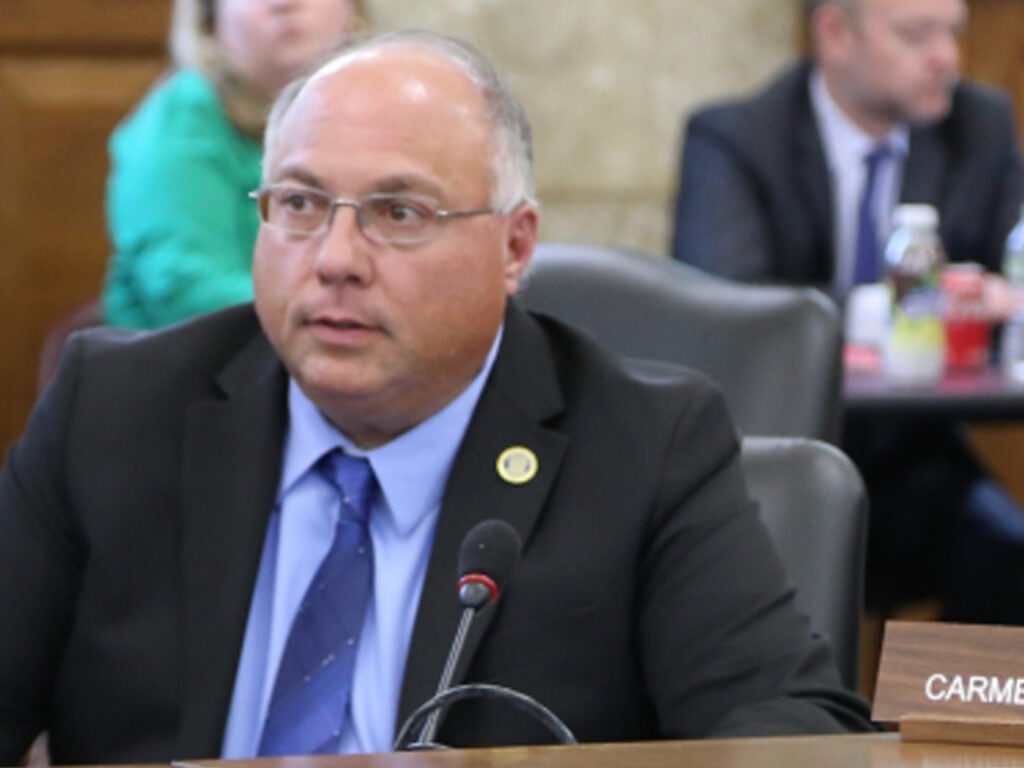
TRENTON, N.J. – Senator Carmen Amato Jr. (R-9) is throwing

ASBURY PARK, N.J. — Congressman Byron Donalds endorsed Republican gubernatorial

BROOKLYN, NY – A late-night subway encounter turned violent when

NEWARK, N.J. – Gov. Phil Murphy dismissed criticism over his

ALEXANDRIA, Va. – A 20-year-old employee at a popular Old

DELEON SPRINGS, Fla. – A 27-year-old man has been charged

TRENTON, N.J. – New Jersey Attorney General Matthew J. Platkin

NEW WINDSOR, N.Y. – A construction crew working on a

COLONIE, N.Y. – An early-morning tractor-trailer crash involving dozens of

Monmouth County, NJ – Republican gubernatorial candidate Jack Ciattarelli outlined

Raleigh, NC – A 52-year-old man was taken into custody

BRONX, N.Y. – A man was found dead early Wednesday

JACKSON, N.J. – A Jackson favorite known for its family

SYRACUSE, N.Y. – A community is outraged after a dog

NEW BRUNSWICK, N.J. – Gubernatorial candidate Mikie Sherrill is facing
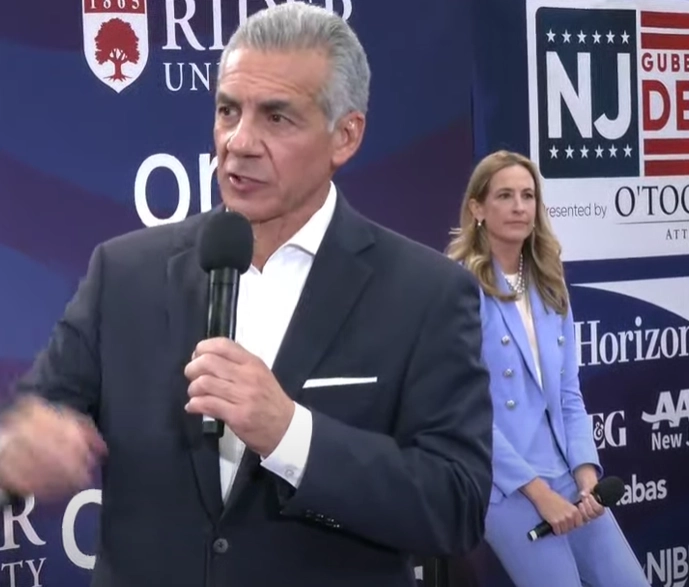
Voters split on who will win as Sherrill and Ciattarelli

TOMS RIVER, N.J. – George Lobman, a candidate for the

JACKSON TOWNSHIP, NJ – A Karate Instructor who spent 17

MANHATTAN, NY – Police released video and photos Tuesday showing
BEDMINSTER, NJ – Former President Donald Trump took direct aim

DOJ defends Alina Habba’s appointment as New Jersey U.S. attorney in court challenges
Philadelphia, PA
The Department of Justice returned to court to uphold Alina Habba’s appointment as acting U.S. attorney for New Jersey. Criminal defendants argue her appointment was unlawful, claiming it disqualifies her from prosecuting them.
A panel from the 3rd U.S. Circuit Court of Appeals, composed of Judges L. Felipe Restrepo, D. Michael Fisher, and D. Brooks Smith, questioned the legality of Habba’s appointment. They explored the intersection of federal statutes regarding the appointment of U.S. attorneys, which must be confirmed by the Senate.
Defendants Julien Giraud Jr., Julien Giraud III, and Cesar Pina contended that Judge Matthew Brann of the Middle District of Pennsylvania correctly determined that Habba was not lawfully serving. The DOJ countered that Brann’s decision would impede the government’s ability to fill thousands of important positions.
Judge Brann did not dismiss the indictment against the defendants but noted that the executive branch operated through novel legal methods in appointing Habba. The DOJ cited 5 U.S. Code § 3345 and the Federal Vacancies Reform Act as the basis for her role as acting U.S. attorney.
Habba, once a personal attorney for Donald Trump, was first named interim U.S. attorney in March. Her temporary appointment allowed for a 120-day tenure, which had to conclude with Senate confirmation or a federal court appointment.
Throughout her interim period, Habba’s nomination remained pending in the Senate, leading to federal judges appointing Desiree Grace as U.S. attorney. Following Trump’s decision to withdraw Habba’s nomination, she resigned from the interim position and was named the first assistant.
Attorney General Pam Bondi reacted by dismissing Grace, asserting that rogue judges disrupted Trump’s powers. Habba subsequently secured a position as a “Special Attorney to the United States Attorney General.”
During arguments on Monday, Henry Whitaker from the DOJ defended Habba’s appointment, stating it was within statute. However, he acknowledged that the circumstances surrounding her appointment were unique.
The panel probed whether the sequence of events surrounding Habba’s appointment posed serious constitutional implications. Judge Smith remarked that the case involved fundamental issues surrounding the appointment of U.S. attorneys and Separation of Powers.
Whitaker maintained that Habba could fulfill her role without being subject to time limits as a special attorney. He argued the statutes were being applied properly, though he recognized that specific precedents were lacking.
Lawyer Abbe Lowell, representing the defendants, criticized the legal framework surrounding Habba’s appointment. He claimed it allowed an individual to operate indefinitely without Senate confirmation.
The court heard claims from amicus James Pearce, representing the Association of Criminal Defense Lawyers in New Jersey. Pearce stressed that endorsing this legal maneuver could lead to a shadow government of delegated U.S. attorneys.
Whitaker contended that precedents exist for delegated authority under federal law. He noted that challenges to Habba’s appointment were unprecedented and had emerged from unique circumstances.
The implications of this ruling could significantly impact future appointments of acting U.S. attorneys across the country. The case highlights ongoing tensions between judicial authority and executive power in appointing key government officials.

TRENTON, N.J. – Just hours after a Republican activist published

TRENTON, N.J. – New Jersey lawmakers are moving forward with

PATERSON, NJ – New Jersey Republican Bill Prempeh released an

TRENTON, NJ – The Mercer County Prosecutor’s Office has been

ANNAPOLIS, MD – Governor Wes Moore is rolling out free