


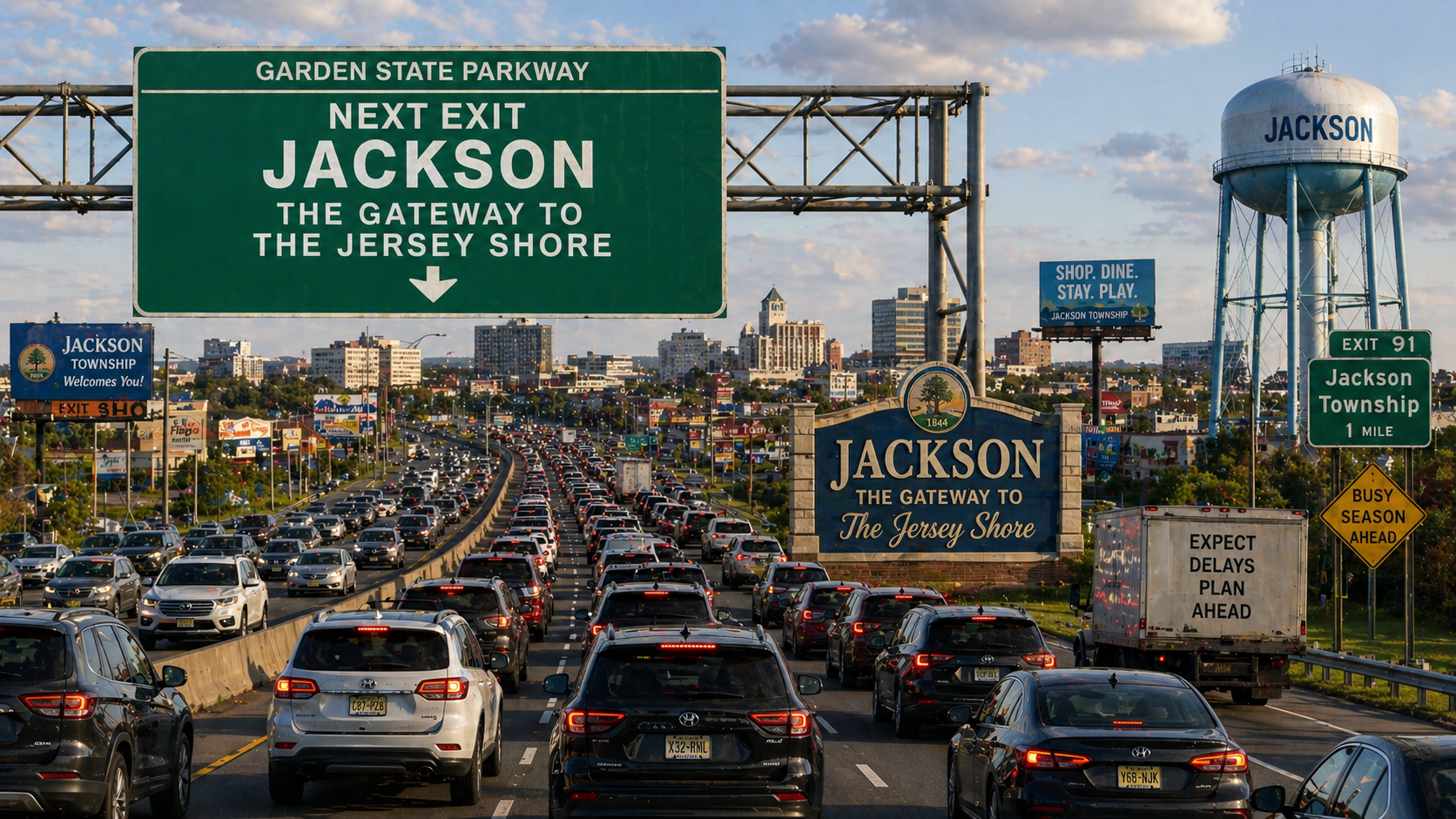
Jackson, NJ — A quiet Ocean County township known for suburban neighborhoods and open land could see its population triple from about 65,000 to nearly 200,000 residents within the next decade, according to Ocean County Commissioner Frank Sadeghi. The projected surge is part of a broader population boom transforming the Jersey Shore from a seasonal destination into a year-round population center.
The scale of that growth would make Jackson one of the largest municipalities in New Jersey, fundamentally changing its infrastructure needs, housing landscape, and regional influence.
From seasonal shore to year-round expansion
Ocean County has long been associated with tourism, beach traffic, and summer rentals. But in recent years, towns like Lakewood and Jackson have seen sustained, year-round population increases driven by housing demand, family expansion, and migration from higher-cost regions.
Unlike traditional shore towns, this growth is not tied to vacation homes—it’s permanent, residential expansion.
Commissioner Sadeghi’s projection underscores how rapidly that shift is accelerating, particularly inland from the coastline where large-scale development is still possible.
Jackson at the center of the boom
Jackson’s potential jump to 200,000 residents represents one of the most dramatic local growth projections in the state.
The township’s available land, relative affordability compared to North Jersey, and proximity to major highways have made it a focal point for new housing and community development.
Lakewood, already one of the fastest-growing municipalities in New Jersey, has seen similar expansion patterns, adding pressure to surrounding towns like Jackson as development spreads outward.
—
Key Points
• Jackson Township could grow from 65,000 to 200,000 residents within a decade
• Ocean County towns like Lakewood and Jackson are driving year-round population growth
• The shift marks a transformation from seasonal tourism to permanent residential expansion
—
Infrastructure pressure builds
That level of growth brings immediate challenges.
Roadways, schools, water systems, and emergency services in Jackson were not built to support a population approaching 200,000. Rapid expansion could strain:
- Traffic corridors already experiencing congestion
- School systems facing enrollment spikes
- Utilities and water supply infrastructure
- Local emergency response capacity
Officials have not yet outlined a full-scale infrastructure plan matching the projected population increase, leaving open questions about how the township will adapt.
Housing demand fuels expansion
The population surge is closely tied to housing.
As prices continue rising in North Jersey and parts of New York, more families are moving դեպի Ocean County in search of space and affordability. Developers have responded with large residential projects, accelerating the pace of change.
Jackson, with its mix of undeveloped land and established neighborhoods, has become a key release valve for that demand.
Economic and political ripple effects
A population jump of this magnitude would reshape not just Jackson, but the broader region.
More residents mean:
- Increased tax base
- Greater demand for commercial development
- Expanded political influence within Ocean County
At the same time, rapid growth often brings tension over zoning, land use, and community character—issues already surfacing in parts of the county.
A different future for the Shore
The broader trend points to a redefinition of what the “Jersey Shore” represents.
Once driven primarily by tourism, parts of Ocean County are evolving into dense, permanent population hubs with year-round economic activity.
Jackson’s projected growth highlights that shift in its most extreme form.
What comes next
While the 200,000-resident projection reflects expectations from county leadership, the timeline and exact scale of growth will depend on development approvals, infrastructure expansion, and migration trends.
As of now, no formal population cap or growth-limiting measures have been announced.
If current trends continue, Jackson Township could soon move from a mid-sized suburb to one of New Jersey’s largest municipalities—bringing both opportunity and significant strain as the transformation unfolds.