Jackson Township, NJ – Few places in New Jersey have experienced a transformation as dramatic as northern Ocean County. Over the past several decades, Lakewood has evolved from a quiet resort destination into one of the state’s fastest-growing municipalities. That growth has increasingly influenced neighboring communities including Jackson Township, Howell, Manchester, and Toms River, where development, traffic, housing demand, and public services have become central issues in local politics.
For many, that change has been too much, and too quickly.
To some residents, the changes represent economic vitality, new businesses and expanding opportunities. Others say the pace of growth has fundamentally altered the character of the communities where they have lived for decades. Those differing perspectives have fueled debates at planning board meetings, school board sessions and township council meetings across northern Ocean County.
Many are choosing to just leave their hometowns of generations as they rapidly evolve into new cities. A city that is expected to grow to 200,000 residents in the near future, according to estimates by county officials.
From resort town to one of New Jersey’s fastest-growing municipalities
Lakewood’s origins stretch back to the late 1800s, when wealthy families from New York and Philadelphia built grand hotels and seasonal estates around Lake Carasaljo. Through much of the 20th century, the township was known for tourism, retirement communities and a relatively modest year-round population.
The community began changing in the decades following the establishment and expansion of Beth Medrash Govoha, one of the world’s largest yeshivas. As enrollment grew and families established permanent roots, Lakewood experienced sustained population growth that accelerated into the 21st century.
According to U.S. Census data, Lakewood’s population has more than doubled since 1990, making it one of New Jersey’s fastest-growing municipalities. That growth has been driven by a combination of natural population increase, continued migration and residential development.
Growth spreads beyond municipal borders
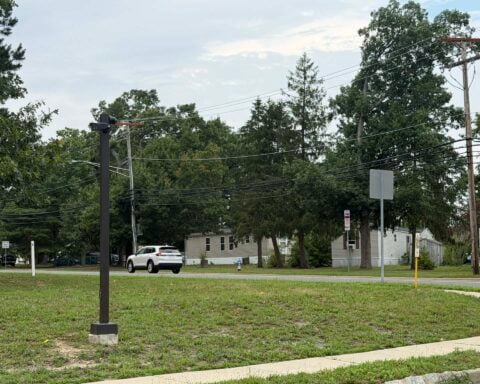
As available land within Lakewood became increasingly limited, residential construction expanded into neighboring municipalities, particularly portions of Jackson Township and western Toms River.
Developers have proposed numerous housing projects, retail centers, religious learning facilities, and private schools in areas of Jackson once dominated by wooded lots and low-density residential neighborhoods. Planning boards have spent years reviewing applications for subdivisions, infrastructure improvements and zoning changes intended to accommodate additional residents and rapid growth.
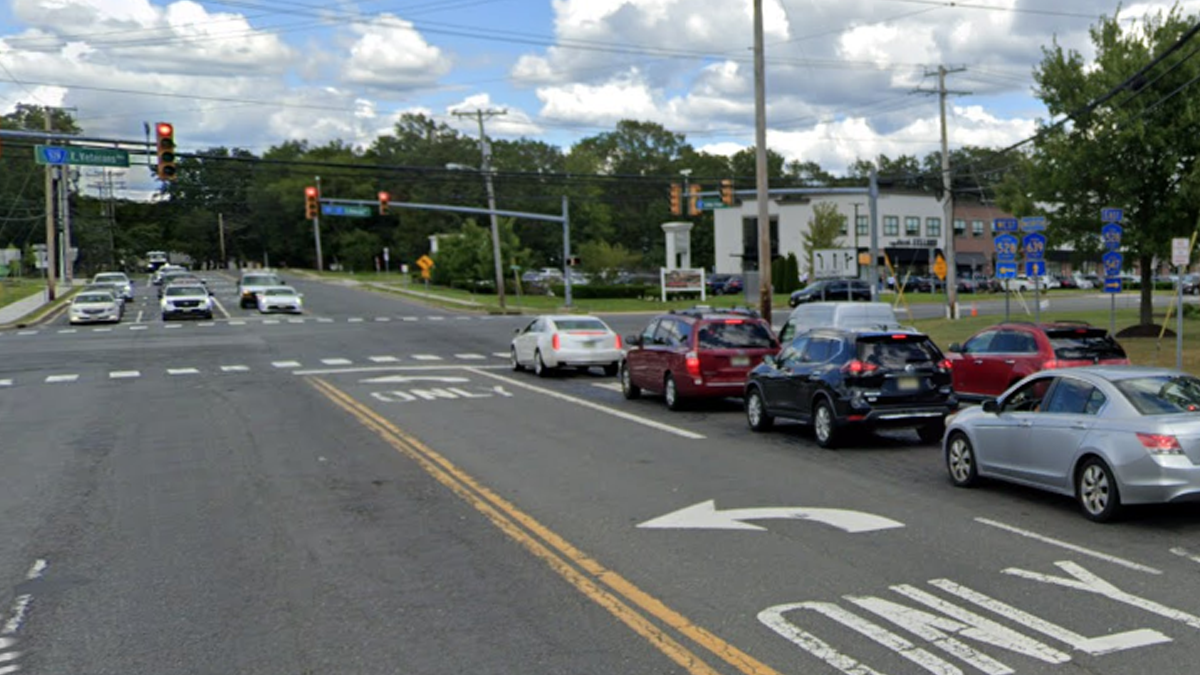
Growth has also increased demand on county roads and state highways.
County Line Road, Cedar Swamp Road, New Hampshire Avenue, Route 9, Route 70 and Route 88 have all experienced significantly higher traffic volumes than they carried just a few years ago. Ocean County officials and the New Jersey Department of Transportation have undertaken intersection improvements, signal upgrades and roadway expansion projects, but many residents say congestion remains a daily concern.
Last year, the county announced it will turn a once quiet Cross Street into a five-lane highway. That road was a rural farming road just a few years ago. Now it is a main thoroughfare lined with schools and businesses.
Schools face continuing challenges
School funding has become another recurring issue.
Lakewood Public Schools serve a relatively small percentage of the township’s school-age children, with the majority attending private religious schools. The district nevertheless remains responsible for transportation, special education services and other obligations under New Jersey law.
Those requirements have contributed to years of budget challenges, emergency state aid requests and litigation involving education funding. The district has frequently cited transportation and special education costs as major financial pressures.
Neighboring districts in Jackson and Toms River have confronted different challenges, including enrollment fluctuations, budget constraints and debates over long-term planning as residential patterns continue to evolve.
Strains on busing, special needs programs, and ESL services have burdened all surrounding districts.
Commercial corridors evolve
Demographic change is often reflected in local business districts.
Throughout Lakewood, and increasingly in portions of neighboring communities, commercial centers have adapted to changing consumer demand. New kosher supermarkets, bakeries, restaurants, clothing retailers, bookstores and specialty businesses have opened alongside long-established local merchants.
In Jackson, entire shopping centers that once catered to everyone are full of busineses that support the growing religious community, including kosher restaurants, clothing stores and other businesses.
Retail experts note that this pattern is common whenever communities experience significant demographic change. Businesses tend to adjust inventory, services and marketing to meet the preferences of local customers, whether those customers are retirees, young families, immigrants or religious communities.
Some longstanding businesses have continued operating while expanding their product offerings, but most have closed up shop. Others have changed ownership or been replaced by new enterprises serving the area’s growing population.
Housing demand reshapes neighborhoods
Northern Ocean County’s housing market has undergone significant changes as demand increased.
Larger apartment complexes, infill development and subdivision proposals have become increasingly common in portions of Lakewood, Jackson and Toms River. Rising property values have benefited many homeowners while simultaneously making it more difficult for first-time buyers to enter the market.
Real estate professionals say some longtime residents have chosen to sell after seeing substantial appreciation in their home values, while others cite changing neighborhood dynamics, retirement plans, tax considerations or proximity to family as reasons for relocating.
Traffic and public safety
Rapid population growth often brings transportation challenges.
Ocean County has invested in roadway improvements, traffic signal coordination and intersection redesigns throughout the northern portion of the county. Police departments have also adjusted staffing and traffic enforcement strategies to address changing traffic patterns.
Crash statistics vary by roadway and year, making long-term comparisons complex. Transportation planners generally attribute increases in congestion and collisions in growing communities to higher traffic volumes, roadway design, development patterns and commuter behavior.
In 2026, Jackson Township and the police department acknowledged a noticeable increase in traffic crashes in the past few years. This led to a spring enforcement effort that resulted in citations and driver education.
A changing cultural landscape
As populations evolve, so do the institutions that define a community.
Lakewood today is home to hundreds of synagogues, schools, charitable organizations and businesses serving its Orthodox Jewish population. Those institutions have become an integral part of the township’s identity and contribute significantly to its local economy.
Jackson and Toms River remain more demographically diverse, though portions of both municipalities have experienced notable changes over the past two decades. Residents interviewed by regional media have expressed a wide range of opinions, from welcoming growth and investment to expressing concerns about development density, infrastructure capacity and preserving community character.
Why some residents decide to move
Migration decisions are rarely driven by a single factor.
Interviews published by New Jersey news organizations have found that residents who relocate often cite combinations of retirement, lower taxes, reduced traffic, housing costs, family considerations and lifestyle preferences.
Many have chosen to sell their Jackson homes because of the increase in valuation and the changes happening in their neighborhods. For many who moved, their children were older, and they wanted to start over without impacting their elementary and middle school education, as New Jersey boasts one of the best education centers in America.
National migration data show many New Jersey residents relocating to Delaware, North Carolina, South Carolina and Florida, attracted by lower taxes, warmer climates and newer housing.
Ocean County’s future will continue to be shaped by planning decisions, infrastructure investment, housing demand and demographic trends.
Municipal officials face the challenge of balancing growth with road capacity, school needs, environmental concerns and public services. Residents, meanwhile, continue to debate how their communities should evolve while preserving the qualities that attracted many of them to northern Ocean County in the first place.
Whether viewed as an example of economic growth, demographic change or the natural evolution of a region, the transformation of Lakewood and its neighboring municipalities has become one of New Jersey’s most significant local stories. The decisions made over the next decade—from zoning and transportation to education and housing—will help determine what northern Ocean County looks like for generations to come.
Related: Keywords: Lakewood growth, Jackson Township development, Toms River development, Ocean County population growth, New Jersey housing development, Lakewood schools, Ocean County traffic, Jersey Shore communities.