
Assemblyman John McKeon’s comments questioning whether New Jersey should make firearm carry permits more accessible for residents of several of the state’s largest cities have drawn criticism from fellow lawmakers and Second Amendment advocates.
A white lawmaker from an affluent part of New Jersey said he doesn’t want law-abiding people of color in New Jersey’s major cities to be able to legally carry a concealed firearm. No, this wasn’t said in 1965; it was said just three years ago, but is being revisited today after the Supreme Court has ruled that yes, people in Newark, Paterson, Trenton, and Camden may, in fact, legally obtain conceal carry permits and not be restricted by local or state lawmakers.
A debate over New Jersey’s latest gun control legislation turned contentious this week after Assemblyman John McKeon (D-Essex) questioned whether reducing the financial barriers to obtaining a concealed carry permit would result in more firearms being carried in Paterson, Newark, Elizabeth and Camden.
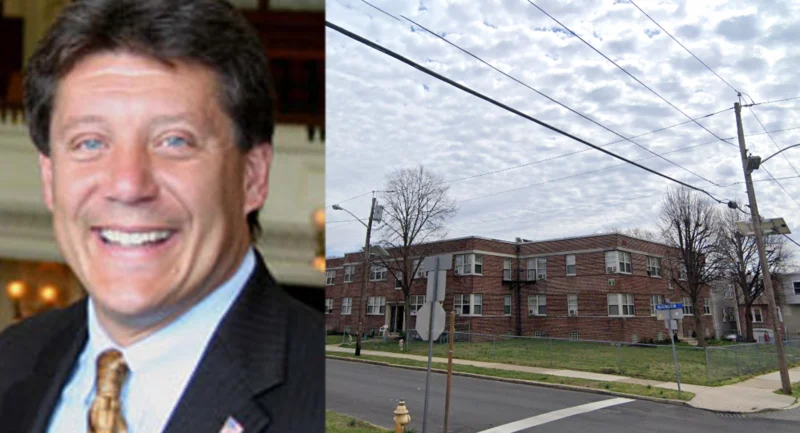
Speaking during a Judiciary Committee hearing on Assembly Bill A4769, McKeon responded to testimony criticizing the cost of New Jersey’s firearm permitting system. The statements made three years ago are being resurfaced by opponents in the wake of a Supreme Court decision regarding concealed carry and New Jersey Democrats’ reactions to that decision.
In a 6-3 decision in Wolford v. Lopez, the U.S. Supreme Court struck down a Hawaii law that made it a crime for concealed-carry permit holders to bring handguns onto private property open to the public unless the property owner gave explicit, affirmative consent.
The Court ruled the mandate unconstitutional, finding it violated the Second Amendment by severely restricting where Americans can carry arms for self-defense during their daily routines.
“Do either of you, does anybody really want to put more guns in the hands of people that live in Paterson and Newark and Elizabeth and Camden?” McKeon said. “The point being is that how can anybody think putting guns in the hands of people in the city… would be really something that you need.”
Later in the hearing, McKeon also acknowledged the legislation could ultimately face constitutional scrutiny. McKeon was once thought to be in the running to be named Attorney General under Mikie Sherrill.
“We’re trying to exercise our wisdom within the ambit of the Constitution… I can’t guarantee that it will be constitutional at all… We’ve got to vote what we feel,” he said.
Comments draw criticism over cities cited
McKeon’s remarks quickly drew criticism because the four municipalities he specifically identified are among New Jersey’s largest and most diverse cities.
According to U.S. Census data cited by critics:
- Paterson is approximately 25.7% Black and has a poverty rate of about 25.2%.
- Newark is approximately 49.5% Black and has a poverty rate of about 25.2%.
- Elizabeth is approximately 20.0% Black and has a poverty rate of about 15.2%.
- Camden is approximately 42.5% Black and has a poverty rate of about 33.6%.
By comparison, McKeon represents portions of Essex and Morris counties. Demographic data cited during the public debate indicates his legislative district is approximately 61.7% White, 12.9% Black, and has a poverty rate of roughly 4.5%.
Those demographic comparisons became a focal point of criticism on social media following the hearing and even today.
Fantasia calls comments unacceptable
Assemblywoman Dawn Fantasia (R-Sussex) publicly criticized McKeon’s remarks.
“I cannot believe I’m saying this in 2026, but somebody please tell the New Jersey Attorney General that the color of your skin is NOT a valid reason to deny someone the right to carry a firearm, or to stipulate where you can lawfully carry,” Fantasia wrote on X. “Yet here we are.”
Fantasia did not accuse McKeon of racism directly but argued that race should never factor into discussions about who may lawfully obtain a permit to carry.
Debate focused on firearm permit costs
The exchange occurred during discussion of Assembly Bill A4769, which is part of New Jersey’s continuing effort to revise its firearms laws following the U.S. Supreme Court’s decision in New York State Rifle & Pistol Association v. Bruen.
During testimony, several speakers argued that increasing permit application fees disproportionately affects lower-income residents seeking to lawfully own or carry firearms.
One speaker cited the fatal shooting of DoorDash driver Petra Roden in Paterson, arguing that residents living in higher-crime neighborhoods may have greater reasons to seek lawful means of self-defense if they satisfy all legal requirements.
Supporters of stricter regulations argued that expanding the number of concealed firearms in densely populated cities raises legitimate public safety concerns.
Constitutional questions remain
McKeon’s acknowledgment that the legislation may ultimately face constitutional challenges reflects the ongoing legal uncertainty surrounding New Jersey’s post-Bruen firearm laws.
Since the Supreme Court ruled that states cannot require applicants to demonstrate a special need to obtain a carry permit, New Jersey has enacted new restrictions involving permit fees, training requirements, insurance proposals, and limits on where firearms may legally be carried.
Many of those provisions have been challenged in federal court, with portions of New Jersey’s concealed carry law remaining the subject of ongoing litigation.
Key Points
- Assemblyman John McKeon questioned whether New Jersey should make concealed carry permits more accessible for residents of Paterson, Newark, Elizabeth and Camden during a Judiciary Committee hearing.
- The four cities he identified have significantly higher poverty rates and larger Black populations than his own legislative district, according to U.S. Census data cited by critics.
- Assemblywoman Dawn Fantasia criticized the remarks, saying race “is NOT a valid reason to deny someone the right to carry a firearm.”
- The debate occurred as lawmakers considered Assembly Bill A4769, legislation that could face future constitutional challenges under recent U.S. Supreme Court Second Amendment rulings.