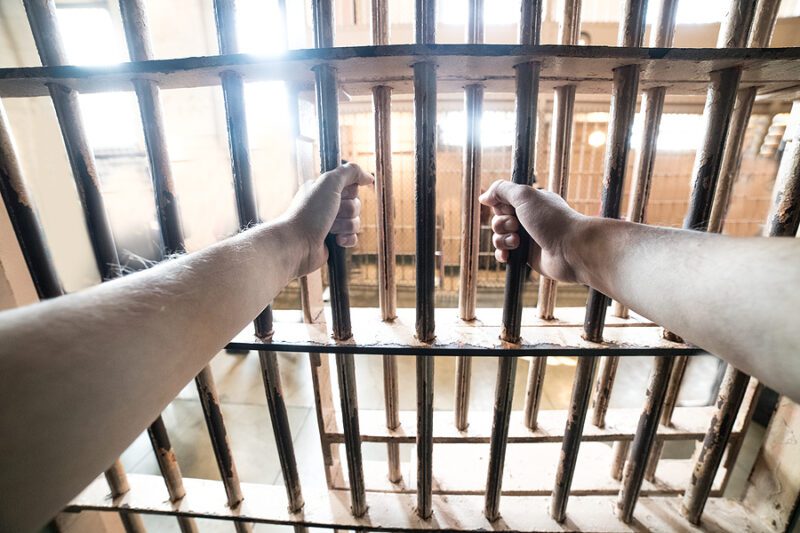
ALBANY, NY — A new proposal in the New York State Assembly would create a 17-member commission tasked with reducing the state’s prison population and lowering violent crime, with findings due by December 2026, according to legislation introduced by Assemblymember David Weprin.
Assembly Bill A00303 would establish the “New York State Commission to End Mass Incarceration and to Prevent Violence,” a temporary body empowered to study systemic drivers of incarceration and recommend policy changes.
What the commission would do
The commission would investigate a wide range of criminal justice issues, from sentencing laws to social factors tied to crime, and issue a public report with recommendations to the governor and state lawmakers.
Members would be appointed by top state leaders: nine by the governor, three by the Senate’s temporary president, one by the Senate minority leader, three by the Assembly speaker, and one by the Assembly minority leader. The governor would also designate the chair.
Commission members would not be paid but could be reimbursed for expenses. The group would have authority to hold hearings, request data from state agencies and courts, and conduct studies or partner with outside organizations.
Focus areas span sentencing, policing, and social policy
The legislation outlines an expansive list of topics the commission must examine, reflecting both criminal justice policy and broader social conditions.
On incarceration, the commission would study sentencing reforms, the impact of the war on drugs, racial disparities, prison conditions, and alternatives to incarceration such as mental health and substance abuse treatment. It would also examine barriers faced after release, including employment, housing, and access to public benefits.
On violent crime, the scope includes policing strategies like body cameras and community policing, as well as prevention efforts such as education, job training, and reducing high school dropout rates. The bill also calls for examining gun laws, gang violence, and the role of technology and data in crime prevention.
Key Points
• Bill A00303 creates a 17-member state commission on incarceration and crime
• Panel would study sentencing, racial disparities, policing, and prevention strategies
• Final report with recommendations due by December 1, 2026
Why lawmakers say the commission is needed
The bill’s memorandum frames the effort within national trends, noting that the United States has both the largest prison population and the highest incarceration rate globally.
It also highlights disparities, stating that African Americans are incarcerated at more than five times the rate of white Americans, and argues that equalizing incarceration rates could significantly reduce prison populations.
Lawmakers behind the bill argue that despite crime rates declining since the mid-20th century, incarceration has sharply increased, raising questions about policy effectiveness and fairness.
The commission’s mandate reflects an attempt to address both sides of the equation: reducing incarceration while also targeting the root causes of violent crime.
Timeline and authority
If approved, the commission would take effect immediately and begin its work with access to state resources and data.
It would be required to submit a final report, including any legislative recommendations, by December 1, 2026. That report would be delivered to the governor, Senate leadership, and Assembly leadership, and published publicly online.
The bill carries no direct fiscal impact, according to its legislative memo.
What happens next
The legislation was introduced in January 2025 and referred to the Assembly Committee on Correction, where it remains under review.
As a newly introduced bill, it has no prior legislative history and must advance through committee before reaching a full Assembly vote. A Senate companion bill has not been detailed in the provided materials.
Debate over the proposal is likely to center on how broad the commission’s mandate should be and whether its recommendations could lead to significant policy changes in sentencing, policing, and reentry programs.
For now, the measure represents an early-stage effort to formalize a statewide review of incarceration and crime policy, with the potential to shape future legislation depending on its findings.
The bill remains pending in committee with no scheduled vote.




Gunfire erupts in Southeast DC as suspect vanishes into night