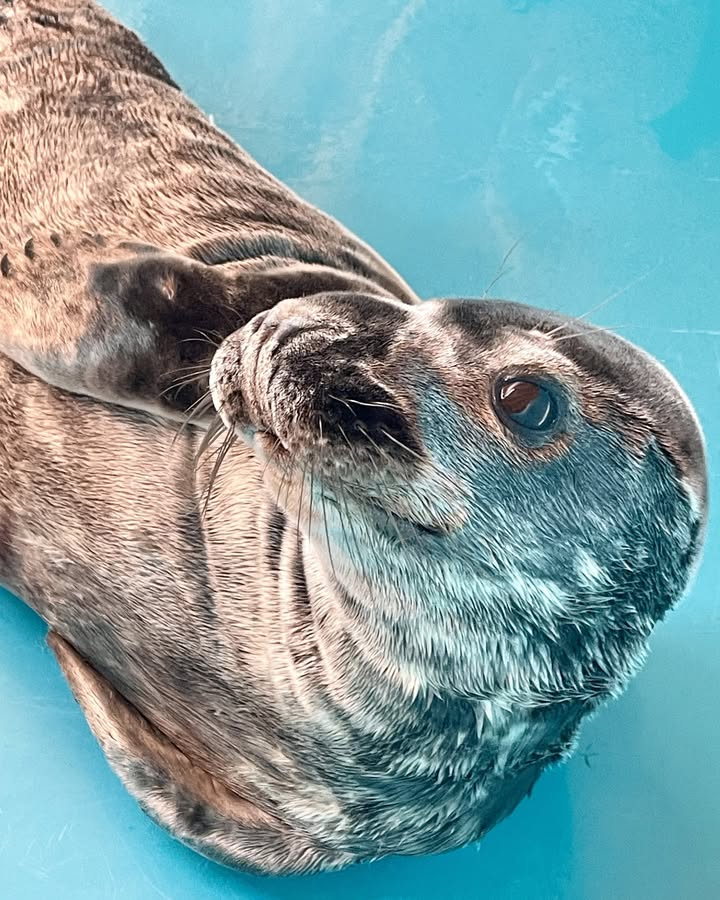
HOLGATE, N.J. — A young grey seal found badly injured on a Holgate beach is now recovering and eating on its own after rescuers determined the wounds were likely caused by a shark attack.
The Marine Mammal Stranding Center (MMSC) said the juvenile male seal was discovered April 12 with multiple lacerations to the rear of its body and was quickly transported for emergency care.
Rescue Team Finds Severe Injuries
Stranding technicians responding to the report found the seal in distress with significant wounds along its posterior area.
At the MMSC facility, staff immediately began treatment, administering fluids and cleaning the injuries to stabilize the animal.
During a veterinary exam, officials determined the injuries were most consistent with a shark bite from a failed predation attempt.
Seal Showing Signs of Recovery
The seal, which weighed 56.4 pounds at intake, has since begun eating independently—a key milestone in its recovery.
Medical teams have started both oral and topical medications to prevent infection as the wounds heal.
The animal is currently being monitored in the center’s rehabilitation area as staff continue supportive care.
—
Key Points
• Injured juvenile grey seal rescued from Holgate beach with shark bite wounds
• Animal receiving treatment at Marine Mammal Stranding Center
• Seal has begun eating on its own, signaling early recovery progress
—
Rehabilitation Effort Ongoing
The case highlights the challenges marine animals face in the wild, including predation attempts that can leave survivors severely injured.
MMSC officials say they are currently caring for nine seals at their facility, underscoring the ongoing demand for rescue and rehabilitation services.
What Comes Next
The seal will remain under observation as treatment continues, with recovery dependent on how well the wounds heal and the animal regains strength.
No timeline for release has been announced as the rehabilitation process continues.