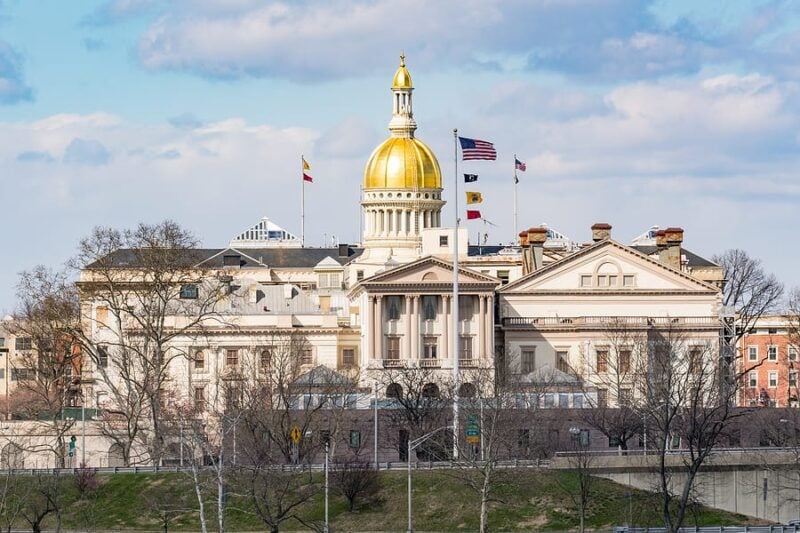
New Jersey ranks among the wealthiest states in America by median household income, but it also consistently ranks among the most expensive places to live. High taxes, soaring housing costs, aging infrastructure, and growing fiscal pressures have created a complex set of challenges facing residents and policymakers. While opinions differ on the best solutions, the following issues are among the most significant social, political, and economic problems confronting the Garden State.
Here is New Jersey’s Not-So-Good, Bad, and the Ugly list:
1. Property Taxes Continue to Burden Homeowners
No issue generates more bipartisan frustration in New Jersey than property taxes. According to the Tax Foundation, New Jersey has consistently maintained the nation’s highest effective property tax rate, with many homeowners paying between $9,000 and $15,000 annually, while homes in affluent suburbs often exceed $20,000 per year.
Property taxes primarily fund local school districts, municipalities, and county governments. Unlike many states that rely more heavily on countywide school funding, New Jersey’s system depends largely on local property values. This creates significant disparities between wealthy and less affluent communities and fuels annual debates over school aid and municipal spending.
The state’s School Funding Reform Act (SFRA) has attempted to distribute state education aid more equitably, but reductions in aid to some suburban districts have often forced local governments to raise property taxes or cut services. Municipal officials frequently argue that state mandates—including affordable housing requirements, public employee benefits, and pension obligations—leave them with few alternatives.
Governor Phil Murphy has repeatedly defended increased education funding, while Republican lawmakers have called for broader structural reforms, spending caps, and mandate relief to reduce the burden on taxpayers.
For homeowners, the impact is immediate. Property taxes can rival or exceed monthly mortgage payments, influencing where families choose to live and prompting many retirees to relocate to states with lower tax burdens.
Why It Matters: High property taxes affect housing affordability, business competitiveness, retirement decisions, and overall economic growth across New Jersey.
2. Housing Affordability Crisis
New Jersey’s housing market has become increasingly difficult for first-time buyers and renters alike. The state’s proximity to New York City and Philadelphia, combined with limited developable land and strong demand, has driven home prices to record or near-record levels in many counties.
According to New Jersey Realtors, median home sale prices have climbed substantially over the past several years, while apartment rents have increased well above historical averages in many markets. At the same time, mortgage interest rates have remained significantly higher than the ultra-low levels seen during the pandemic, further reducing affordability.
Affordable housing has also become one of the state’s most contentious political issues. Under the Mount Laurel Doctrine—a series of landmark New Jersey Supreme Court decisions dating back to the 1970s—municipalities must provide realistic opportunities for affordable housing. More recently, lawmakers adopted legislation intended to streamline the process for assigning housing obligations, but many suburban communities continue to challenge state mandates, arguing they strain infrastructure, schools, and local services.
Housing advocates counter that decades of underbuilding have contributed to rising prices and displaced working families. Teachers, police officers, nurses, firefighters, and young professionals increasingly find themselves priced out of the communities where they work.
The shortage also affects employers. Businesses report difficulties recruiting workers when housing costs consume a large share of household income, especially in high-cost counties such as Bergen, Monmouth, Morris, Essex, and Hudson.
Why It Matters: Housing affordability influences economic development, workforce retention, population growth, and quality of life throughout New Jersey.
3. Cost of Living Continues to Climb
New Jersey routinely ranks among the five most expensive states in America. Residents face higher-than-average costs for housing, utilities, healthcare, auto insurance, childcare, groceries, and transportation.
While inflation has moderated from its pandemic-era peaks, many families continue to report that wages have not kept pace with rising expenses. Organizations such as United Way’s ALICE (Asset Limited, Income Constrained, Employed) project estimate that a substantial share of New Jersey households earn too much to qualify for many public assistance programs but still struggle to meet basic living expenses.
Childcare alone can cost well over $15,000 annually for one child in many parts of the state, while auto insurance premiums rank among the highest nationally. Utility bills have also increased due to higher electricity generation costs and infrastructure investments approved through the New Jersey Board of Public Utilities.
Healthcare remains another major expense. Employer-sponsored insurance premiums, deductibles, prescription drug costs, and long-term care continue to place pressure on household budgets, particularly for seniors and families managing chronic illnesses.
The cumulative effect is that many residents report living paycheck to paycheck despite earning incomes above the national median.
Why It Matters: A high cost of living influences migration patterns, consumer spending, workforce participation, and the long-term affordability of living in New Jersey.
4. Structural Budget Challenges
Although New Jersey has experienced record revenues in recent years, fiscal analysts continue to warn about structural budget challenges. The state’s annual budget has grown significantly over the past decade, supported in part by strong tax collections and temporary federal pandemic assistance.
Organizations including the New Jersey Office of Legislative Services and independent policy groups have cautioned that recurring spending obligations may outpace recurring revenues if economic growth slows. Large commitments include pension payments, healthcare benefits for public employees, school aid, Medicaid, transportation, and debt service.
New Jersey has made substantial progress in rebuilding its surplus after years of financial instability, a move praised by many credit rating agencies. At the same time, economists note that maintaining large reserves while balancing demands for tax relief, infrastructure investment, and expanded public services will remain a difficult policy challenge.
Budget debates frequently center on whether additional spending should be directed toward education, property tax relief, healthcare, affordable housing, transportation, or tax reductions for residents and businesses.
Why It Matters: The state’s fiscal health affects nearly every public service, from education and transportation to healthcare and public safety.
5. Rising Energy and Utility Costs
Electricity bills have become a growing concern for New Jersey households. Residential customers in many utility service areas have experienced noticeable increases following state-regulated electricity auctions, higher wholesale energy prices, and investments in grid modernization.
The New Jersey Board of Public Utilities has approved various initiatives to expand offshore wind transmission planning, energy efficiency programs, electric vehicle infrastructure, and renewable energy development. Supporters argue these investments will improve long-term reliability and reduce emissions. Critics contend they contribute to higher short-term costs for ratepayers.
Natural gas prices have also fluctuated due to national market conditions, weather, and supply constraints. Combined with higher delivery charges and infrastructure upgrades, many residents have seen monthly utility bills rise significantly compared with previous years.
Low-income households and seniors living on fixed incomes often face the greatest hardship, prompting expanded eligibility for state utility assistance programs.
Energy policy has become increasingly political, with debates focusing on nuclear energy, offshore wind development, pipeline infrastructure, renewable energy mandates, and long-term strategies to maintain reliability while transitioning to cleaner sources.
Why It Matters: Utility costs affect household budgets, business competitiveness, manufacturing, and the state’s broader economic outlook.
6. NJ Transit Reliability
NJ Transit remains the nation’s third-largest public transit system, yet commuters continue to face delays, equipment failures, aging infrastructure, and fare increases. Modernization projects, including work associated with the Gateway Program and replacement of century-old rail infrastructure, are intended to improve long-term reliability but require substantial investment and years of construction.
7. Public Employee Pension Obligations
New Jersey continues making historically large annual pension contributions after decades of underfunding. While the funded status has improved, the retirement system remains among the largest long-term fiscal obligations facing state government, requiring policymakers to balance retirement security with taxpayer affordability.
8. Healthcare Costs
Healthcare remains expensive despite New Jersey’s nationally recognized hospital systems. Rising insurance premiums, physician shortages in some specialties, behavioral health needs, and increasing prescription drug costs continue challenging families, employers, and healthcare providers.
9. Business Climate
Business organizations frequently cite high taxes, labor costs, and regulatory requirements as obstacles to expansion, while supporters emphasize New Jersey’s educated workforce, strategic location, pharmaceutical sector, ports, and transportation network. Policymakers continue debating how to encourage investment while maintaining worker protections and environmental standards.
10. Workforce Housing
Essential workers—including teachers, police officers, firefighters, nurses, and municipal employees—often struggle to afford homes near their workplaces, contributing to longer commutes, staffing shortages, and recruitment challenges for local governments and school districts.
11. Childcare Costs
New Jersey consistently ranks among the nation’s most expensive states for childcare, creating financial strain for working parents and limiting workforce participation, particularly among households with young children.
12. School Funding Formula
The School Funding Reform Act remains a source of controversy as districts gaining aid praise the formula’s emphasis on student need, while communities losing state aid argue that residents are forced to absorb higher local property taxes to maintain educational programs.
13. Flooding and Climate Change
From Superstorm Sandy to repeated inland flash floods, New Jersey continues investing billions in resiliency projects, flood mitigation, shoreline protection, and stormwater upgrades as sea-level rise and stronger storms increase long-term infrastructure risks.
14. Aging Infrastructure
Thousands of miles of roads, hundreds of bridges, aging water mains, wastewater facilities, and public buildings require ongoing repair or replacement, creating enormous funding needs for state and local governments.
15. Transportation Costs
Higher tolls on the New Jersey Turnpike and Garden State Parkway, adjustments to the gas tax, vehicle maintenance expenses, and public transit fare increases collectively raise commuting costs for residents throughout the state.
16. Mental Health and Addiction
Although opioid overdose deaths have declined from their peak in some areas, addiction, mental illness, and access to behavioral healthcare remain major public health priorities, with expanded treatment programs and recovery services continuing statewide.
17. Income Inequality
Despite having one of the nation’s highest median household incomes, New Jersey also experiences significant income disparities, with many working families earning above eligibility thresholds for assistance programs but still struggling to cover basic living expenses.
18. Political Polarization
Debates over taxes, affordable housing, immigration, education, public safety, and environmental policy have become increasingly partisan, making bipartisan agreement on major reforms more difficult despite broad public concern over many of the same issues.
19. Population and Demographic Changes
While New Jersey remains one of the country’s most densely populated states, demographic shifts—including an aging population, migration to lower-cost states, and changing workforce needs—continue influencing housing demand, school enrollment, and economic planning.
20. Government Transparency and Public Trust
Public confidence in state and local government is influenced by recurring debates over ethics, campaign finance, public records access under the Open Public Records Act (OPRA), procurement practices, and the efficiency of government services, prompting continued calls for greater transparency and accountability.