


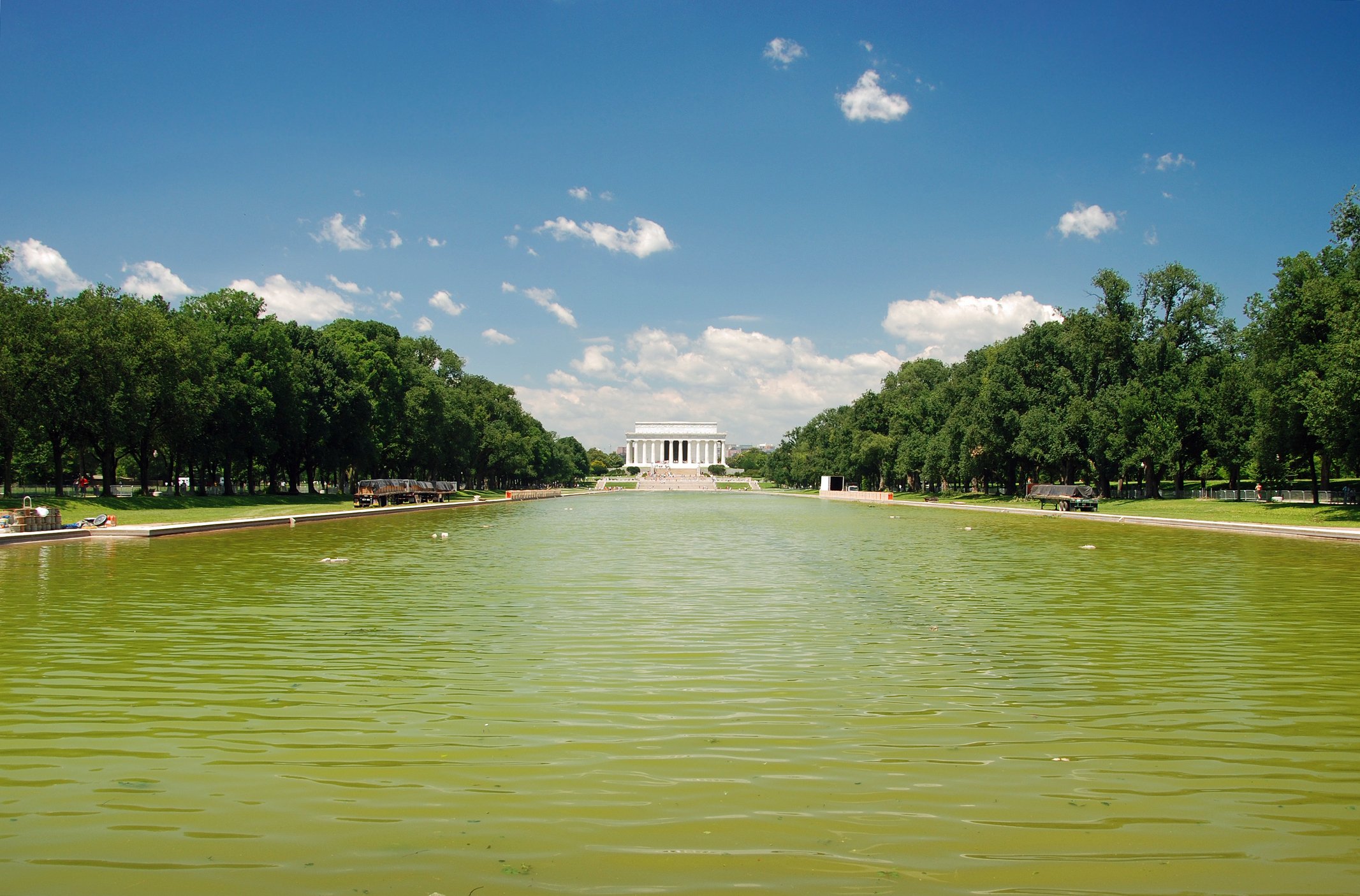
Washington, D.C. — A plan to repair the Lincoln Memorial Reflecting Pool for roughly $2 million has triggered sharp political backlash after President Donald Trump initiatuate the plan to fix the far more expensive work by former Presidents estimated at over $300 million. The project, announced in April, aims to address persistent leaks and water quality issues that have plagued the iconic site for years.
The Reflecting Pool was recently drained, exposing murky, algae-filled water conditions that critics say highlight long-standing maintenance failures. Trump framed the fast-track repair as a cost-saving alternative, contrasting it with what he described as a multi-year, high-cost plan developed under prior administrations.
Competing approaches to a recurring problem
The Reflecting Pool has undergone major repairs before. A significant renovation completed in 2012 during the Obama administration cost about $34 million and took roughly 18 months. That project addressed structural issues at the time but did not permanently resolve leaking and algae problems, which have continued intermittently.
A newer proposal developed during the Biden administration would have replaced the pool’s granite foundation at a projected cost of about $301 million over three years. That plan, however, has not been universally confirmed in full detail and remains a point of dispute in how it has been characterized.
Instead, the current approach focuses on a quicker fix: sandblasting, sealing, and applying an industrial-grade coating designed to prevent leaks and improve water quality.
Political reaction and online criticism
The decision to drain the pool and pursue the lower-cost repair has drawn criticism online, particularly from Democratic commentators who argue the move risks oversimplifying a complex infrastructure issue and, well, because Trump is doing it.
Some posts have focused on the visual of the drained pool—described as swamp-like or dirty—while others question whether a short-term coating solution can address deeper structural problems.
Supporters of the plan argue the opposite: that prior efforts spent tens of millions without delivering a lasting fix, making a lower-cost, rapid intervention worth attempting.
—
Key Points
• Trump announced a $1.5M–$2M plan to repair the Reflecting Pool using industrial coating
• A previously cited proposal to rebuild the pool was estimated at about $301M over three years
• The pool has faced recurring leaks and algae issues despite a $34M renovation completed in 2012
—
Cost questions and project scope
While the administration has promoted the repair as a roughly $2 million effort, some contracting estimates suggest the total cost could exceed $8 million depending on scope and execution. Details about final expenditures and long-term maintenance expectations have not been fully released.
The project’s accelerated timeline—expected to take weeks rather than years—marks a clear departure from traditional large-scale restoration efforts typically used for historic landmarks.
A broader debate over maintenance strategy
At the center of the debate is a familiar policy question: whether to invest heavily in long-term reconstruction or pursue incremental, lower-cost fixes.
The Reflecting Pool, stretching more than 2,000 feet between the Lincoln Memorial and the Washington Monument, is both a historic landmark and a heavily used public space. Its upkeep has long required balancing preservation standards with practical maintenance challenges.
The latest dispute reflects not just differing cost estimates, but competing philosophies on infrastructure spending, particularly for high-visibility federal sites.
What happens next
Work on the pool is underway following the drainage, with the coating and sealing process expected to move quickly. It remains unclear whether the approach will deliver a lasting solution or require additional repairs in the coming years.
No revised long-term restoration plan has been announced as of April 2026, and federal agencies have not publicly detailed whether further evaluations will follow once the current work is complete.