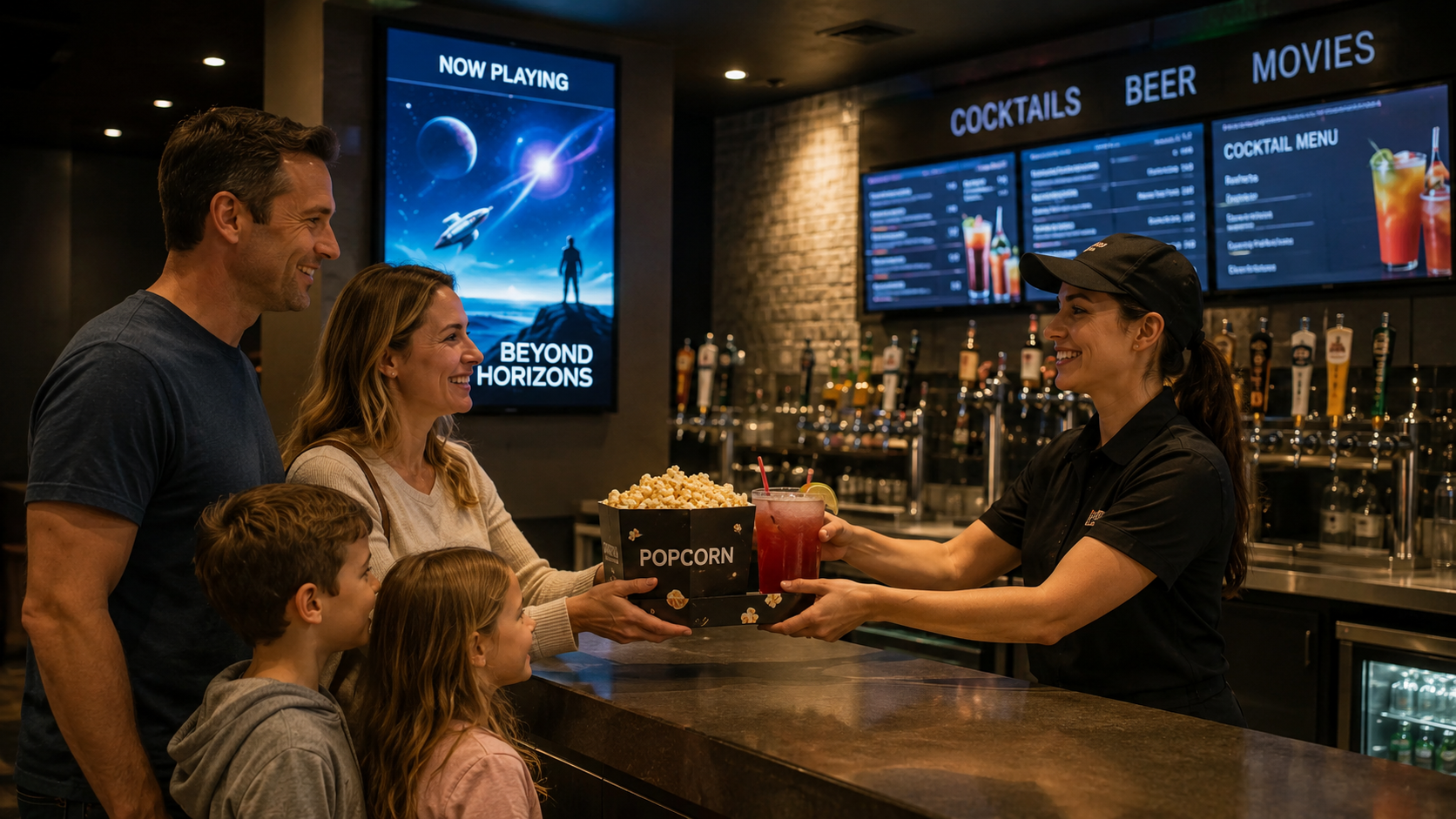
New Jersey lawmakers want to give movie theaters a new way to survive as streaming services continue to cut into ticket sales: turning cinemas into places where customers can drink beer, wine, and cocktails while watching first-run films.
The proposal, backed by Democratic State Senator Vin Gopal and introduced in the Assembly as Bill A6233, would allow for-profit movie theaters across New Jersey to obtain special liquor licenses permitting alcohol sales before and during movie screenings. Supporters say the measure could help struggling theaters boost revenue years after the COVID-19 pandemic reshaped the entertainment industry.
Under the legislation, theaters could sell alcoholic beverages beginning two hours before showtime and continue serving during films. The licenses would apply specifically to theaters showing first-run movies and charging admission.
Theaters Seek New Revenue Streams
Movie theaters across New Jersey and the country have faced declining attendance as audiences increasingly shift toward streaming platforms and at-home entertainment.
The bill’s sponsors say allowing alcohol sales could help theaters compete with modern entertainment venues that already offer expanded dining and nightlife experiences.
The legislation states that the goal is to support “an industry still facing significant financial strain from the COVID-19 pandemic and enduring shifts in audience behavior.”
The proposal would also exempt movie theater liquor licenses from New Jersey’s strict population-based liquor license cap, which currently limits municipalities to one plenary retail consumption license for every 3,000 residents.
How the Licenses Would Work
Under the bill, municipalities could issue plenary retail consumption licenses to for-profit movie theaters with approval from the state Division of Alcoholic Beverage Control.
The initial license fee would cost at least $210,000, though theaters could qualify for a reduced $150,000 fee if at least 10% of alcoholic beverages sold come from New Jersey breweries, wineries, cideries, or distilleries.
Payments would be spread out over 18 months:
- One-third due when the license is issued
- One-third due after nine months
- Final third due after 18 months
The measure also limits the licenses to movie theater properties and adjacent premises operated by the same business.
—
Key Points
• NJ bill would let movie theaters sell alcohol before and during films
• Proposal aims to help struggling cinemas compete with streaming services
• Theaters serving NJ-made alcohol could receive discounted license fees
—
Supporters Say Plan Could Revive Theater Traffic
Backers of the legislation argue the proposal could attract more adults back to theaters while boosting nearby restaurants and commercial districts.
The bill specifically highlights theaters as “cultural and commercial anchors” in local communities and says the measure could strengthen economic activity around entertainment hubs.
Supporters also point to similar theater models already operating in other states, where dine-in cinemas and alcohol service have become part of the moviegoing experience.
The proposal could particularly benefit independent theaters and regional cinema chains looking for additional revenue beyond ticket sales and concessions.
Questions Remain About Local Approval
Even if the legislation passes, local governments would still control whether theaters in their municipalities receive licenses.
The Division of Alcoholic Beverage Control would also need to approve applications before theaters could begin serving alcohol.
The bill remains in the legislative process and has not yet received final approval from the New Jersey Legislature.