
TOMS RIVER, NJ — This isn’t just a national trend, but your favorite local McDonald’s here in New Jersey will follow suit.
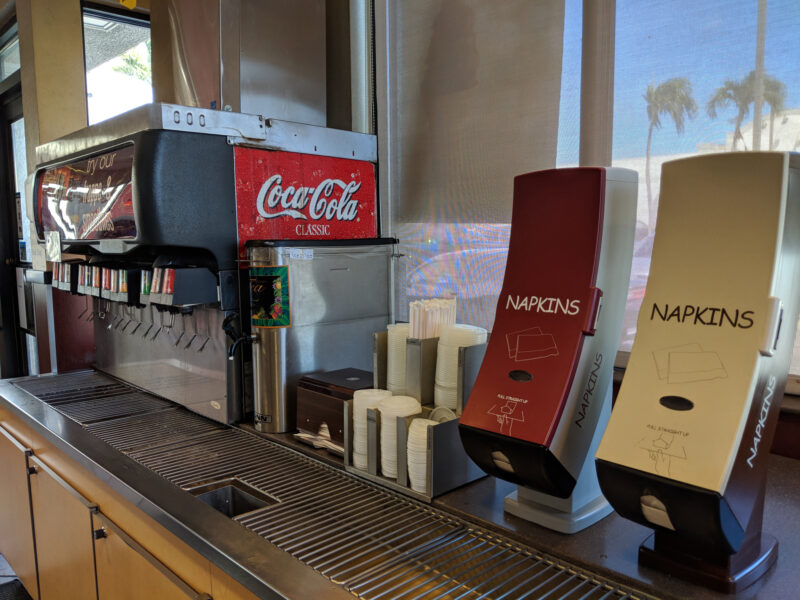
McDonald’s plans to eliminate self-serve soda stations in all U.S. restaurants by 2032, a major shift that will change how customers order drinks and largely end free refills. The move, already underway in redesigned locations since late 2023, reflects a broader transformation in how customers use the chain—favoring drive-thru, mobile orders, and delivery over dining inside.
Instead of filling their own drinks, customers will increasingly receive beverages prepared by staff using automated systems designed to streamline service and maintain consistency across all order types.
Digital ordering reshapes restaurant layouts
The decision comes as McDonald’s adapts to a surge in app-based, drive-thru, and third-party delivery orders—formats that don’t rely on traditional dining room setups. Self-serve soda fountains, once a staple of fast-food interiors, have become less central to operations as fewer customers eat inside.
By shifting drink preparation behind the counter, the company aims to create a more uniform process whether an order comes from the drive-thru lane, a kiosk, or a delivery app.
Fewer refills, more control
One of the most noticeable changes for customers will be the decline of free refills. While policies may vary by location during the transition, removing self-serve stations limits easy access to unlimited beverages.
Some restaurants have already begun charging for refills or removing refill options entirely as part of early redesigns.
—
Key Points
• McDonald’s will phase out self-serve soda fountains in the U.S. by 2032
• Shift reflects rise in drive-thru, mobile, and delivery orders
• Change likely to end free refills at most locations
—
Cost, cleanliness, and consistency
Beyond changing customer habits, the move also addresses operational concerns. Self-serve stations require regular maintenance and cleaning, and have historically been linked to issues such as spills, machine downtime, and product loss.
Centralizing drink service allows staff to control portions, reduce waste, and maintain equipment more efficiently.
Part of a broader industry trend
McDonald’s is not alone in rethinking dining room features. Other fast-food chains have scaled back or eliminated self-serve drink stations in recent years, citing similar reasons—cleanliness, modernization, and tighter cost control.
The shift reflects a wider evolution in fast food, where speed, digital integration, and off-premise consumption increasingly define the customer experience.
What comes next
The transition will continue gradually through the end of the decade, with new and remodeled McDonald’s locations leading the change. Existing restaurants are expected to adopt the new format over time as upgrades roll out.
By 2032, self-serve soda fountains—once a defining feature of the fast-food experience—are expected to disappear from McDonald’s U.S. locations, marking a significant change in how customers interact with the brand.