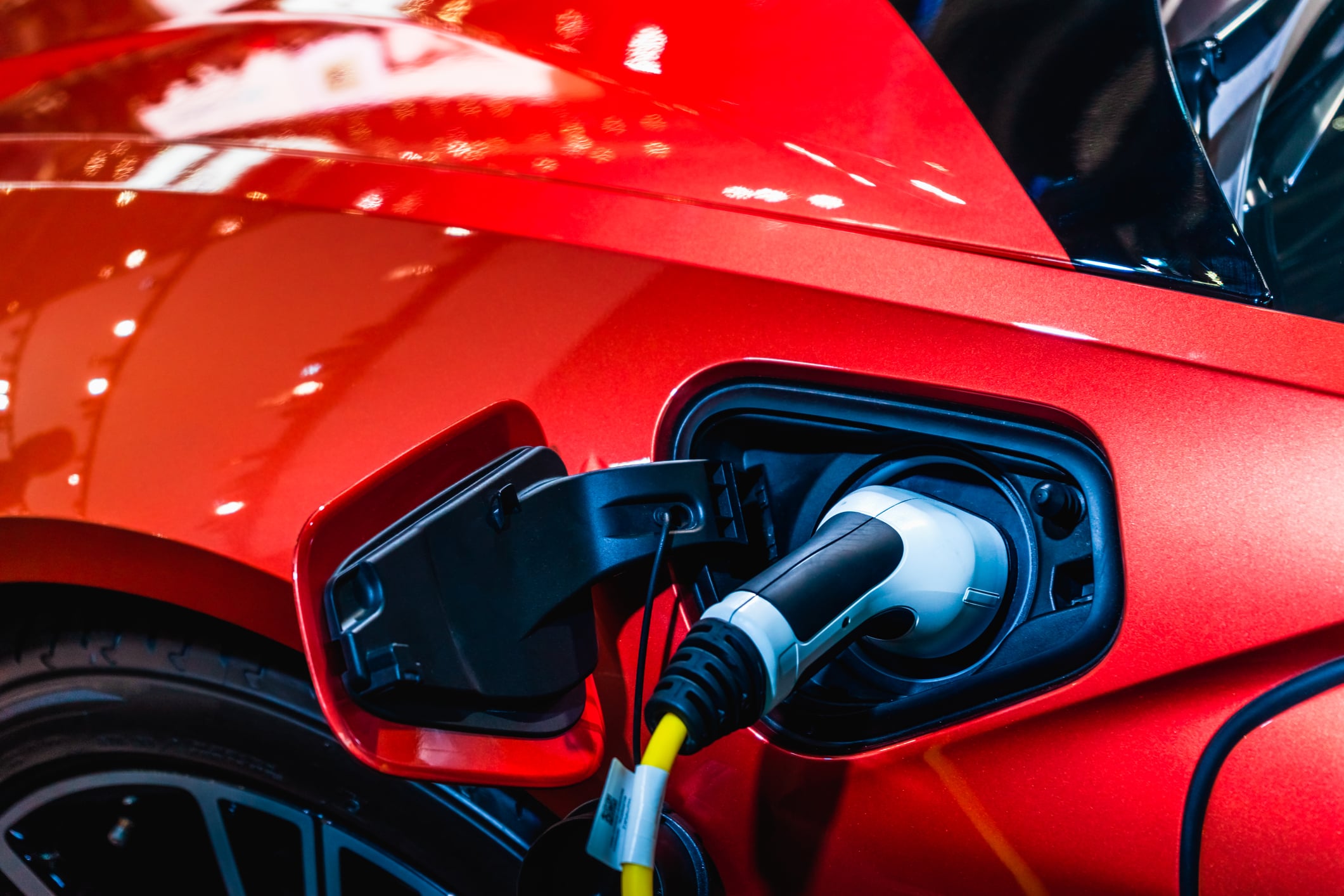
TRENTON, N.J. — New Jersey’s push toward widespread electric vehicle adoption is colliding with growing concerns over the global supply chain that produces many EV batteries and components. A bill pending in the Legislature would prohibit state agencies, local governments, public schools and public colleges from purchasing electric vehicles unless manufacturers certify they were produced without forced or child labor.
The proposal comes as federal officials continue enforcing the Uyghur Forced Labor Prevention Act and increasing scrutiny of imports tied to China’s Xinjiang region, where the U.S. government has alleged forced labor is used in the production of critical minerals and other materials used in electric vehicle manufacturing.
Assembly Bill 5327, sponsored by Assemblymen Michael Inganamort and David Bailey Jr., would require government purchasers to obtain sworn certifications from manufacturers stating that no entity involved in producing an electric vehicle—or any component or raw material used in it—relied on forced or child labor.
Proposed law targets entire EV supply chain
Unlike legislation that focuses only on finished vehicles, the proposal extends throughout the manufacturing process.
The bill would require certifications covering “any constituent part or the mining or other sourcing of any materials” used in producing an electric vehicle or its components.
If a manufacturer knowingly provides false or misleading information, the proposal would impose civil penalties of either $10,000 per false statement or 50% of the total contract value, whichever is greater.
The legislation would apply to state agencies, public schools, local governments, public colleges and other contracting agencies purchasing electric vehicles.
Federal scrutiny of EV batteries continues to grow
The state proposal comes amid continuing federal enforcement targeting products suspected of being manufactured with forced labor.
China remains the dominant global processor of many critical minerals used in electric vehicle batteries, including lithium, graphite and rare earth materials. Human rights organizations and federal officials have repeatedly raised concerns that portions of those supply chains may involve forced labor in Xinjiang.
Those concerns have resulted in increased Customs inspections, shipment detentions and growing pressure on manufacturers to document where battery materials originate.
New Jersey continues aggressive EV transition
New Jersey remains committed to expanding electric vehicle adoption through zero-emission vehicle mandates, charging infrastructure investments and government fleet purchases.
If Assembly Bill 5327 advances, state agencies would face an additional procurement requirement before purchasing EVs, potentially requiring manufacturers to provide extensive documentation regarding their supply chains.
New Jersey has committed to one of the nation’s most ambitious transitions away from gasoline-powered vehicles, but the state’s electric vehicle strategy could face new challenges as federal authorities intensify enforcement against products suspected of being manufactured with forced labor.
Much of the concern centers on China’s dominance of the global electric vehicle battery supply chain. China processes much of the world’s lithium, graphite and rare earth minerals used in EV batteries, while federal officials and human rights organizations have raised concerns that portions of those supply chains may involve forced labor in China’s Xinjiang Uyghur Autonomous Region.
The issue is becoming increasingly relevant as New Jersey continues to implement policies designed to phase out new gasoline-powered vehicle sales and expand electric vehicle adoption.
Federal enforcement targets battery supply chains
The United States has significantly expanded enforcement of the Uyghur Forced Labor Prevention Act (UFLPA), which creates a presumption that certain goods produced wholly or in part in Xinjiang are made with forced labor unless importers can prove otherwise.
U.S. Customs and Border Protection has detained thousands of shipments under the law, including products involving batteries, solar panels, critical minerals and automotive components.
Manufacturers importing affected products must demonstrate their supply chains are free of forced labor before goods can enter the United States.
New Jersey’s EV goals rely on global manufacturing
New Jersey’s clean energy strategy depends on a steady supply of electric vehicles and battery components entering the U.S. market.
The state continues expanding EV charging infrastructure while requiring increasing percentages of new vehicle sales to be zero-emission vehicles in the coming years.
If federal enforcement results in additional shipment detentions or manufacturers struggle to document compliant supply chains, the availability, cost and timing of electric vehicles could be affected.
Automakers seek alternatives to China
Automakers have spent billions of dollars attempting to diversify their battery supply chains by investing in domestic manufacturing and sourcing critical minerals from countries outside China.
Despite those efforts, China remains the world’s dominant processor of many battery materials and continues to play a major role in global EV manufacturing.
Industry analysts have warned that fully relocating those supply chains will likely take years.
Human rights and clean energy intersect
The debate illustrates the increasingly complex relationship between environmental policy, global trade and human rights.
Federal officials describe the Uyghur Forced Labor Prevention Act as both a trade enforcement measure and a human rights initiative intended to prevent products made through forced labor from entering the U.S. market.
As New Jersey continues accelerating its electric vehicle transition, policymakers may face increasing pressure to ensure the state’s clean energy goals are achieved using supply chains that comply with evolving federal import restrictions and human rights standards.
- Federal enforcement of the Uyghur Forced Labor Prevention Act has increased scrutiny of EV battery supply chains.
- China remains a dominant global supplier of battery materials and mineral processing.
- New Jersey’s electric vehicle goals depend on reliable imports of EVs and battery components.
- Import restrictions or shipment detentions could affect EV prices and availability.
- Automakers continue investing in alternative supply chains outside China.
FAQ
- What is the Uyghur Forced Labor Prevention Act?
- It is a federal law that presumes certain products manufactured in China’s Xinjiang region are made with forced labor unless importers prove otherwise.
- Does this mean all electric vehicles involve forced labor?
- No. The law targets specific supply chains and materials where forced labor concerns exist. Manufacturers are increasingly diversifying their sourcing.
- Why does this matter for New Jersey?
- New Jersey’s transition to electric vehicles depends on a stable supply of vehicles and batteries. Increased federal enforcement could affect imports, costs and vehicle availability.
Sources: U.S. Customs and Border Protection, Department of Homeland Security, Uyghur Forced Labor Prevention Act
New Jersey, Electric Vehicles, EV Batteries, Forced Labor, China, Uyghur Forced Labor Prevention Act, Clean Energy, Automotive Industry