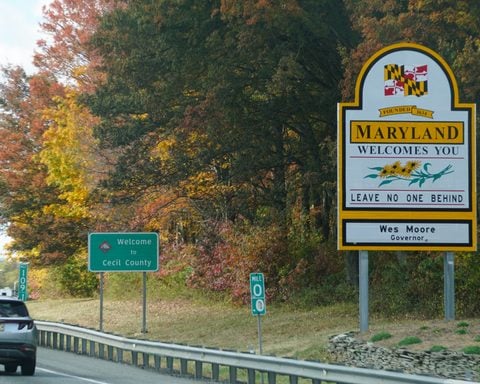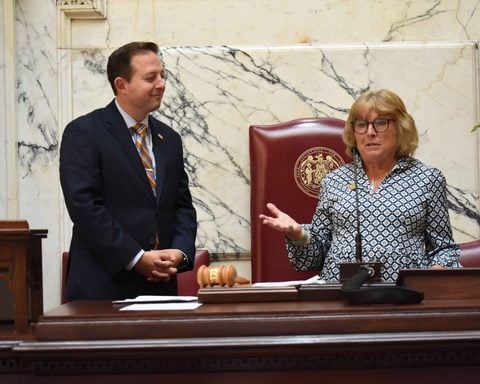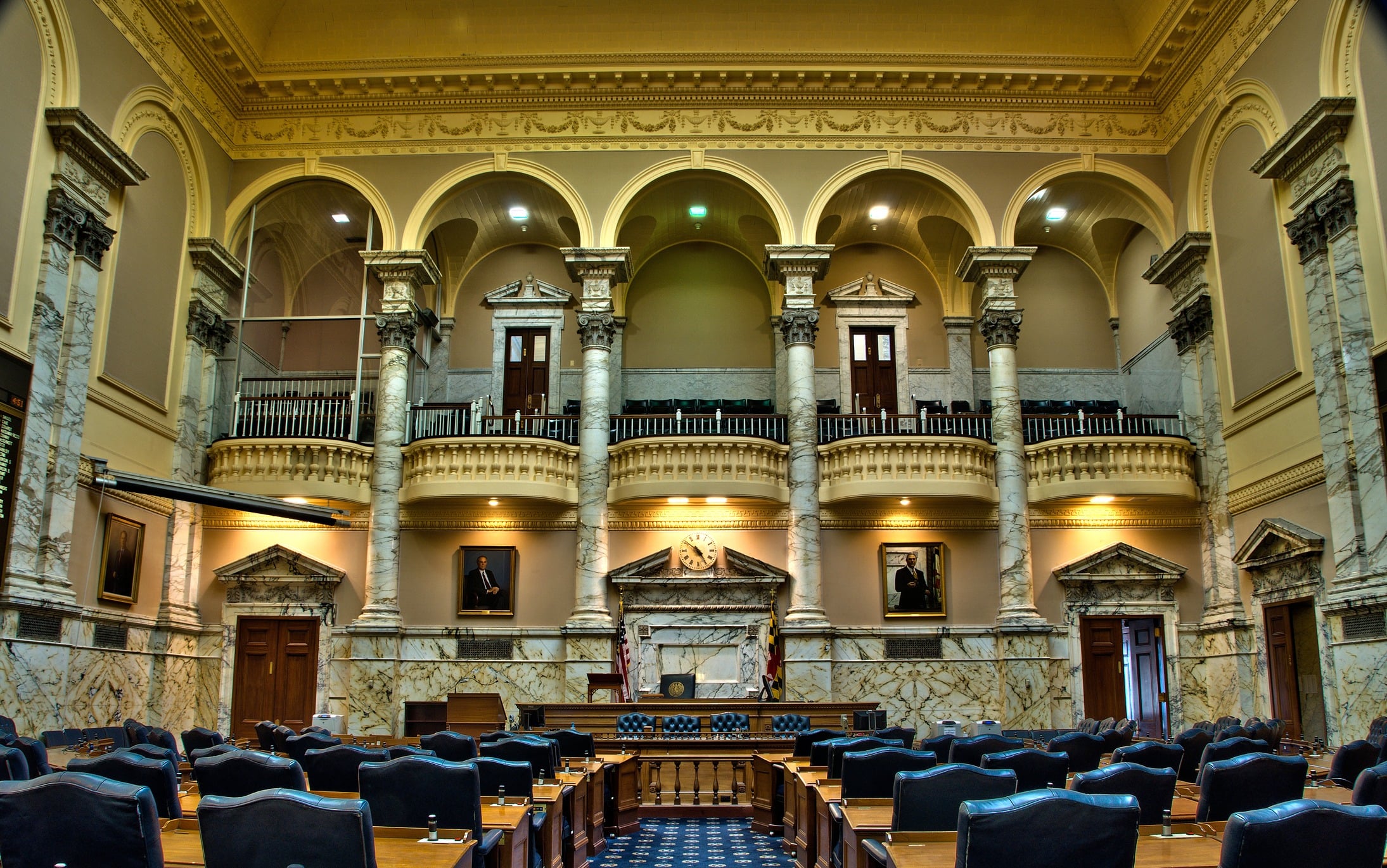
ANNAPOLIS, Md. – A remarkable collection of legislation advanced through Maryland in 2026, moving the state further left on immigration enforcement, policing, guns, congressional redistricting and the relationship between state government and Washington.
Several measures directly restrict cooperation with federal immigration authorities, while another creates a state cause of action against federal officers accused of violating constitutional rights. Lawmakers also advanced new gun restrictions, protections around immigration enforcement at sensitive locations and a controversial constitutional amendment affecting congressional redistricting.
Supporters describe the legislation as protecting civil rights, immigrants and Maryland residents from federal overreach. Republicans, sheriffs and other opponents see something very different: a Democratic supermajority increasingly using state power to obstruct federal immigration enforcement, restrict gun ownership and reshape political representation.
- Maryland enacted multiple measures restricting state and local participation in federal immigration enforcement.
- Several of the year’s most divisive measures produced lawsuits, partisan floor fights or challenges from county sheriffs and the Trump administration.
- A separate August redistricting amendment could affect the future of Maryland’s only Republican-held congressional district.
1. Community Trust Act Restricts Cooperation With ICE
The Community Trust Act, SB 791/HB 1575, became one of the year’s biggest state-versus-federal confrontations.
The law sharply restricts when state and local authorities can cooperate with U.S. Immigration and Customs Enforcement. Local authorities generally cannot continue holding someone solely on the basis of an administrative immigration warrant, subject to provisions involving certain convicted offenders.
Republicans and county sheriffs argue the law effectively pushes Maryland toward sanctuary-state policies and interferes with cooperation between local police and federal immigration authorities.
Democrats and immigrant-rights organizations counter that local police departments and county jails should not operate as extensions of federal civil immigration enforcement.
The House passed the measure 92-37, and the Senate ultimately approved it 32-15. Gov. Wes Moore allowed it to become law without his signature while expressing implementation concerns.
The political fight quickly became a legal one. Sheriffs from 17 Maryland counties sued to block the law, and the Trump administration subsequently brought its own federal challenge alleging that Maryland is interfering with federal immigration authority.
2. Maryland Bans Local 287(g) Agreements With ICE
HB 444/SB 245 went further by prohibiting Maryland sheriffs, police departments and other state and local agencies from entering into federal 287(g) agreements.
Those agreements authorize specially trained local officers to perform certain immigration-enforcement functions in cooperation with ICE.
Nine Maryland counties had participated in the program. Republican lawmakers and sheriffs argued the state was stripping locally elected law-enforcement officials of an important mechanism for transferring removable offenders to federal custody.
Supporters argued immigration enforcement belongs to the federal government and that turning local officers into immigration agents damages relationships between police and immigrant communities.
Moore signed the emergency legislation in February. Eight of the nine affected counties subsequently terminated their agreements, while the ninth said it would no longer enforce its agreement.
3. Maryland Moves Against Masked ICE Agents
SB 1/HB 155 targeted another highly visible feature of the Trump administration’s immigration crackdown: federal agents covering their faces during enforcement operations.
The legislation generally prohibits law-enforcement officers operating in Maryland, including federal immigration agents, from concealing their faces while performing official duties. It contains exceptions for undercover operations, religious coverings, health concerns and other circumstances.
Democrats portrayed the legislation as an accountability measure, arguing people stopped or detained by government agents should be able to identify those officers.
Republicans argued federal immigration agents sometimes conceal their identities because they and their families face threats, harassment and doxxing. Opponents also questioned Maryland’s authority to dictate how federal agents perform federal duties.
The Senate initially approved SB 1 by a 31-13 vote before the immigration mask legislation ultimately cleared the General Assembly.
4. ‘No Kings Act’ Opens Federal Officers to Maryland Lawsuits
Few pieces of legislation captured the political mood in Annapolis more clearly than the measure Democrats called the “No Kings Act.”
HB 351/SB 346 creates a state-level avenue for Maryland residents, or the attorney general, to pursue civil litigation against federal officials accused of violating constitutional rights while acting under color of law.
Supporters portrayed the measure as a defense against unconstitutional government conduct.
Critics viewed it as another component of Maryland Democrats’ broader campaign against the Trump administration and questioned the constitutional consequences of attempting to use state law against federal officials.
Moore signed the measure in May.
Taken together with the Community Trust Act, 287(g) prohibition and restrictions targeting masked immigration agents, the legislation illustrates how extensively Maryland lawmakers used the 2026 session to challenge federal enforcement policy.
5. Maryland Values Act Expands Immigration ‘Sensitive Locations’
The Maryland Values Act of 2026, SB 810/HB 1341, adds another layer to the state’s immigration restrictions.
The law expands protections surrounding immigration enforcement at designated sensitive locations, including schools and courthouses, while also addressing locations connected to schools and food distribution.
It limits certain involvement by school personnel in immigration enforcement and establishes notification procedures.
Supporters argue children should be able to attend school and residents should be able to seek essential services without fearing an immigration arrest.
Opponents contend the law deliberately creates additional obstacles for federal officers attempting to enforce federal immigration statutes.
Moore signed the measure April 28 as emergency legislation.
6. Democrats Target Maryland’s Congressional Map
The most politically explosive fight may have arrived after the regular legislative session.
Lawmakers returned to Annapolis for an August special session and advanced HB 2100/SB 2100, proposing a constitutional amendment affecting requirements governing congressional districts.
The amendment would remove certain compactness and boundary requirements as they apply to congressional districts, potentially clearing a legal obstacle to another mid-decade congressional redraw.
Democrats currently control seven of Maryland’s eight U.S. House seats. Republican Rep. Andy Harris holds the remaining seat, representing a district centered on the Eastern Shore.
Republicans contend the amendment is intended to make it possible for Democrats to dismantle Harris’ district and pursue an 8-0 congressional delegation.
The fight has already reached the courts. An Anne Arundel County judge ruled Aug. 27 that the amendment could not appear on the November ballot, citing multiple legal problems. An appeal is pending.
7. Maryland Targets Pistols That Can Be Converted to Automatic Fire
Gun policy provided another sharp partisan divide.
SB 334/HB 577 prohibits, beginning Jan. 1, 2027, the manufacture, sale, purchase, receipt or transfer of certain semiautomatic pistols that can be readily converted to automatic fire, subject to exceptions.
The controversy centers largely on firearms capable of being converted using devices commonly known as Glock switches.
Supporters argue police are encountering illegally converted automatic weapons and that restricting firearm designs particularly susceptible to conversion attacks the problem before those guns reach the street.
Republicans counter that converting a semiautomatic firearm into a machine gun is already illegal and argue the state is placing additional restrictions on lawful firearms instead of focusing punishment on criminals who illegally modify or use them.
The legislation passed 28-16 in the Senate and 91-40 in the House before Moore signed it May 26.
8. Reparations Proposal Would Have Taxed Large Endowments
Not every major leftward proposal became law.
HB 1271 proposed establishing a Maryland Reparations Board and Reparations Fund to provide grants addressing historical inequality.
Its funding mechanism made the proposal particularly controversial. The legislation contemplated an excise tax on private institutions with endowments of at least $2 billion, with proceeds going toward the reparations fund.
Supporters view reparations as a mechanism for addressing the continuing economic consequences of slavery and racial discrimination.
Opponents question imposing financial responsibility on institutions and people today for historical injustices and raise concerns about determining who should qualify for benefits.
The legislation received a House hearing but did not advance to passage.
9. Massive Energy Bill Puts Data Centers and Ratepayers in Spotlight
The Utility RELIEF Act, HB 1532/SB 841, represents a different kind of ideological fight.
The sprawling energy legislation seeks to reform utility regulation, increase energy generation and address rapidly growing electricity demand from artificial intelligence and hyperscale data centers.
A major objective is preventing residential utility customers from bearing infrastructure costs generated by enormous electricity consumers such as data centers.
The legislation comes as Maryland faces an intensifying argument over whether massive data centers represent an economic opportunity or a threat to electricity prices, water resources, the power grid and surrounding communities.
At least 17 data-center-related measures were introduced during the session, according to the legislative review provided for this report, although only two passed.
The political divide is expected to continue beyond the 2026 session as Maryland weighs economic development against concerns about electricity demand and residential utility bills.
10. Maryland’s Broader Gun-Control Fight Continues
SB 334 was the centerpiece of the year’s firearm debate, but it was also part of a broader philosophical divide over how Maryland addresses violent crime.
Democratic lawmakers have continued pursuing restrictions aimed at firearms, firearm designs and access to weapons they contend present heightened public-safety risks.
Republicans have pushed a fundamentally different approach, arguing Maryland should concentrate on people who illegally possess, modify or use firearms rather than imposing additional restrictions affecting lawful purchasers and manufacturers.
The dispute also highlights Maryland’s geographic political divide. Gun-control policies popular in Baltimore and the Washington suburbs can meet substantially greater resistance in Western Maryland and on the Eastern Shore.
Maryland’s 2026 Agenda Sets Up Bigger Political Fight
No single bill establishes that Maryland has moved dramatically to the left. Taken together, however, the 2026 legislative record shows Democratic lawmakers pursuing an unusually broad collection of policies expanding state involvement in immigration enforcement disputes, federal accountability, gun regulation and electoral rules.
The immigration measures are particularly significant. Rather than one isolated restriction, lawmakers enacted multiple policies affecting ICE cooperation, 287(g) agreements, immigration enforcement around sensitive locations and the conduct of federal officers.
Republicans characterize that agenda as putting undocumented immigrants and progressive political priorities ahead of citizens, crime victims and local law enforcement. Democrats argue they are protecting constitutional rights, preserving trust between police and communities and preventing Maryland resources from being commandeered for federal civil immigration enforcement.
Those competing interpretations are likely to become central to Maryland’s elections.
The redistricting fight adds another dimension. If Democrats ultimately gain the legal authority to redraw the congressional map again, Republicans contend the same political shift seen in Annapolis could be used to eliminate the state’s last Republican congressional seat.
For voters, the 2026 session therefore offers something larger than a collection of individual bills. It provides a clear picture of the direction Maryland’s Democratic leadership wants to take the state — and the issues Republicans will use to argue that Annapolis has moved too far left.
Did all 10 controversial Maryland proposals become law?
No. Some became law, while others either failed to pass or remain caught in political and legal disputes. HB 1271, the reparations proposal, did not pass, while the congressional redistricting amendment faces an ongoing court fight.
Why were immigration bills such a major issue in Maryland in 2026?
Maryland lawmakers considered multiple measures limiting state and local involvement in federal immigration enforcement as the state increasingly clashed with the Trump administration over ICE operations.
Why do Republicans say Maryland is moving too far left?
Republicans point to restrictions on ICE cooperation, the 287(g) ban, gun legislation, protections surrounding immigration enforcement and the congressional redistricting fight. Democrats argue those policies protect civil rights, public trust and Maryland’s authority to establish its own priorities.