NEWARK, N.J. — NJ Transit has entered the final stretch of summer facing worsening rail performance, hundreds of canceled trains, continued staffing pressure and growing passenger frustration, according to reports and testimony presented during the agency’s Aug. 28 committee meetings.
During the public comment portion of the meeting NJ Transit boss Kris Kolluri delivered condescending remarks to people who raised concerns about conditions of the NJ Transit system, some of which have gone viral, at one point telling a caller they live in their basement. Kolluri told another customers that “He’s always going the wrong direction in life”.
The numbers show a system struggling most noticeably on its rail network.
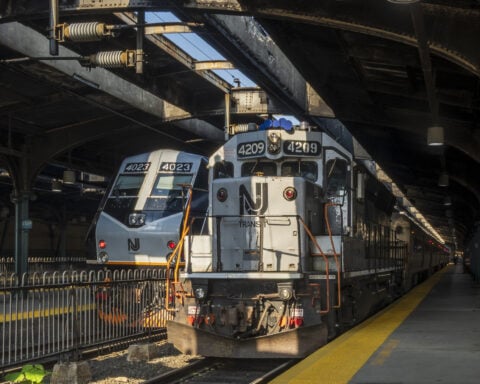
NJ Transit reported 787 train cancellations in July, nearly double the 433 cancellations recorded in June. Those canceled trains represented 4.3% of the 18,433 scheduled rail trips during the month. Overall NJ Transit rail on-time performance also fell from 88.4% in June to 85.7% in July.
The problems were especially pronounced on weekends, where on-time performance dropped nearly 10 percentage points in one month, falling from 92.4% in June to 82.5% in July.
The agency attributed 476 of July’s cancellations to causes it characterized as unpreventable, including severe weather, fallen trees, flooding, outside utility failures, medical emergencies, police activity and incidents involving trespassers.
But weather wasn’t the only issue riders and officials discussed.
Crew availability emerged repeatedly during the meeting as another source of service problems, with NJ Transit’s customer advocate acknowledging a “significant number” of complaints about trains being canceled because crews were unavailable.
July storms hit rail service hard
July began with several significant disruptions.
Extreme temperatures on July 2 caused equipment problems across the system and delays of up to 90 minutes, according to NJ Transit. Signal problems at Lower Hack also disrupted Morris & Essex, Gladstone Branch and Montclair-Boonton service into and out of Hoboken.
A day later, severe thunderstorms and strong winds knocked down trees and caused power outages. Damage affected multiple rail lines, with repairs delaying full restoration on the Morris & Essex, Gladstone Branch and Montclair-Boonton lines until July 7.
Other problems during the month included a brush fire near Metuchen, signal issues near Murray Hill and between Long Branch and Red Bank, and switch problems near Annandale and Secaucus Junction.
Even when incidents attributed to Amtrak were excluded, NJ Transit’s rail performance declined. The adjusted on-time figure fell from 91.9% in June to 88.1% in July.
Trains serving New York Penn Station recorded just 81.7% on-time performance, compared with 90% for Hoboken service.
Equipment reliability slipped slightly as well. The mean distance between equipment failures fell from 46,631 miles in June to 46,382 miles in July.
The deterioration showed up in customer feedback.
NJ Transit’s customer advocate reported rail concerns per 10,000 passengers increased 18% between June and July, although the complaint rate remained below the agency’s annual target. Complaints increased across nearly every rail line, with severe weather, mechanical cancellations and crew availability among the main issues cited.
Staffing remains a problem
The rail cancellations come as NJ Transit continues trying to fill hundreds of jobs.
At the end of June, the agency reported a 4.27% vacancy rate. That included 358 vacancies in bus operations, 86 in rail, 94 in administration and 19 in light rail and contract services.
Customer complaints about rail jumped 18%
The customer advocate reported that rail concerns per 10,000 passengers were stable from May to June but increased 18% from June to July.
Despite the increase, the rate remained below NJ Transit’s annual target.
The advocate said July increases occurred across nearly every rail line, with complaints dominated by severe-weather disruptions, mechanical cancellations and crew-availability cancellations
NJ Transit hired 171 employees during June, including 50 bus operators, 18 locomotive engineer trainees and 24 assistant conductors.
Interesting unexplained number: 97 employee suspensions in July
This caught at least one board member’s attention.
NJ Transit reported:
- 58 suspensions in June
- 97 suspensions in July
- 4 discharges in June
- 3 discharges in July
By July, the overall vacancy rate had improved to 3.84%. Bus operations still had 328 vacancies, while rail had 67, administration had 96 and light rail and contract services had 17.
Another 117 employees were hired during July, including 61 bus operators, 12 cleaners and 11 track workers.
A board member addressed the staffing situation during the meeting, pointing to retirements and departures and saying hiring remained difficult across multiple parts of the agency.
“If anybody thinks that there’s any complacency here, there’s absolutely none from my perspective as a board member,” the board member said.
Staffing problems are not limited to rail. While bus performance improved in July, NJ Transit said complaints involving trips that did not operate were primarily connected to operator availability.
Systemwide bus on-time performance increased from 89.6% in June to 91.2% in July, putting it above the agency’s 90% goal. Port Authority Bus Terminal performance improved to 88.4%, while Hoboken reached 92.1%.
Why were 97 employees suspended?
Another workforce number drew attention during the Administration Committee meeting.
NJ Transit reported 97 employee suspensions in July, up from 58 in June. The agency also reported four employee discharges in June and three in July.
A board member interrupted the following presentation to ask for more information about the 97 suspensions, including whether the employees worked in bus, rail or other parts of the organization.
2 EEO complaints under investigation
NJ Transit’s Equal Employment Opportunity office reported 42 complaints under investigation as of July 31.
Of those, the presentation said:
- 21 involved retaliation
- 17 involved racial discrimination
- 15% involved sex discrimination
Some complaints alleged multiple forms of discrimination or harassment.
“NJ Transit CEO Clashes With Public Critic: ‘I Don’t Know What Makes You So Angry'” — This is the strongest video/social story. The exchange is unusually personal for a public agency meeting, particularly the “angry young man,” “usher” and “anger stuff has got to stop” remarks.
“NJ Transit Rail Cancellations Nearly Double as July Performance Falls” — 787 cancellations versus 433 in June, weekend OTP plunging from 92.4% to 82.5%, plus acknowledgment of crew-availability problems.
“NJ Transit Suspended 97 Employees in July — Board Member Wants to Know Why” — The number is striking, a board member noticed it immediately, and management couldn’t provide a breakdown during the meeting. That creates a natural records-request/follow-up story.
“NJ Transit Starts Fiscal Year $11.8 Million in Red as Fare Revenue Misses Budget” — Financial story combining the operating loss, fare revenue, subsidies, debt and farebox-recovery figures.
The board did not explain what caused the increase in suspensions, what types of alleged violations were involved or how many of the employees ultimately returned to work.
Riders criticize redesigned NJ Transit app
Passengers are also raising concerns about the agency’s redesigned mobile app.
Transit advocate Nick Giglia told officials the complaints were about more than riders simply resisting a new design. He cited problems finding scheduled departure times, inaccurate real-time train information, less prominent favorite trips and accessibility concerns surrounding the loss of a true dark mode.
Another commenter said the redesigned app appeared rushed and urged NJ Transit to “take your time, get it right.”
The agency’s customer advocate acknowledged receiving numerous complaints about the NJ Transit app. Improvements involving favorites and real-time bus departure filtering could arrive as early as September, according to information presented during the meeting.
Light rail riders raised similar complaints about real-time information.
A Hudson County Complete Streets representative said countdown clocks at Hudson-Bergen Light Rail stations were regularly blank and described an occasion when an expected train wait stretched toward 30 minutes. He also raised concerns about incorrect destination signs and unreliable elevators.
Overall light rail on-time performance increased slightly, from 94.5% to 94.7%.
Performance differed considerably between individual systems. Hudson-Bergen Light Rail fell from 95.3% to 94.1%, Newark Light Rail increased from 99.3% to 99.5%, and the River LINE improved from 89% to 90.6%.
NJ Transit also acknowledged intermittent elevator and escalator outages affecting accessibility on the Hudson-Bergen and Newark systems.
Agency starts fiscal year with $11.8 million net loss
Service problems come alongside financial pressure.
NJ Transit reported an $11.8 million total net loss in July, the opening month of fiscal year 2027. Operating revenue finished $4.9 million below budget while operating expenses were about $4.9 million over budget.
Farebox revenue totaled $85.8 million. That was $2.2 million below budget but $4 million higher than in July 2025.
The agency also received $89 million in state operating assistance, $40.4 million from the New Jersey Turnpike Authority and $51 million from other grants and assistance.
As of July 31, NJ Transit reported $123.6 million in operating cash, a $240 million credit-facility balance and $1.6 billion in long-term debt.
Another presentation illustrated how much of the system’s operating cost is covered directly by riders.
Across all transportation modes, NJ Transit collected an average of $4.61 in fare revenue per passenger against an average cost of $15.42, producing an overall farebox recovery ratio of about 30%.
Rail had the highest recovery ratio at 45%, followed by bus at 37%. Light rail stood at 13%, while Access Link was 2%.
The financial discussion comes after fare increases took effect July 1, 2025, and again July 1, 2026.
During public comment, rider Adam Rich argued NJ Transit should have held new public hearings before implementing those increases and claimed upcoming Portal North Bridge service changes should also trigger hearings.
Those were Rich’s legal assertions during public comment. The committee meeting itself did not establish that NJ Transit violated state law, and no substantive board response to his argument followed in the portion of the meeting reviewed.
Public comment turns personal
The meeting’s most confrontational moment came after another member of the public criticized NJ Transit CEO Chris Kolluri.
The caller, identified in the transcript as Andy Weiss, attacked Kolluri over transparency, the visibility of NJ Transit’s customer advocate and the absence of executives from seats near the front of the meeting.
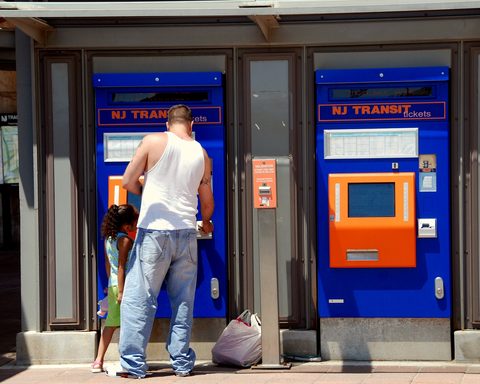
Weiss used personal language, accusing Kolluri of making a “sleazy move,” “rigging the process” and having a “callous and bad attitude.” He also raised more routine rider complaints, including the condition of a Route 88 bus and a broken fare machine that he said prevented him from buying an 85-cent transfer.
Kolluri responded after public comment ended rather than leaving the remarks unanswered.
“Thank you to the angry young man who always calls,” Kolluri began.
The CEO said the customer advocate had repeatedly offered to meet with the caller but that those offers had not been accepted. He accused the commenter of directing invective at the agency rather than sticking to facts.
Kolluri then responded sarcastically to the caller’s criticism about where NJ Transit officials were sitting.
“If you want to play the role of usher at New Jersey Transit board meetings, then come and talk to me and I’m happy to see if that position is open,” Kolluri said.
Kolluri said senior staff could be seen on the meeting screen and told the caller to “stick to the facts.”
“I don’t know who you are. I don’t know what makes you so angry,” Kolluri said before adding that he was willing to hear thoughtful criticism.
“This anger stuff has got to stop. This is just not appropriate behavior,” he said.
The sequence is important: the commenter initiated the personal attacks, and Kolluri then chose to answer with his own pointed and at times sarcastic response.
Police report 1,325 smoking summonses
NJ Transit Police also provided an update on enforcement and outreach.
Police issued 123 smoking summonses between Aug. 1 and Aug. 26, bringing the total for the year to 1,325.
Officers administered Narcan eight times during that same August period and 100 times so far this year. The police chief characterized those administrations as 100 lives saved.
Police also reported 316 outreach encounters at NJ Transit facilities from Aug. 1 through Aug. 26. Eighty-eight resulted in some form of social service, while six involved the ARRIVE Together mental health program. Four of those six people accepted services.
NJ Transit’s Equal Employment Opportunity office separately reported 42 complaints under investigation as of July 31. Twenty-one involved retaliation and 17 involved racial discrimination, while 15% involved sex discrimination. Some complaints contained allegations involving more than one form of discrimination or harassment.
Numbers point to a difficult summer for rail riders
Taken together, the reports presented Aug. 28 show sharply different conditions depending on how passengers use NJ Transit.
Bus performance improved and exceeded the agency’s overall on-time goal. Light rail posted a small systemwide improvement despite continuing reliability and accessibility complaints.
Rail was the clear weak point.
July brought 787 canceled trains, an 85.7% overall on-time rate, an 82.5% weekend rate and an 18% month-over-month increase in rail complaints per 10,000 passengers. At the same time, riders complained about crew shortages, app reliability and canceled service.
The agency is hiring, and its overall vacancy rate improved between June and July. But hundreds of positions remained vacant as of the latest figures presented to the committees.
That leaves New Jersey commuters heading toward the fall schedule with a basic question: whether the improvement in hiring can translate into more reliable service after a July marked by weather emergencies, infrastructure trouble, equipment issues and unavailable crews.