
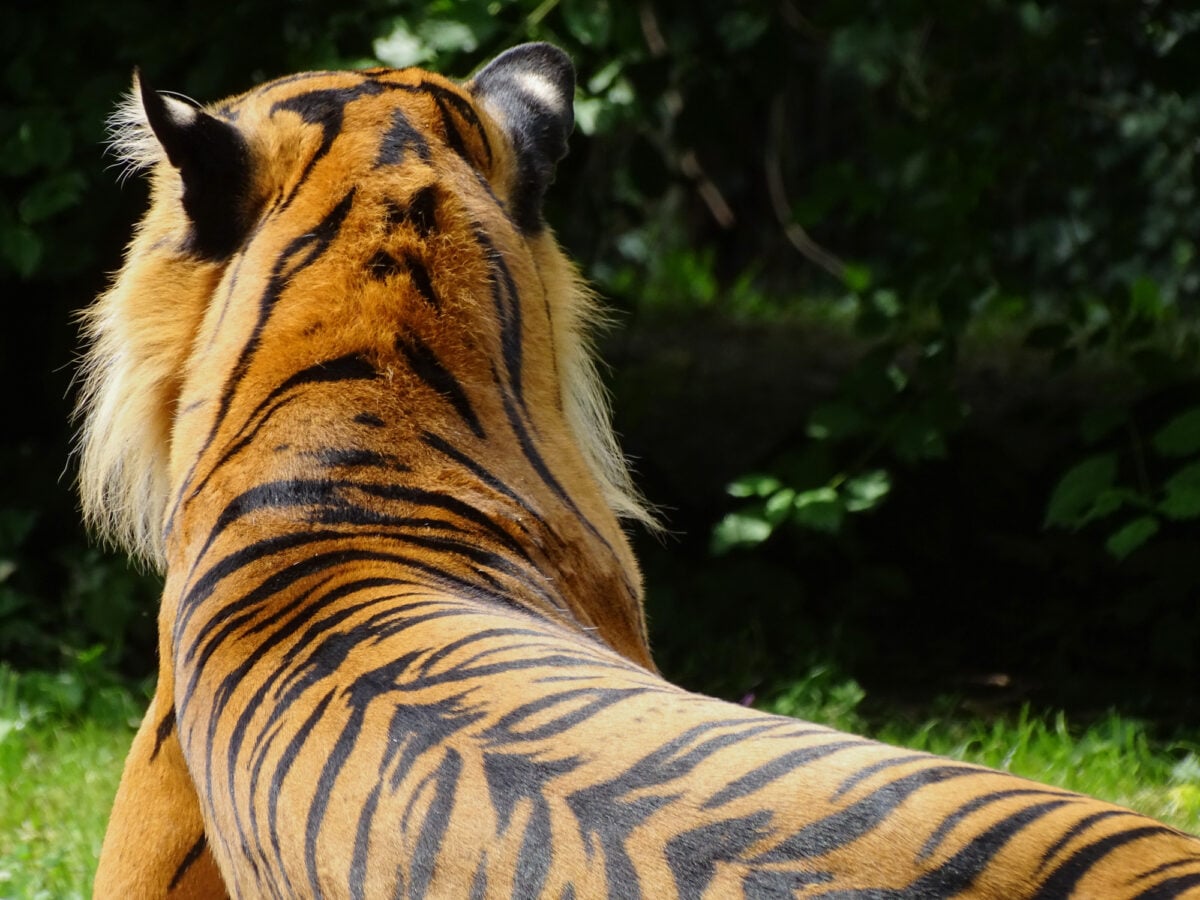
Jackson police say no tiger is loose today, but in 1999 an escaped Bengal tiger triggered a four-month investigation that ended with a DNA match.
JACKSON, NJ — A viral video and rumors of a loose tiger sent Jackson residents scrambling for answers this week, but police quickly put the story to rest: There is no tiger roaming the township, and Six Flags Great Adventure has accounted for its animals.
For longtime residents, however, the report carried an eerie echo of January 1999. That time, the tiger was real.
The animal wandered through Jackson before wildlife officers killed it on Jan. 27, 1999, after efforts to immobilize it failed. What followed was a mystery involving Six Flags, a private tiger compound, disputed animal counts and a forensic investigation that ultimately traced the tiger through its DNA.
Today’s Tiger Scare Was Only a Rumor
Jackson police responded Tuesday night after a video circulating on social media claimed a tiger might be loose in the township.
As Shore News Network reported Wednesday, police said the report was false and that Six Flags Great Adventure had confirmed all animals at its Wild Safari were accounted for.
Authorities also asked residents not to call 911 about the rumor, warning that unnecessary calls could tie up emergency lines.
It was a straightforward conclusion to a fast-moving social media scare. The events of 1999 were anything but straightforward.
A Real Tiger Was Loose in Jackson in 1999
On Jan. 27, 1999, authorities responded to reports of a tiger roaming near Interstate 195 in Jackson. The sightings initially sounded implausible, even in a township known for its safari park and collection of privately held exotic animals.
The reports were soon confirmed.
Officers tracked the large cat using aerial surveillance and infrared equipment. According to the New Jersey Department of Environmental Protection’s official account, wildlife officers attempted to tranquilize the animal before it was shot and killed because of the danger it posed in a populated area.
The tiger’s death answered the immediate public-safety concern. It did not answer the question consuming Jackson: Where had it come from?
Suspicion Fell on Six Flags and the “Tiger Lady”
Two possible sources stood out.
One was Six Flags Great Adventure, whose nearby safari attraction housed tigers and other exotic animals. The other was the Tigers Only Preservation Society, a private Jackson compound operated by Joan Byron-Marasek, who became widely known as the “Tiger Lady.”
Six Flags said its animals were accounted for. Byron-Marasek also denied that the dead tiger came from her property.
The disagreement left investigators without an owner publicly claiming the animal. New Jersey conservation officers began examining the Tigers Only Preservation Society compound, where they recovered tiger hair that could be compared with specimens taken from the dead animal.
That evidence transformed the case.
Investigators Turned to DNA
The investigation lasted four months and involved laboratories on the other side of the country.
Hair recovered from the Jackson compound and samples from the euthanized tiger were sent to Forensic Science Associates in Richmond, California, where technicians extracted DNA. The samples were then forwarded to AgGen Inc. in Davis, California, for comparison.
The laboratory results produced a match.
In its June 1999 announcement of the DNA findings, the DEP said the genetic profile from the dead tiger matched evidence recovered inside the Tigers Only Preservation Society facility.
The finding linked the loose tiger to the private compound, resolving the central question that had fueled months of speculation over whether the animal belonged to Six Flags or Byron-Marasek’s operation.
The DNA Finding Deepened the State’s Case
The tiger investigation unfolded as state officials were already reviewing Byron-Marasek’s Animal Theatrical Permit.
The DEP denied its renewal, citing inadequate justification for theatrical activities and concerns about the compound’s operation. State inspectors reported overcrowding, insufficient space, unsanitary conditions, inadequate veterinary care, an undocumented diet and problems involving the perimeter fence.
Officials said some structural improvements had been made, including fence overhangs, cement footings and temporary shelter. The state maintained that significant animal-care and safety problems remained.
The DNA results reinforced the department’s position as Byron-Marasek challenged the permit decision through the administrative process.
The dispute continued for years. In 2003, the state removed 24 tigers from the Jackson property and relocated them to an animal sanctuary in Texas.
Why Jackson Believed the New Rumor
Nearly three decades later, the 1999 case remains part of Jackson’s local history. That helps explain why a video suggesting another tiger escape could spread so quickly.
Jackson is home to one of New Jersey’s best-known animal attractions, and the township has experienced other unusual wildlife incidents. In 2011, a baboon believed to have escaped from Six Flags spent several days moving through the area before being tranquilized on a Howell farm.
SNN has also covered the animal program at Great Adventure, including a tiger and lion cub raised together by Wild Safari staff.
The difference is evidence. In 1999, officers confronted a living tiger, launched a forensic investigation and followed DNA back to a Jackson compound. In 2026, authorities checked the viral claim, accounted for the animals and determined there was no tiger to find.
Readers can follow continuing coverage of New Jersey, Ocean County, local news, public safety and wildlife.
